
Last updated October 30, 2026
 Wrought iron
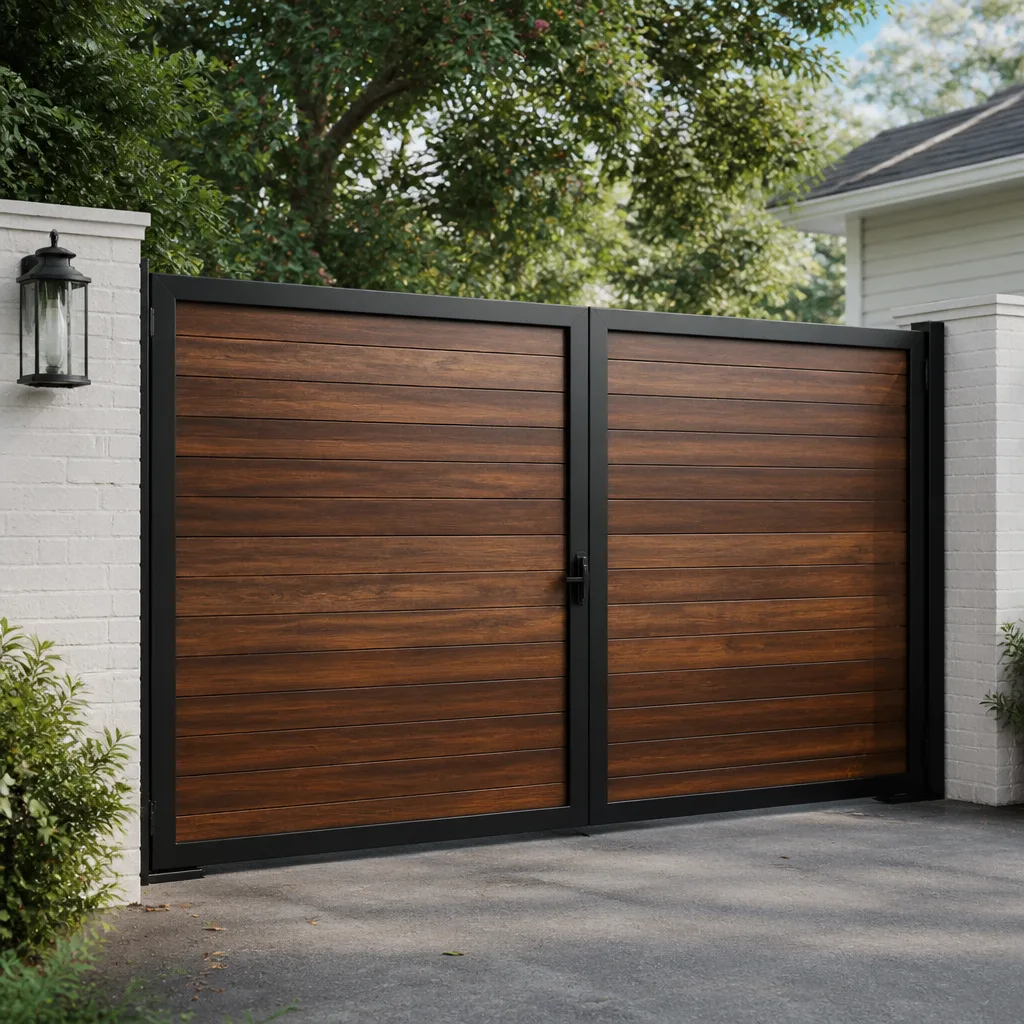 Wood & steel frame
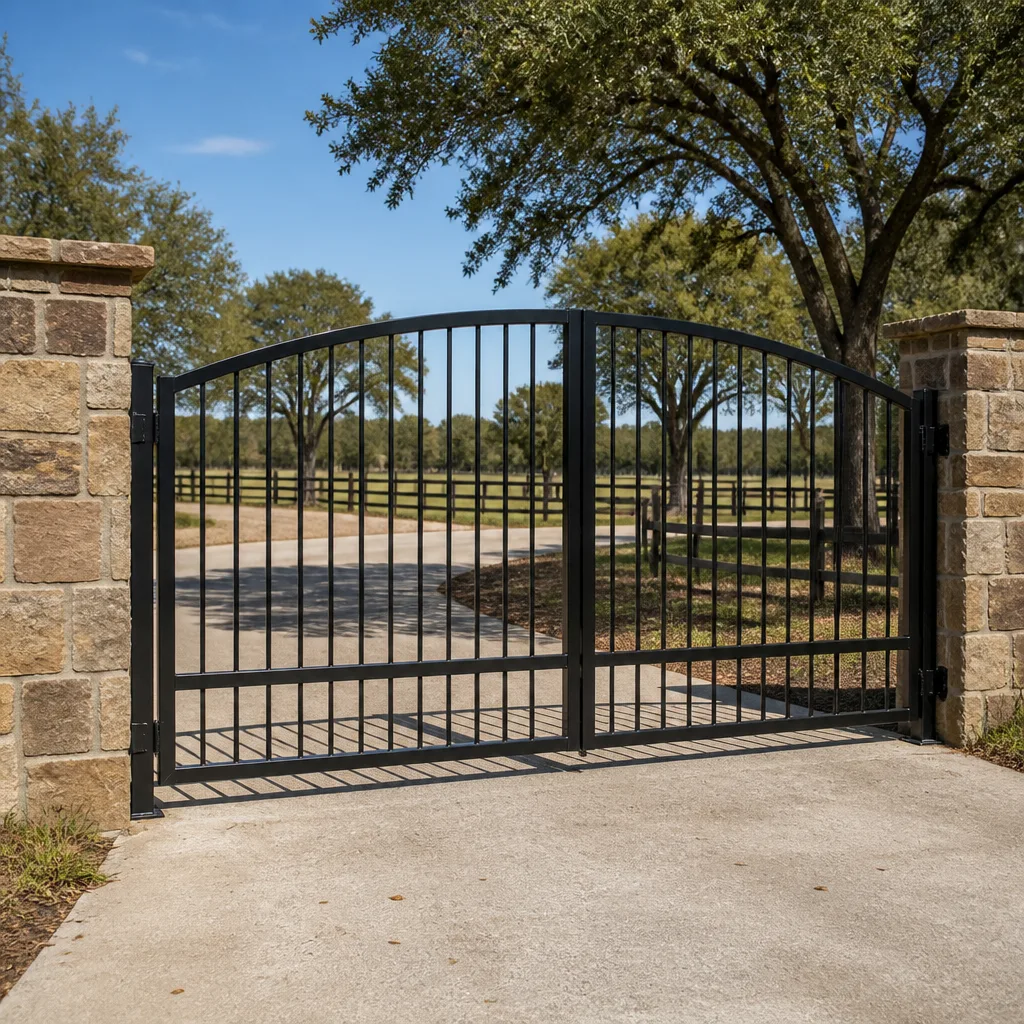 Farm & ranch
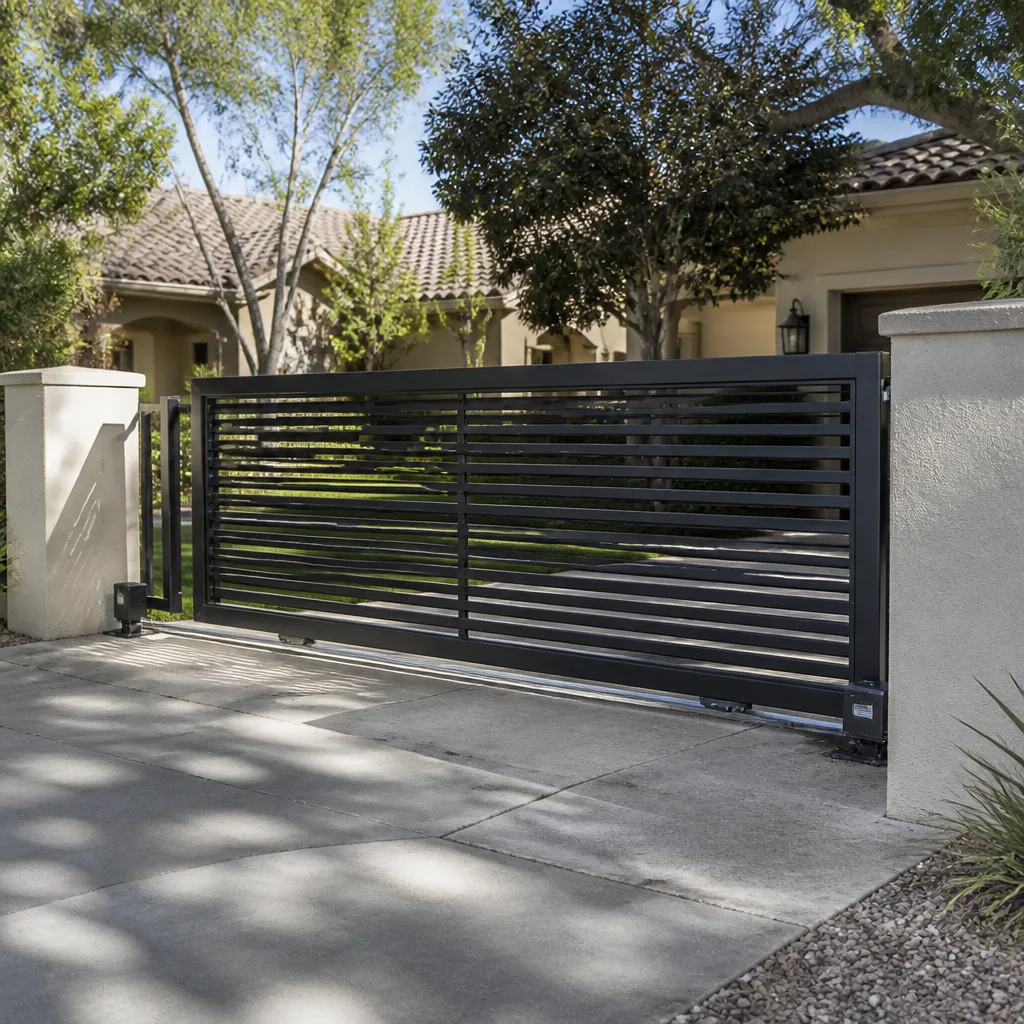 Sliding driveway gates
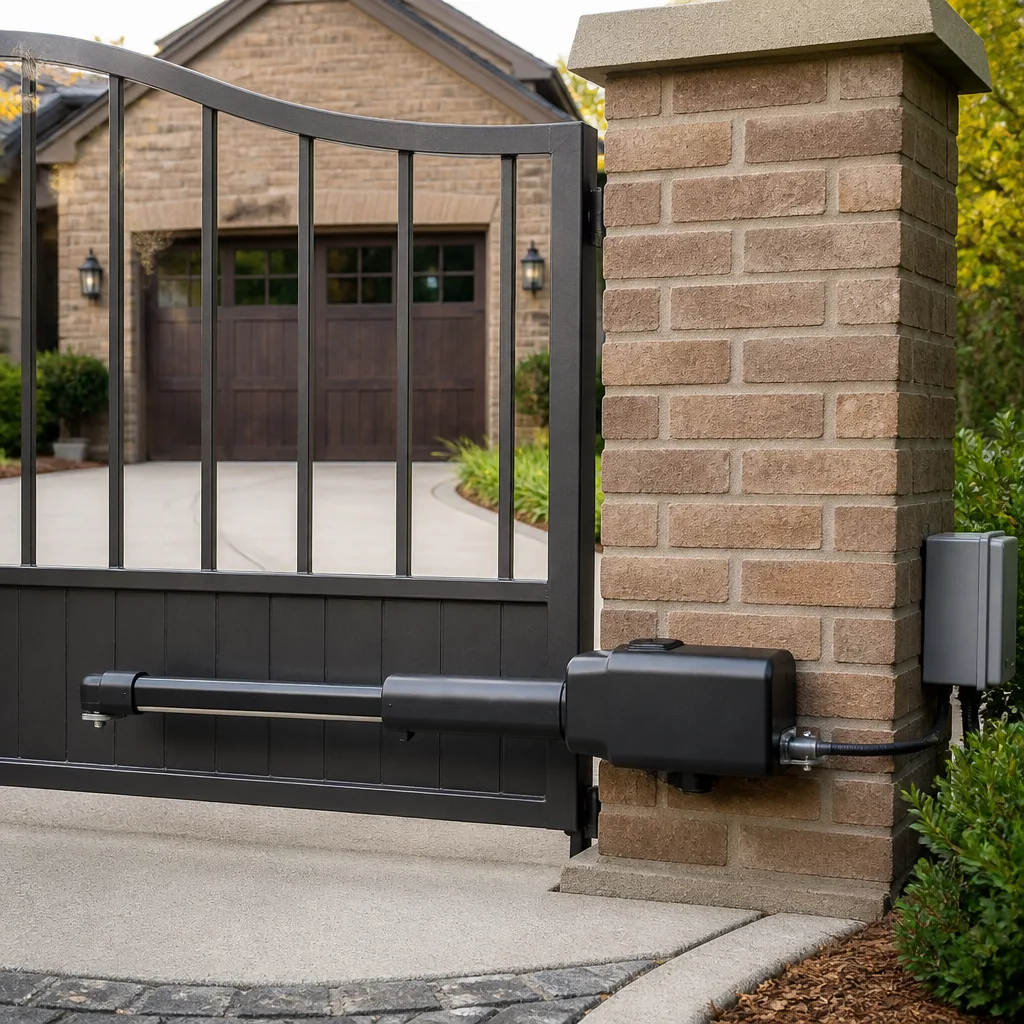 LiftMaster operators
Free on-site gate assessment - hinges, posts, and your LiftMaster or Nice gate operator checked before anything is quoted
The assessment is free and the quote is the invoice.
Get your free estimateGate Repair Warning Signs: A Montclair Homeowner’s Reference Guide
Most gate failures in Montclair don’t happen suddenly. They broadcast distress for 30 to 90 days beforehand, but the signals sound like minor annoyances rather than mechanical failure. A gate that hesitates half a second before moving is not “warming up.” It’s a sign the operator is drawing excess current to overcome mechanical resistance, and that pattern typically precedes motor burnout within 60 days. This guide maps each warning sign to the specific failure it predicts, explains what’s happening inside the mechanism, and tells you roughly how much time you have before the gate stops working entirely, with links to more guides & resources throughout. We’ll cover swing gates and slide gates separately because they fail in different ways, and we’ll be specific about Montclair conditions: dry-season dust, wet-season ground movement, and the temperature swings that stress electronics up here.
Quick Answer
Gate repair warning signs fall into five categories: hesitation or slow starts, grinding or scraping sounds, partial travel or random reversal, intermittent operation, and visible sagging or misalignment. A gate that hesitates, grinds, or reverses direction without command is typically 30 to 90 days from full failure. If your gate shows any of these symptoms, shutting it down and calling our Gate Repair services prevents a $400 repair from becoming a $2,800 motor and operator replacement. Montclair Gate Repair works on nine operator brands including Ghost Controls, DoorKing, Elite, and Mighty Mule, and we diagnose the fault at its source: board, motor, loop, or wiring.
Styles & brands we work with
Table of Contents
- Hesitation and Slow Start: The Motor Burnout Signal
- Grinding, Scraping, and Metal-on-Metal Sounds
- Partial Travel and Random Reversal
- Intermittent Failures: Why “Works Fine Sometimes” Is a Warning
- Swing Gates vs. Slide Gates: They Fail Differently
- When to Shut the Gate Down Immediately vs. Monitor It
- How Montclair’s Climate Accelerates Gate Wear
- Common Mistakes to Avoid
- When to Call a Professional
- Frequently Asked Questions
Hesitation and Slow Start: The Motor Burnout Signal
A gate that pauses before moving, or starts slowly and then lurches into motion, is telling you something specific. The operator motor is straining against resistance. That resistance comes from one of three places: degrading capacitor (reduced starting torque), binding hinges or rollers (mechanical friction), or a failing motor winding. We see this pattern frequently in Montclair because dry-season dust infiltrates motor bearings and hinge pins, increasing friction gradually over months. The gate still moves because the motor keeps working harder to compensate, drawing more current each cycle. That excess current generates heat, and heat is what kills motor windings.
The timeline is predictable. When hesitation first appears, you typically have 60 to 90 days before the motor overheats to the point of failure. If you hear a humming sound during the hesitation, that timeline drops to 30 days or less because the hum means the motor is stalled under load and the capacitor is already degrading. On Mighty Mule and Ghost Controls residential operators, a slow start often traces to a weak battery in solar-powered setups or a failing control board capacitor. On DoorKing and Elite commercial operators, hesitation usually means the motor run capacitor is failing or the gearbox oil has thickened beyond spec.
What to check without opening the cabinet: watch how the gate behaves at each point in its travel. Does it hesitate only at the start, or also when reversing direction? Start-only hesitation points to motor or capacitor. Hesitation mid-travel points to mechanical binding. Hesitation in both directions points to a control board sending inconsistent voltage. None of these are things you should try to fix by adjusting the force settings upward. Crank the force limit higher and you mask the symptom while accelerating motor death.
Grinding, Scraping, and Metal-on-Metal Sounds
Sound is the most reliable diagnostic tool you have. A properly functioning gate operator makes a steady, even hum. Anything else is the sound of metal wearing against metal, and it always costs more to ignore than to address.
Here’s what each sound means:
- High-pitched squeal on start or stop: Belt slippage or a failing drive belt on a slide gate operator. Common on Linear and Viking operators after 5 to 7 years in service.
- Intermittent grinding during travel: Debris in the rack and pinion teeth on a slide gate, or a failing gearbox on a swing gate arm operator. In Montclair, decomposed granite and fine dust collect in rack teeth and get ground in with every cycle.
- Deep rumble or growl: Worn gearbox bearings. This is a pre-failure sound. The gearbox will continue to function until the bearing seizes, at which point the motor transfers force into the housing and something expensive breaks.
- Rhythmic scraping tied to gate position: The gate itself is dragging on the ground or on its track. Not an operator problem, but it puts the same load on the motor as any other resistance and shortens motor life the same way.
A grinding gate never gets better on its own. Metal does not self-heal. Every cycle with a grinding sound removes more material from the failing component and spreads that material into the surrounding mechanism. We’ve opened gearboxes that looked like they were filled with metallic paste, and in most cases the homeowner had heard the sound for three to four months before calling. By that point the repair was a full gearbox replacement rather than a gear and bearing service.
Partial Travel and Random Reversal
A gate that opens halfway and stops, or reverses direction without being commanded to, is demonstrating a safety system response. Automatic gate operators are required by UL 325, the governing safety standard, to reverse when they sense an obstruction. The obstruction sensing happens through either a current-sensing mechanism in the control board or through physical safety edges and photo eyes. When the system thinks it feels or sees an obstruction, it stops or reverses. That’s the safety system working, even when no obstruction actually exists.
The diagnostic question is whether the reversal is real or false. A real reversal means something is genuinely binding: a warped gate panel catching on the track, a broken wheel, a hinge so stiff the motor interprets the resistance as an obstruction. A false reversal means the sensing circuit is malfunctioning: a photo eye out of alignment, a corroded loop detector misreading, or a control board with a drifting sensitivity setting.
Here’s the ordered process we follow when diagnosing partial travel on a Montclair gate:
- Test with the gate disengaged. Release the operator and manually move the gate through its full travel. If it’s hard to push, the problem is mechanical, not electrical. A properly balanced gate of any size should move with one hand.
- Check the track and wheels. On slide gates, look for flat spots on the wheels, debris on the rail, and warped sections of the gate frame where it catches on the guide rollers.
- Check swing gate hinges. Swing gate hinges load unevenly over time. The top hinge almost always wears faster. If the gate sags at the latch side, the hinge bearings have failed and the weight is now dragging through the operator arm.
- Test the photo eyes. Misaligned photo eyes are one of the most common causes of false reversals. Dust on the lens, minor gate frame flex, or a shifted mounting post is all it takes.
- If all mechanical checks pass, suspect the board. Ghost Controls and Mighty Mule boards in particular are sensitive to voltage fluctuations. A board that worked fine for years can develop calibration drift after the first several Santa Ana wind events of the season if the gate is on the same circuit as other high-draw equipment.
Partial travel specifically means the gate stops at roughly the same spot each time. That’s a limit-switch or travel-module problem, not an obstruction problem. Random reversal that changes location each time is the safety system. Random stopping that changes location is usually a failing control board relay. The distinctions matter because each points to a different repair, and guessing wrong means paying for parts that don’t fix the symptom.
Intermittent Failures: Why “Works Fine Sometimes” Is a Warning
An intermittent gate is the most dangerous kind because it invites you to defer the repair. The gate works. Then it fails. Then it works again for a week. Each time it fails, you make a mental note to call someone. Then it works again and the mental note evaporates.
Intermittent failures tell you something specific: the problem is electrical, not mechanical. Mechanical problems are consistent because physics is consistent. A bent bracket stays bent. A seized bearing stays seized. But electrical problems appear and disappear because they’re driven by heat, humidity, voltage, and connection integrity, all of which fluctuate.
The three most common intermittent failure sources we diagnose in Montclair:
- Failing control board component: A capacitor or relay that works when cold and fails when hot. Gates in full sun on Montclair’s south-facing slopes heat the board cavity up to 40 degrees above ambient. A component on the edge of spec will work at 7 a.m. and fail at 2 p.m. This is a classic “works in the morning, dead in the afternoon” signature.
- Corroded or loose connection: Gate wiring lives outdoors and vibrates with every cycle. Connections loosen, corrosion creeps in, and the circuit fails intermittently depending on temperature cycling. The connection makes contact when it’s warm, loses contact when it’s cold. Or vice versa.
- Loop detector drift: Vehicle detection loops embedded in the driveway detect your car and signal the gate to open. Loop detectors can drift out of calibration over time, especially after heavy rain when the ground’s conductivity changes. The gate works fine with one car but refuses to detect another, or detects phantom “vehicles” when a large truck drives by on the street.
The practical rule: treat an intermittent failure as an active failure. The components causing intermittent faults are the same components that fail permanently, and they fail permanently at the worst possible time: when you’re leaving for work, coming home at midnight, or heading out on a trip. The repair cost for an intermittent fault is typically lower than the repair cost after the component fails outright, because a failed component often damages the components around it.
Swing Gates vs. Slide Gates: They Fail Differently
Swing gates and slide gates put load on completely different mechanical systems, and their warning signs diverge accordingly. Knowing which class of gate you have is the first step in reading the signs.
Swing Gate Warning Signs
Swing gates pivot on hinges and are moved by an arm operator, an underground operator, or a ram-style piston. The failure points cluster around the hinges, the operator arm, and the pivot geometry. Warning signs specific to swing gates include:
- Sagging at the latch side: The gate no longer sits square in its frame. The top hinge bearing has worn, and the entire gate is now cantilevered off the operator arm instead of supported by the hinges. This puts a load the operator was never designed to carry onto the motor and arm. Sagging is always progressive: once it starts, it worsens every week.
- Operator arm movement at the mounting plate: Watch the arm where it connects to the gate and to the post. If either mounting plate flexes or shifts while the gate moves, the bolts are working loose or the post itself is deflecting. In Montclair, gate posts set in expansive clay soil shift seasonally as the ground swells and contracts. A post that’s moved even half a degree changes the operator’s geometry enough to accelerate wear.
- Uneven opening and closing speed: The gate opens at normal speed but closes slowly, or vice versa. That’s the motor fighting gravity in one direction or the other, which points to gate imbalance and hinge wear.
Slide Gate Warning Signs
Slide gates ride on wheels along a track and are driven by a chain, belt, or rack-and-pinion system. The failure points cluster around the wheels, track, and drive engagement. Warning signs specific to slide gates include:
- Wobble or shimmy during travel: The gate moves side to side instead of tracking straight. A wheel is failing or a section of the frame has warped. The motor compensates by drawing more current, and the wheels wear faster once one has started to fail because the load redistributes to the remaining wheels.
- Chain or belt slack: On chain-drive slide gates, a loose chain that visibly sags or slaps during operation is either stretched beyond adjustment or the tensioner spring has failed. A chain that jumps teeth under load turns a quiet drive system into a jerky one, and the shock loads transfer directly into the gearbox.
- Track obstruction at the stop points: Debris accumulates where the gate comes to rest because those points get less traffic. Small pebbles, decomposed granite, and leaves collect at the stop points, and the gate gradually works them into the wheel path. Each obstruction is another small impact load on the wheel bearings.
Montclair’s hilly terrain creates conditions worth watching on both gate types: swing gates on slopes experience asymmetric hinge loads, and slide gates on slopes put constant load on the motor brake even when stopped. A brake that’s holding the gate against gravity is a brake that’s wearing every minute, not just during travel.
When to Shut the Gate Down Immediately vs. Monitor It
Some warning signs require immediate shutdown. Others can be monitored while you schedule a service call. Here’s the breakdown, based on what we’ve seen prevent or fail to prevent catastrophic damage across Montclair’s gate stock.
Shut the gate down immediately and leave it disconnected if you observe any of these:
- Grinding that’s audible from inside the house. This is the sound of a gearbox destroying itself. Every additional cycle scrapes more metal.
- A gate that reversed and then failed to respond to the next command. A safety-system fault followed by unresponsiveness usually means the board has entered a fault state, but it can also mean a motor has seized. Don’t keep trying to cycle it.
- Visible arcing or any burning smell from the operator cabinet. This is not a gate problem anymore. It’s an electrical fire risk. Shut it down at the breaker and call a professional.
- A swing gate that has visibly dropped at the latch side. The gate’s weight is no longer supported properly, and the operator is now a load-bearing structural member. Continuing to cycle it risks snapping the operator arm, which can throw metal fragments.
You can monitor and schedule service within the next week if you observe:
- Mild hesitation on start with no accompanying sounds and no change in travel speed after the hesitation clears. You have time, but not unlimited time.
- Occasional false reversal that happens less than once per week. Document when it happens. Time of day, weather conditions, and which vehicle triggered it. That data shortens the diagnostic visit considerably.
- Slow remote response that takes two or three presses of the transmitter. This is usually a receiver or antenna issue rather than a mechanical one, and it doesn’t worsen the mechanical condition of the gate.
How Montclair’s Climate Accelerates Gate Wear
Gate repair warning signs don’t appear on a fixed schedule. They’re accelerated or slowed by environmental conditions, and Montclair has a specific set of conditions that we’ve learned to account for, as detailed in our Seasonal Gate Repair Care for Montclair: Year-Round Homeowner’s Guide.
First: dust. The dry season from roughly May through October leaves a fine layer of dust on everything. That dust finds its way into motor bearings, hinge pins, chain links, and control board enclosures. It acts as an abrasive, accelerating the wear on any moving component. Gates in the more exposed neighborhoods on Montclair’s hillsides see more of this than gates in sheltered yards, but none of them escape it entirely.
Second: ground movement. Montclair sits on varied soil types, and many homes are built on slopes where the native soil shifts with seasonal moisture changes. Gate posts and track foundations move, sometimes by fractions of an inch, sometimes by more. A quarter-inch of post movement changes swing gate geometry enough to increase hinge load noticeably. A track foundation that settles unevenly creates exactly the kind of mid-travel resistance that triggers false obstructions and motor overload.
Third: temperature swings. Montclair’s summer heat pushes control board components toward their thermal limits, especially in enclosures that receive direct afternoon sun. Thermal cycling from hot days to cool nights stresses solder joints and components, and that’s why many control board failures happen in September and October, after a full summer of thermal cycling. Not in the middle of a heat wave.
If you’ve read this far and recognize symptoms in your gate, the next step is simple. Our Montclair Gate Repair home page covers our full service scope, or you can call us for a free estimate. We diagnose the fault at its source rather than replacing parts on a guess, and we work on your brand: Ghost Controls, DoorKing, Elite, Mighty Mule, and five more.
Common Mistakes to Avoid
- Cranking up the force limit to “fix” hesitation. The force setting exists to prevent injury and equipment damage. Increasing it doesn’t fix the underlying resistance; it overrides the safety system’s ability to detect real obstructions. We’ve seen force settings maxed out on gates that were still hesitating, which means the motor was at full draw against a mechanical problem every single cycle.
- Lubricating the gate to fix a grinding sound. Grinding sound means wear has already occurred. Lubricant might quiet it temporarily, but it also traps the metal particles the worn component is shedding, creating an abrasive slurry that accelerates the damage. By the time the sound is back, the component is worse than it would have been without the lubrication.
- Ignoring intermittent failures because the gate “works now.” Intermittent failures are electrical failures in progress. The same components that fail intermittently fail permanently. You’re not saving money by deferring; you’re increasing the chance of a full operator replacement.
- Using the gate while it’s visibly sagging. A sagging swing gate transfers its weight onto the operator arm. Every cycle with the gate in this condition shortens the operator’s life. Continuing to operate a sagging gate is the single fastest way to turn a $300 hinge repair into a $2,000 operator replacement.
- Treating all gate brands as interchangeable for parts. A Limit switch that fits a Mighty Mule does not fit a DoorKing. Mixing brands or using aftermarket universal parts in a branded operator creates calibration problems and voids warranties. We service nine brands with correct parts for each: no trial-and-error.
- Deferring service before a trip. Gates fail when they’re used, and they’re used most heavily right before and after you leave town. A gate that shows warning signs before your vacation is more likely to fail while you’re gone, leaving the house unsecured or trapping vehicles inside. Call before you leave, not after you get back.
When to Call a Professional
You should call a gate technician when any of the five warning categories appears: hesitation, grinding, partial travel, random reversal, or visible sagging. You should call immediately if the gate has reversed and failed to respond, if you smell burning from the operator, or if you see visible sagging at the latch side. These are not conditions that resolve themselves, and every cycle in a degraded state compounds the damage. Montclair Gate Repair offers free estimates in Montclair: call (866) 371-3309 and we’ll inspect your gate, identify the specific fault, and give you a written quote before any work starts.
Frequently Asked Questions
Hesitation on start is the most common warning sign, and it typically appears 60 to 90 days before motor failure. The motor draws excess current against mechanical resistance, generating heat that degrades the windings until they fail. If the hesitation is accompanied by a humming sound, the failure window shrinks to about 30 days. Call (866) 371-3309 for a free estimate before the motor burns out.
Montclair gate repair costs range based on the fault: hinge replacement and realignment typically runs $200 to $500, control board replacement $400 to $1,200 depending on brand, gearbox service $350 to $800, and full operator replacement $1,500 to $3,500. The exact price depends on your gate’s brand, size, and condition, and you’ll get a written quote agreed before any work starts. Call (866) 371-3309 for a free estimate.
We stock parts for all nine brands we service, including Ghost Controls, DoorKing, Elite, and Mighty Mule, so most common failures can be diagnosed and repaired in a single visit. Standard service calls in Montclair are typically scheduled within one to two business days, and we’ll give you a clear timeline when you call (866) 371-3309.
Intermittent operation points to an electrical fault rather than a mechanical one. The cause is usually a failing control board component that works when cold and fails when hot, a loose or corroded connection, or a loop detector that has drifted out of calibration. These components fail permanently over time, so intermittent problems should be addressed before they become full failures.
We service nine gate-operator brands: LiftMaster, FAAC, BFT, Linear, Viking, Ghost Controls, DoorKing, Elite, and Mighty Mule. That spans residential systems like Ghost Controls and Mighty Mule up to commercial operators like FAAC, BFT, and DoorKing. One call covers your brand, whatever it is. Call (866) 371-3309 to confirm your specific model.
A full gate installation includes site assessment, gate fabrication or procurement, post setting, operator installation, safety device installation per UL 325 requirements (photo eyes, safety edges, and loop detectors as applicable), full wiring, and programming and testing. Every installation quote is written before work begins. For a free measure and estimate, call (866) 371-3309. For more detail, see our gate installation service page.
Power surges during outages and restoration can damage control boards and transformer circuits. First, check the dedicated circuit breaker that feeds the gate operator and reset it once. If the gate still doesn’t respond, check whether the operator has battery backup and whether the batteries are charged. If the gate remains dead, do not attempt to bypass the control board: call a technician. Surge-damaged boards are among the most common post-outage repairs we handle in Montclair. Call (866) 371-3309 and we’ll diagnose it.
Gate damage from vehicles, storms, fire, or falling trees is typically covered under most homeowners policies, subject to your deductible and the cause of loss. Wear-and-tear, motor burnout, and mechanical failure are generally not covered by standard insurance. If your gate was damaged by a vehicle, document the damage before any repair and contact your insurer. We can provide a repair estimate for your claim when you call (866) 371-3309.
If your gate is showing any warning sign covered in this guide, or if it’s failed entirely, call us at (866) 371-3309 for a free estimate. We diagnose the fault at its source and fix it correctly the first time, on your brand, whatever it is. For more on our service areas, see Gate Repair in Sky Valley and Electric Gate Repair in Sky Valley.
The Bottom Line
Gate failures telegraph themselves for weeks before they happen. Hesitation means motor strain. Grinding means component wear. Partial travel means safety-system faults or limit problems. Intermittent operation means electrical failure in progress. Sagging means structural support failure. Each of these signs is a specific message about a specific component, and each one is cheaper to address the earlier it’s caught. Montclair’s dust, expansive soil, and thermal cycling all accelerate the timelines. We work on nine brands, from Ghost Controls and Elite to DoorKing and Mighty Mule, and we trace the fault at its source rather than replacing parts on speculation. Call (866) 371-3309 for a free estimate, and we’ll tell you exactly what your gate is trying to say.
Written by the team at Montclair Gate Repair, serving Montclair since 2013.
See the difference
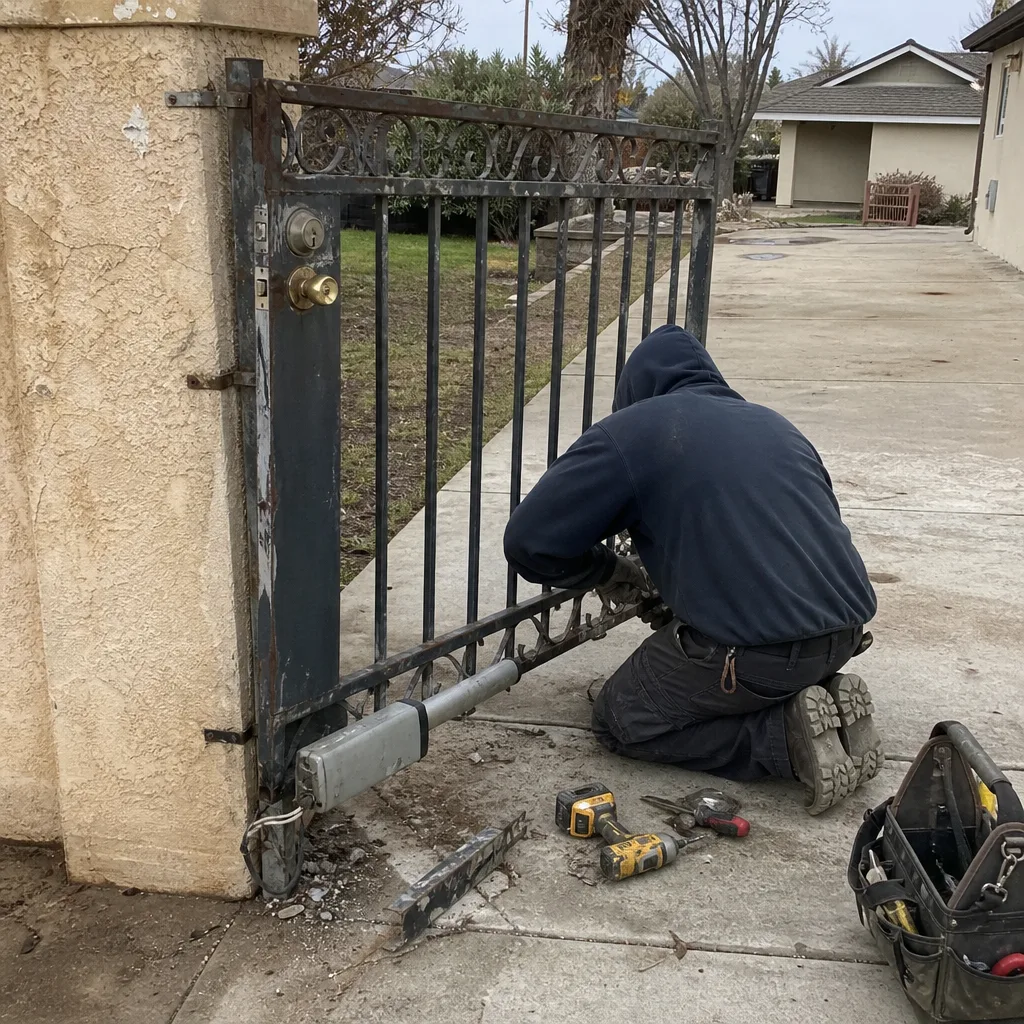 Before
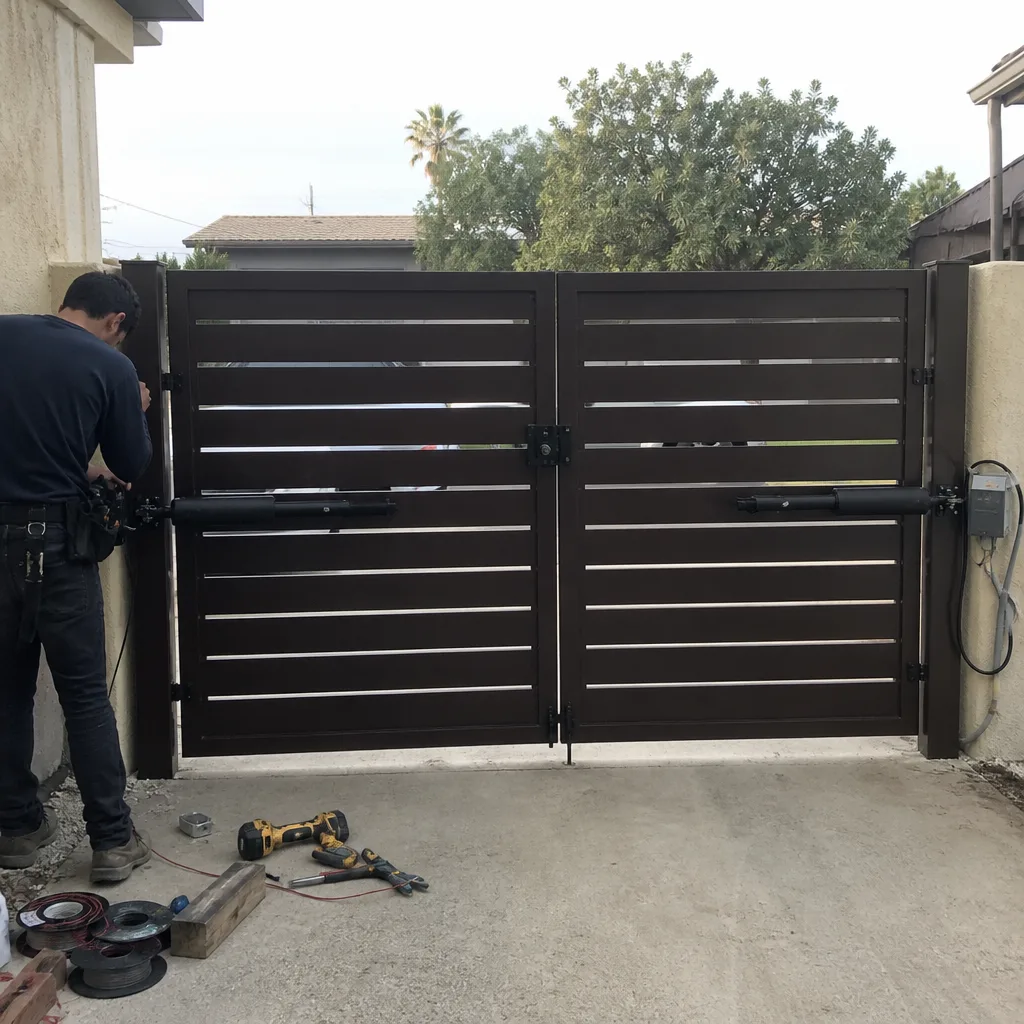 After
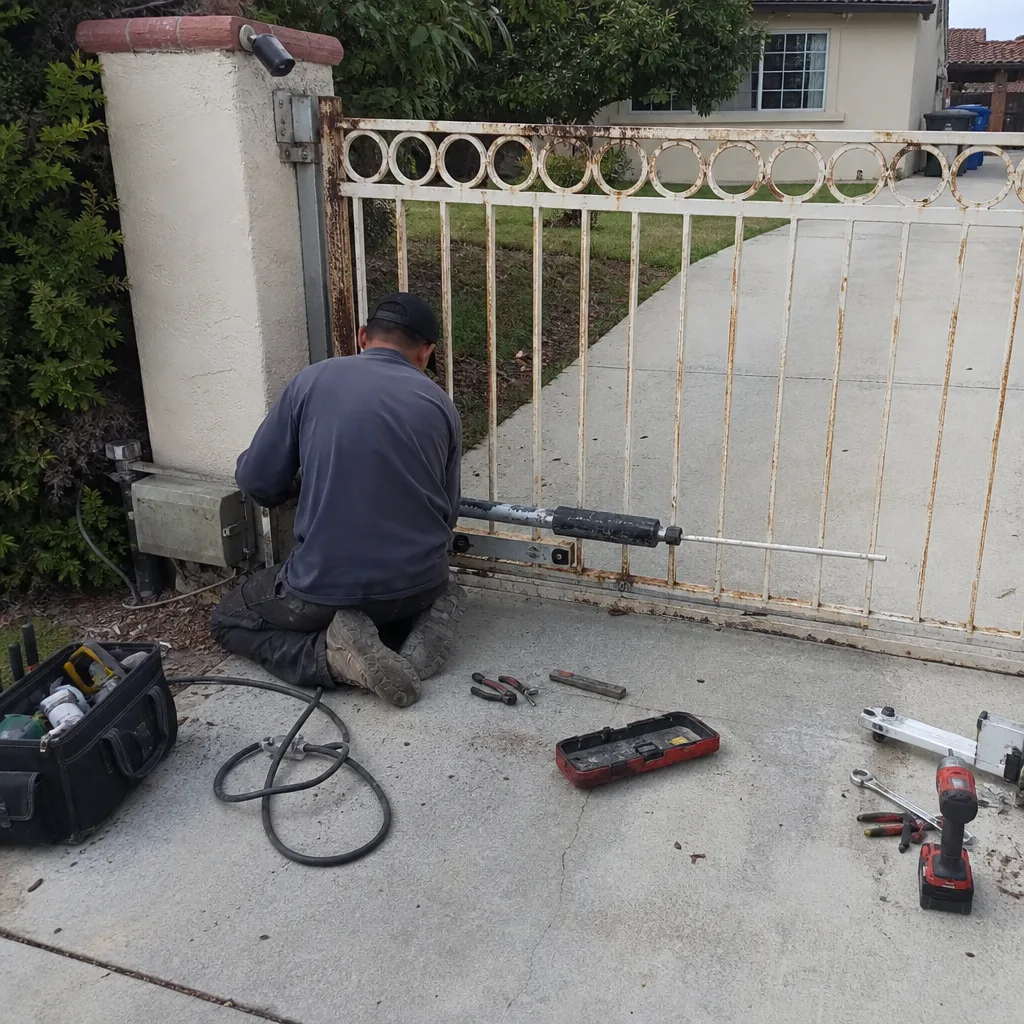 Before
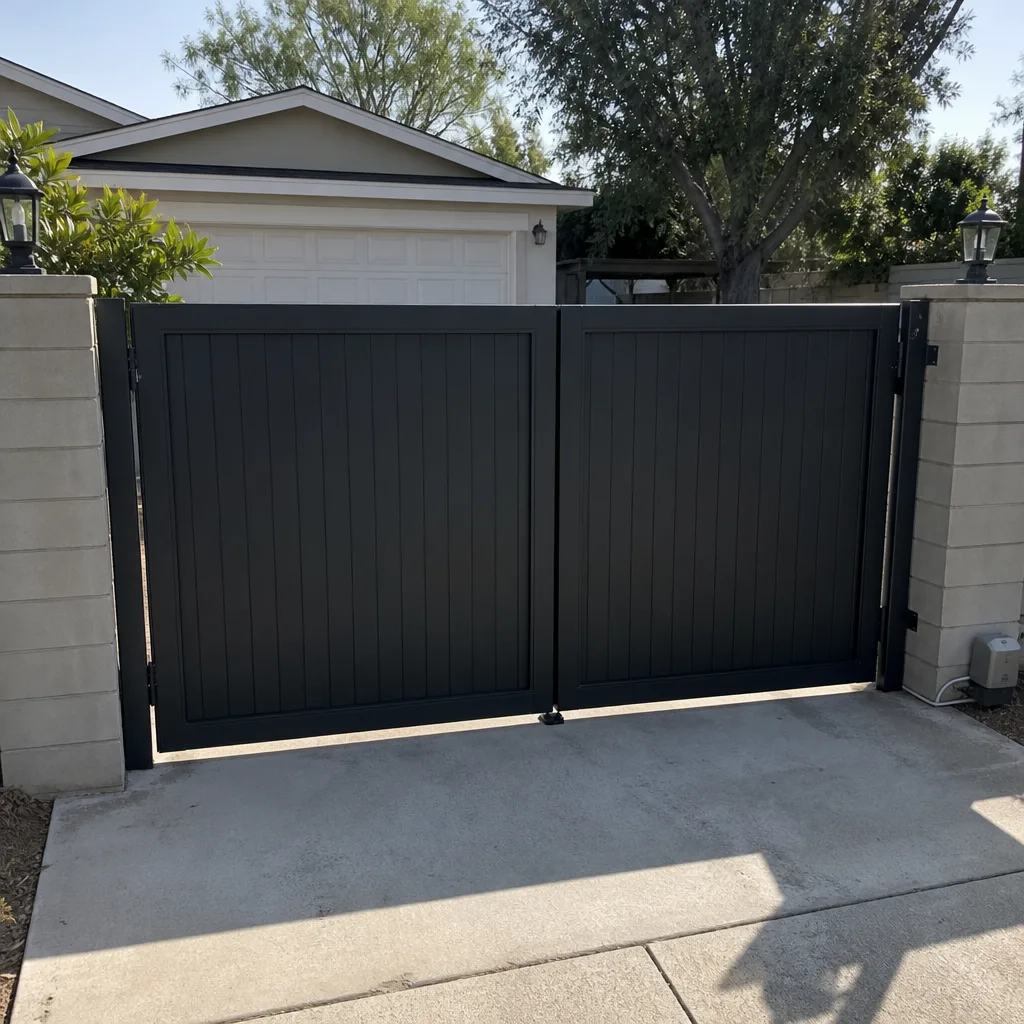 After
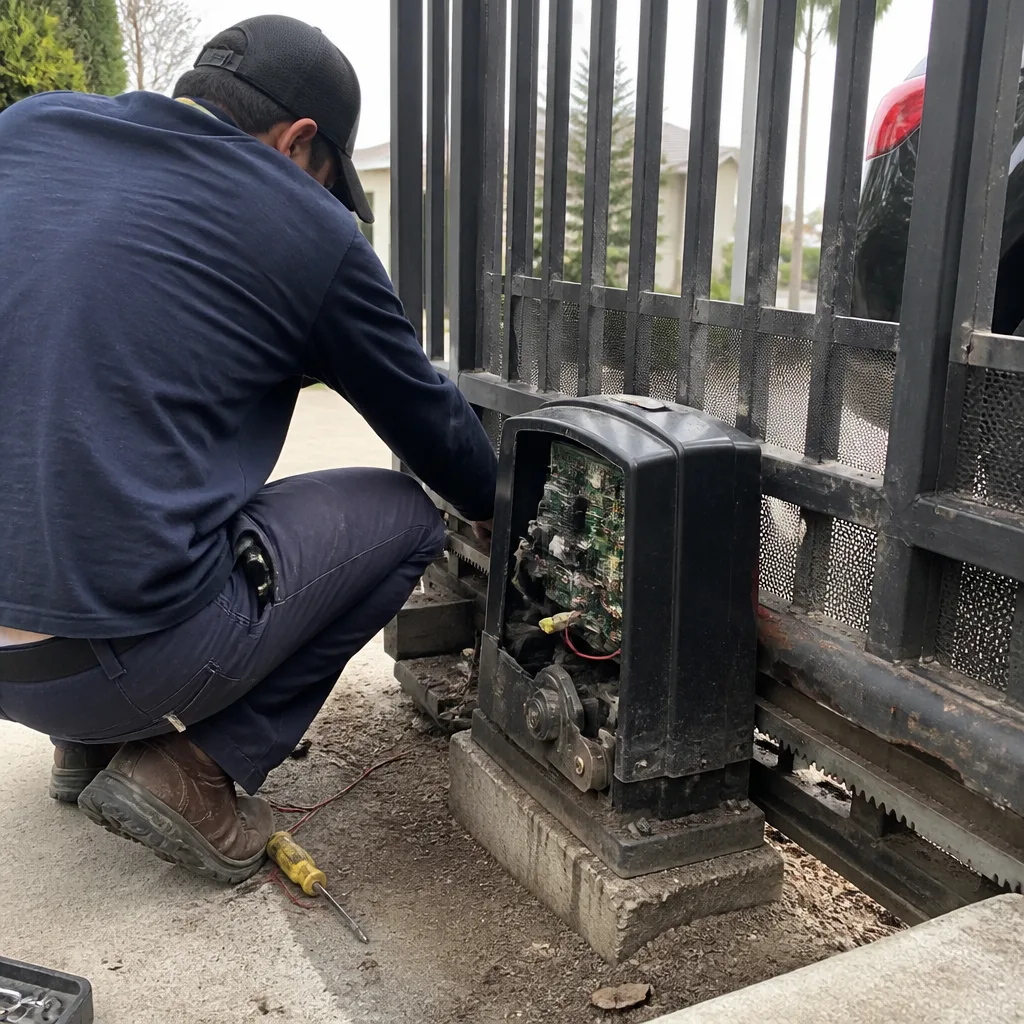 Before
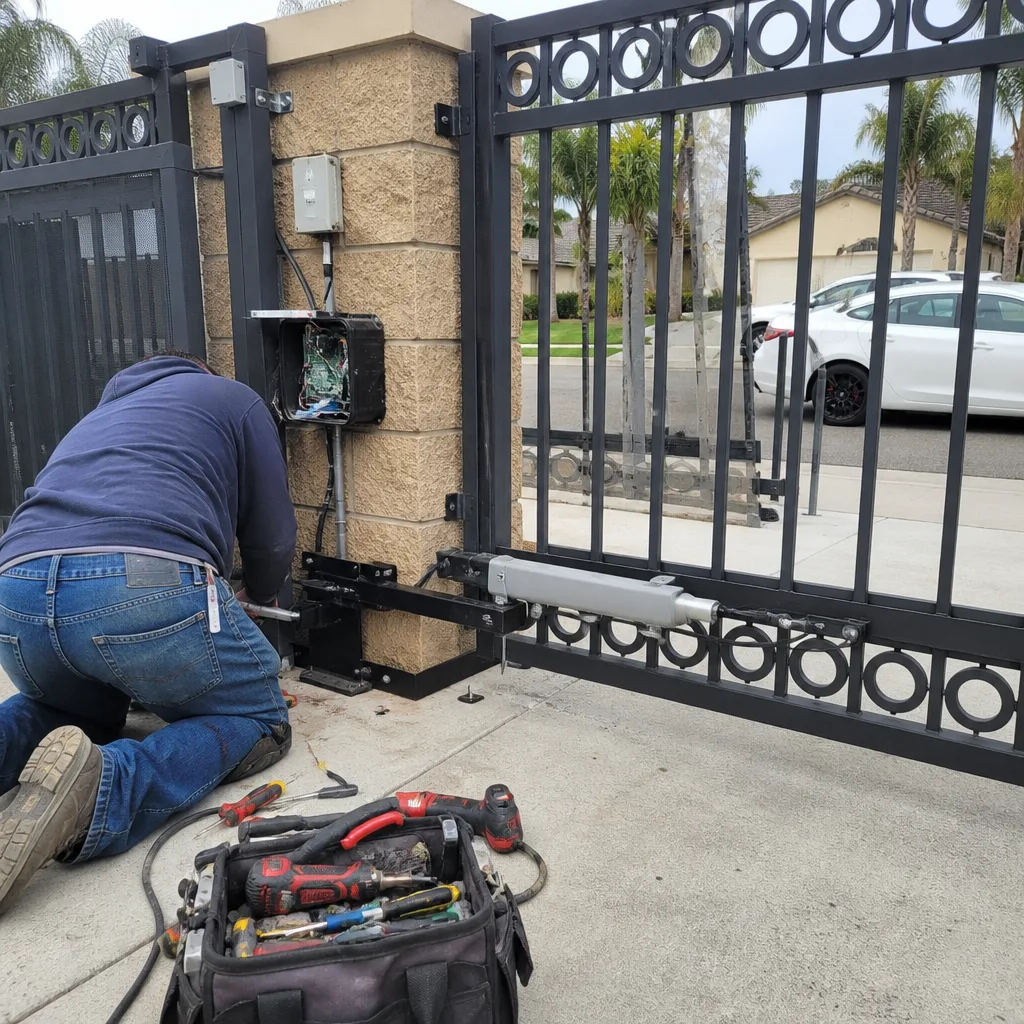 After