
Last updated October 30, 2026
 Wrought iron
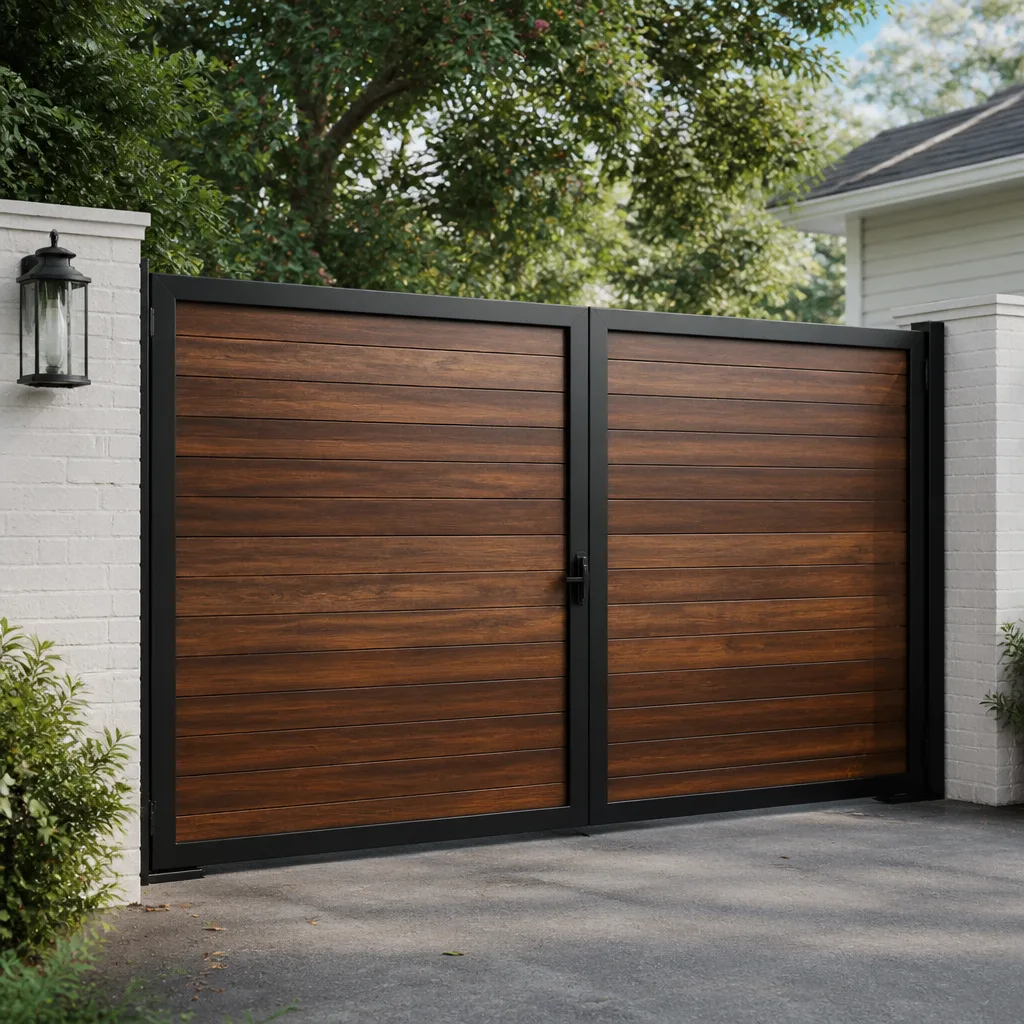 Wood & steel frame
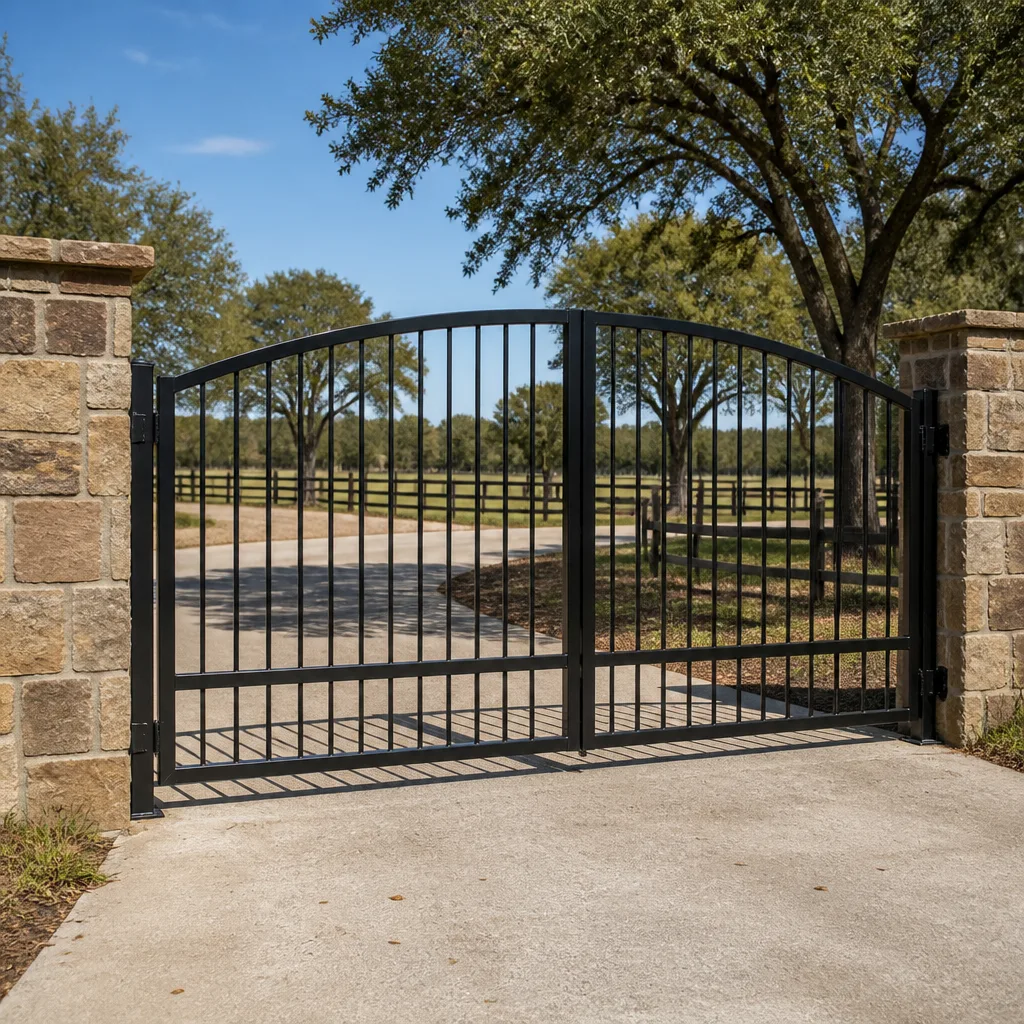 Farm & ranch
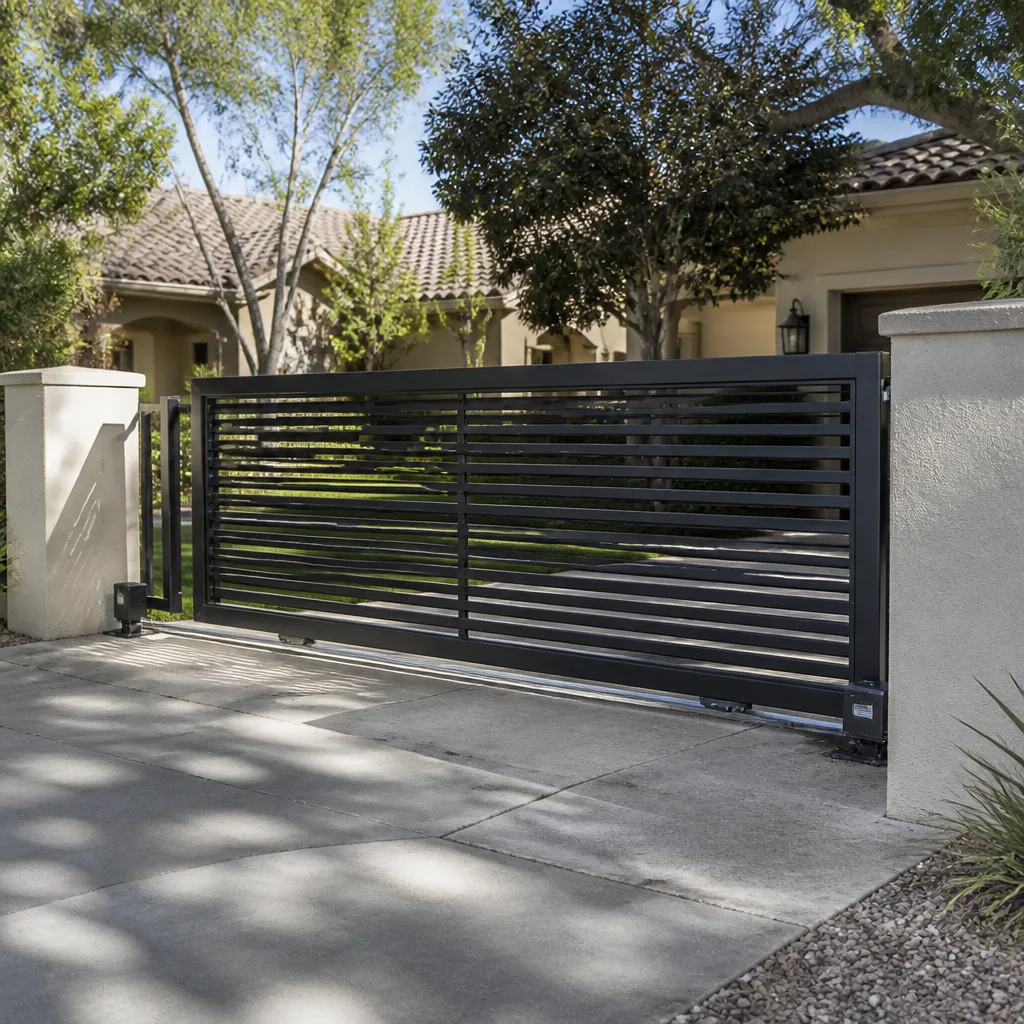 Sliding driveway gates
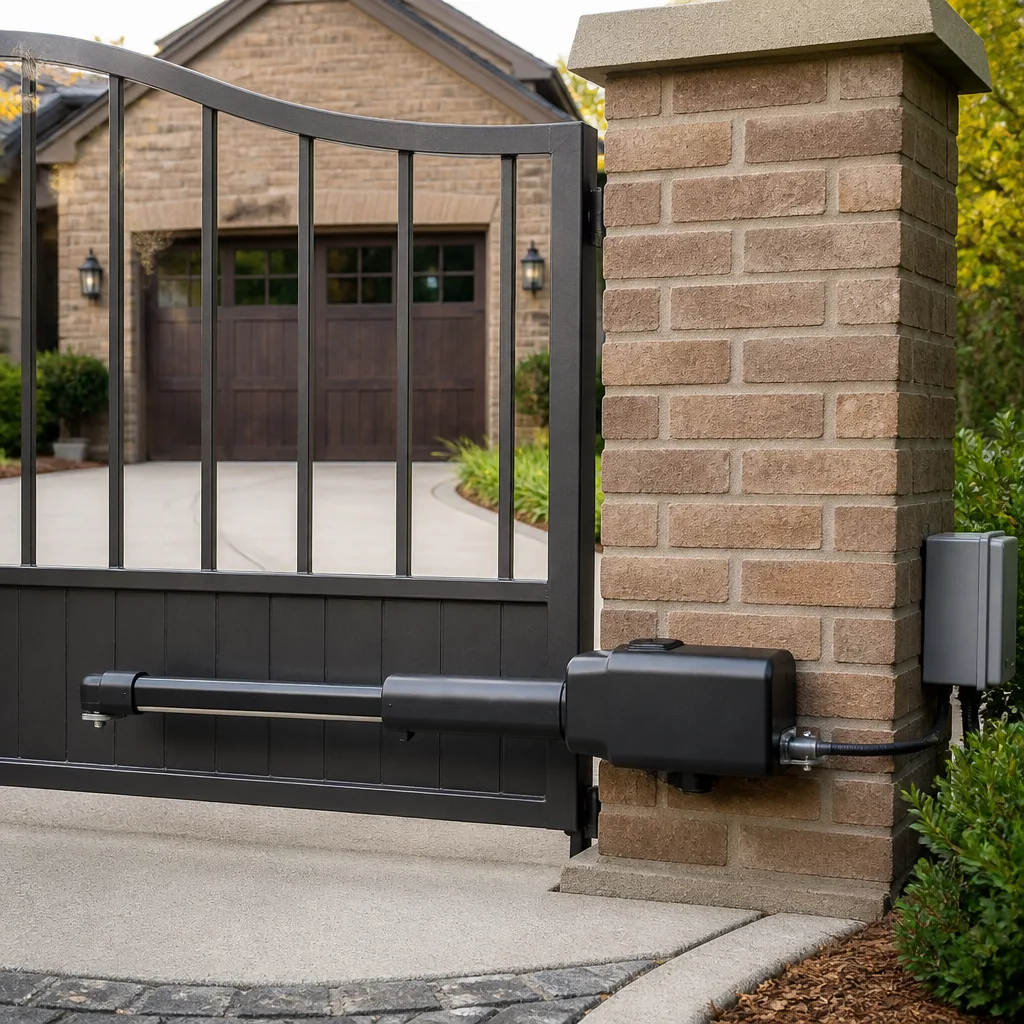 LiftMaster operators
Free on-site gate assessment - hinges, posts, and your LiftMaster or Nice gate operator checked before anything is quoted
The assessment is free and the quote is the invoice.
Get your free estimateThe Complete Gate Repair Guide for Montclair Homeowners
Most Montclair homeowners don’t have a gate problem. They have a diagnosis problem. The #1 reason people pay for gate repair twice is simple: the first technician fixed the symptom without identifying the cause. A slow gate gets a new battery when it actually needed a capacitor. A gate that won’t close gets a new remote when the safety loop was buried too shallow and failing intermittently. Our Complete Guide to Gate Repair in Montclair exists so you can skip that expensive learning curve. We’ll walk through how gates actually fail in Montclair’s specific climate, which failures are honestly fixable on a Saturday afternoon, and which ones involve live voltage that belongs in the hands of a trained technician. By the end, you’ll know exactly what you’re looking at when your gate misbehaves, and you’ll know whether you need a $40 part or a full operator replacement.
Quick Answer
Gate repair in Montclair typically breaks down into three categories: mechanical failures (hinges, wheels, bent arms), electrical failures (control boards, capacitors, motors, wiring), and sensor or safety-loop failures (photo eyes, induction loops, edge sensors). Most mechanical issues are predictable and repairable for a few hundred dollars. Electrical issues range from simple capacitor swaps under $100 to full operator replacements at $1,000+. The fastest way to avoid paying for the wrong repair is a proper diagnostic visit that traces the actual fault, not just the symptom.
Styles & brands we work with
Table of Contents
- How Gates Actually Fail in Montclair’s Climate
- Which Repairs Are DIY-Safe vs. Professional-Only
- Brand-Specific Quirks You Should Know
- What a Proper Diagnostic Visit Should Include
- Repair Costs: A Realistic Breakdown
- Maintenance Intervals That Actually Prevent Failure
- Common Mistakes to Avoid
- When to Call a Professional
How Gates Actually Fail in Montclair’s Climate
Montclair sits in a high-UV, low-humidity band of Southern California, and that combination does very specific things to gate hardware. Rubber seals and weatherstripping crack faster here than in coastal cities because the sun bakes them dry. Solar panel voltage drifts more aggressively in sustained heat. Aluminum frames expand and contract enough through the daily temperature swing to loosen mounting bolts over a single season. When we diagnose a gate in Montclair, we’re not just looking for what broke. We’re looking for what the climate did to make it break.
The three most common climate-driven failures we see in Montclair are:
- UV-cracked rubber and plastic components: Photo eye housings, roller wheels, and seal strips degrade in direct sun. A cracked photo eye lens lets dust in, which eventually blocks the beam and makes the gate refuse to close.
- Solar panel voltage drift: On solar-powered gates, sustained heat degrades the panel’s output curve earlier than the manufacturer’s lifespan estimates. This causes batteries to charge inadequately, which then causes the operator to work harder, which then kills the battery faster. It’s a cascade that starts with the panel, not the battery.
- Thermal racking on aluminum frames: Aluminum expands about twice as much as steel per degree of temperature change. In Montclair, where a 40-degree overnight-to-afternoon swing is normal in summer, aluminum gates flex visibly. Over time, that flex loosens hinge bolts, misaligns the gate relative to the operator, and creates enough binding force to burn out a motor.
Understanding this matters because the fix is different for each. Replacing a cracked seal is cheap. Replacing a drifted solar panel is moderate. Replacing a motor that died from thermal binding is expensive, and if you don’t correct the misalignment that caused the binding, the new motor dies too. That’s the pattern we keep seeing: homeowners who replace the expensive part without addressing the environmental cause.
Montclair’s dust is another factor. The fine, dry particulate that blows through the San Gabriel Valley foothills gets into motor housings and gearboxes. It mixes with grease and becomes an abrasive paste. We open more than a few motor housings each summer that look fine from the outside but are filled with what is essentially grinding compound on the inside. A motor that’s been running in that environment for five years doesn’t fail gracefully. It seizes, strips a gear, or shorts a winding.
Which Repairs Are DIY-Safe vs. Professional-Only
Some gate repairs are genuinely manageable for a homeowner with basic tools and patience. Others involve live 120V or 240V wiring, high-tension springs, or diagnostic equipment that costs more than the service call. Here’s the honest breakdown.
DIY-safe repairs:
- Battery replacement on solar or DC operators: If your gate runs on a 12V battery and the battery terminals show corrosion or the battery tests below 12.2V resting, replacing it is straightforward. Disconnect the operator from any solar panel first. Match the battery type exactly (usually sealed lead-acid or AGM).
- Photo eye cleaning and alignment: If your gate reverses or won’t close, and the photo eyes have visible dust or cobwebs on the lens, clean them with a dry cloth and check that they’re still pointed at each other. This fixes a surprising number of “gate won’t close” calls.
- Hinge lubrication: Squealing hinges are a symptom of dry metal-on-metal contact. Use a white lithium grease or a silicone spray designed for outdoor hardware. Do not use WD-40. It’s a solvent, not a lubricant, and it’ll strip what little grease is left.
- Track cleaning on slide gates: Leaves, gravel, and dirt accumulate in V-track or box-track channels. Clear the track and check that the wheels roll freely by hand. If the gate is hard to push manually when the operator is disengaged, that mechanical binding will eventually kill the motor.
Professional-only repairs:
- AC motor capacitor replacement: Capacitors store and discharge high voltage even after power is disconnected. Touching the wrong terminal can deliver a shock that is painful at best and lethal at worst. This is a $30 part that can be dangerous to install.
- Control board diagnostics and replacement: If the gate shows power but won’t respond to a remote, keypad, or the manual button, the fault could be in the board, the receiver, the limit switches, or the wiring between them. Diagnosing that requires a multimeter and a working knowledge of the specific board’s test points. Guessing wrong means buying a $200 – $600 board that doesn’t solve the problem.
- Safety loop installation or repair: Vehicle detection loops are buried in the driveway under asphalt or concrete, and they fail in two ways: the wire breaks, or the loop detector in the operator fails. Replacing the detector is sometimes DIY-possible. Replacing the loop means cutting the driveway, which is absolutely not a DIY job.
- Heavy gate spring tension adjustment: Some swing gates use torsion or tension springs to counterbalance the gate’s weight. Those springs are under enough load to break bones or worse if released incorrectly. This is not a “watch a YouTube video and give it a try” situation.
The rule of thumb: if the fix involves a screwdriver and a wipe-down, it’s probably fine. If it involves a multimeter, a capacitor, or a spring under tension, call someone who does this every day.
Brand-Specific Quirks You Should Know
Gate operators are not interchangeable, and each major brand has failure patterns that are predictable once you’ve seen enough of them. If you know which brand you own, you actually have a head start on the diagnosis. Here are the quirks we see most often on the popular brands in Montclair.
LiftMaster: LiftMaster residential operators are generally reliable, but we see a pattern of limit-switch drift on older units. The gate slowly starts stopping short of fully open or fully closed, and the fix is a limit-switch adjustment or replacement, not a new board. The other common LiftMaster issue is remote receiver failure after power surges. In Montclair, where summer heat puts strain on the grid, surge-related receiver failures spike in July and August. A surge protector on the operator’s power feed is the cheapest insurance you can buy.
Ghost Controls: These are popular on off-grid and solar installations because they’re battery-friendly. The trade-off is that Ghost Controls systems are sensitive to solar panel voltage drift, which we mentioned earlier. If your Ghost Controls gate starts running slow or the remote range shrinks, the first thing to test is the solar panel output and the battery health. We’ve replaced many Ghost Controls batteries that were killed by panels that had degraded to 60% of their rated output. The brand-specific lesson: on Ghost Controls, battery problems are usually panel problems in disguise.
FAAC: FAAC is a professional-grade brand, mostly found on commercial and high-end residential gates. These operators are hydraulic in many models, which means they respond differently to heat than motor-driven units. Hydraulic fluid thickens when cold and thins when hot, which changes the gate’s speed profile slightly. FAAC operators in Montclair’s summer heat can run marginally faster than they do in winter, which isn’t a fault but can confuse a homeowner who notices the change. If a FAAC gate develops a fault, the most common issue we find is wear on the hydraulic piston seals, especially on operators that are 10+ years old.
Linear: Linear makes workhorse residential operators, and their weakness tends to be the plastic gears in the actuator arm on older swing-gate models. The gears strip over time, especially if the gate gets harder to push due to hinge wear or misalignment. A stripped Linear gear start as a grinding noise, then becomes a gate that won’t move. If you hear grinding before failure, you’ve caught it early enough that a gear replacement is cheaper than a full operator swap.
The broader point: brand knowledge changes the diagnosis. A Ghost Controls battery failure and a Linear gear failure both present as “the gate won’t move,” but the fixes are completely different. That’s why we train our technicians on brand-specific behavior rather than treating all gates as generic machines.
What a Proper Diagnostic Visit Should Include
A real gate diagnostic is a process, not a look-see. If a technician arrives, watches the gate move for three minutes, and starts quoting a replacement operator, that’s a red flag. Here’s what an actual diagnostic visit should cover, and what you as the homeowner should expect to see.
- Manual operation test: The technician disengages the operator and pushes the gate by hand. This immediately separates mechanical problems from electrical or electronic problems. If the gate is hard to push, the motor has been working against resistance, and no amount of board replacement will fix that.
- Voltage test at the operator: A multimeter reading at the operator’s power supply input tells you whether the operator is receiving proper voltage. Low voltage from a failing transformer or a corroded wire connection explains a lot of intermittent behavior.
- Battery and charging system test (if applicable): The battery is tested under load, not just with a resting voltage check. A resting voltage of 12.6V can still drop to 9V under load if the battery is sulfated. The charging source, whether a solar panel or an AC charger, gets tested separately. For solar systems, the panel’s open-circuit voltage and short-circuit current should be measured against its rated output.
- Safety device verification: Photo eyes are checked for alignment and output signal. Safety edge sensors are checked for continuity. Loop detectors are tested by placing a metal object over the loop and watching for detection. This is non-negotiable: the gate’s safety features are part of the repair, not an optional add-on.
- Control board diagnostic: LED indicator lights on the board are read and interpreted, not ignored. Most operators have basic LED diagnostics that point toward specific fault types. A technician who knows the brand can read those LEDs and narrow the problem before opening the manual.
- Cycle testing: After any adjustment or repair, the gate should be cycled at least ten times, including interruption tests on the safety devices. If it works ten times in a row, it’s probably fixed. If it works three times and fails on the fourth, the fault wasn’t fully resolved.
Red flags that a tech is guessing: they quote a replacement without opening the operator housing, they don’t carry a multimeter, they can’t tell you which brand and model you have after looking at it, or they blame the problem on “old wiring” without showing you a specific test result. A proper diagnosis takes 30 – 60 minutes on most gates. If it takes five, you’re not getting a diagnosis. You’re getting a sales pitch.
Repair Costs: A Realistic Breakdown
Gate repair pricing in Montclair varies by the specific failure, but here’s what you should expect to see based on the work we do regularly. These are honest ranges, not exact quotes. Every gate is different, and the price depends on your specific operator, the condition of the rest of the system, and how accessible the components are.
- Diagnostic service call (no parts): Most companies charge a service fee for the visit, which may or may not be credited toward the repair. Expect $75 – $150 for a proper diagnostic that includes the full checklist above. If a company offers a “free diagnostic” and then quotes a full replacement every time, that diagnostic fee wasn’t actually free.
- Battery replacement (solar/DC operators): $80 – $200 including the battery and install, depending on capacity and brand. This is one of the most common repairs we do, and it’s one of the cheapest when caught before the battery damages the charging system.
- Photo eye replacement or realignment: $100 – $250 if it’s a straightforward swap or adjustment. If the wiring between the photo eye and the board has been compromised, the cost goes up with the wiring repair.
- Hinge replacement or reinforcement: $200 – $500 per hinge, depending on gate weight and whether welding is needed. Wrought iron gates in Montclair’s dry climate often have hinge welds that crack from repeated thermal stress. This is a mechanical repair that gets ignored until it’s a structural problem.
- Control board replacement: $350 – $800 including the board and programming, depending on brand. LiftMaster and Linear boards are on the more affordable end. FAAC and DoorKing commercial boards push higher.
- Full operator replacement: $900 – $1,800 including the operator, installation, safety device check, and programming. This is the range for a residential swing gate operator. Commercial or heavy-duty slide gate operators run higher. If you’re quoted $500 for a full operator replacement including labor, be suspicious about what kind of operator that is.
- Gate installation (new gate, no operator): $1,500 – $6,000+ depending on gate size, material, and whether it’s a swing or slide gate. This is a different scope from repair, and the pricing reflects the fabrication or sourcing, the concrete work, and the alignment precision required.
The price you’re quoted should always be confirmed and agreed upon before any work starts. No surprises on the invoice. If a technician can’t give you a firm number before opening things up, ask for the diagnostic process first, then a firm quote based on the findings.
The cheapest repair is the one that identifies the actual failure. A $150 hinge replacement that was done because the gate was binding beats a $1,400 operator replacement that didn’t fix the binding and killed the new motor in eight months. That’s the logic behind our Montclair Gate Repair home approach: trace the fault, fix the cause, verify with cycles.
Maintenance Intervals That Actually Prevent Failure
Most gate failures in Montclair are preventable, and the prevention is not complicated. It’s just consistent. Here are the maintenance intervals that actually matter, based on the failure patterns we’ve documented over years of service calls in this climate.
Monthly (2 minutes):
- Clear debris from the gate track (slide gates) or the swing path (swing gates). Gravel, palm fronds, and dirt are the enemies.
- Visually check that the photo eyes are still aligned and lenses are clean. A quick wipe with a dry cloth takes seconds.
- Listen for new noises. A gate that previously ran quietly and now grinds, squeals, or clicks is telling you something. Don’t wait for the noise to become a failure.
Quarterly (15 minutes):
- Lubricate hinges, roller wheels, and the chain or belt drive (if applicable) with the correct lubricant for each component. White lithium grease for metal-on-metal hinge points. Silicone spray for plastic wheels and nylon guides.
- Tighten visible mounting bolts, especially on aluminum gates where thermal expansion works bolts loose. A socket set and five minutes can prevent a year of misalignment damage.
- Test the auto-reverse function on the gate. Place a box or traffic cone in the gate’s path and confirm it reverses. If it doesn’t reverse, the safety system needs repair before someone gets hurt.
Twice a year (30 minutes):
- Test the battery if your operator is solar or DC-powered. A battery under load should hold above 12V. If it drops below that, budget for replacement before it strands you with a dead gate.
- Inspect all rubber and plastic components for UV cracking. Replace cracked photo eye housings, seal strips, and wheel bushings before they fail completely. UV damage in Montclair is relentless, and the parts are cheap compared to the failures they cause.
- Check the gate’s balance manually. With the operator disengaged, a swing gate should move freely through its full arc without binding or self-swinging. A slide gate should roll smoothly without added resistance.
An annual professional inspection is worth considering for electric gates, especially if you depend on the gate for security. The technician can test charging systems, verify loop detector sensitivity, check capacitor health, and catch the slow failures that a homeowner wouldn’t notice until the gate is stuck open at 10pm.
Common Mistakes to Avoid
- Replacing the battery without testing the charging source: If the solar panel or charger is failing, the new battery will die within months. We see this constantly with Ghost Controls systems in Montclair. Test the panel output first.
- Ignoring gate binding because “the opener is strong enough to handle it”: No opener is strong enough to handle constant mechanical resistance forever. The motor burns out, the gear strips, or the actuator arm bends. Fix the binding early.
- Using WD-40 on hinges and rollers: WD-40 dissolves the existing lubricant and then evaporates, leaving the metal dryer than it was before. Use white lithium grease or silicone spray.
- Attempting a control board replacement without diagnosing the wiring: A new board connected to a shorted wire will fry immediately. We’ve seen homeowners go through two boards before realizing the problem was a pinched wire under the gate track. Test first, replace second.
- Buying cheap off-brand replacement parts: A $20 aftermarket capacitor that’s not rated correctly for your operator can fail in weeks or damage the board. Match the part, not just the shape.
- Disabling safety devices to “fix” a gate that won’t close: If the gate won’t close because a photo eye or safety edge is triggering, the correct response is to fix the safety device, not bypass it. A bypassed safety device is a liability and a danger to anyone using the gate.
- Waiting until the gate fails completely before calling: By the time a gate stops moving entirely, the repair is almost always more expensive than if it had been caught earlier. A weird noise, a slower cycle, a remote with reduced range. These are early warnings. Listen to them.
When to Call a Professional
Call a professional when the repair involves live voltage, high-tension springs, control board diagnostics, or any safety device that has stopped working properly. Also call when you’ve already tried the simple fixes and the gate still doesn’t work correctly. At that point, you’re not paying for the repair. You’re paying for the diagnosis that prevents you from buying the wrong repair.
If you’re in Montclair and your gate is misbehaving, Montclair Gate Repair offers free estimates in Montclair – call (866) 371-3309. We’ll walk through what the gate is doing, what brand it is, and what the likely causes are before anyone even comes out. If a visit is needed, the diagnostic comes first, the quote comes second, and no work starts until you’ve approved the number.
See the difference
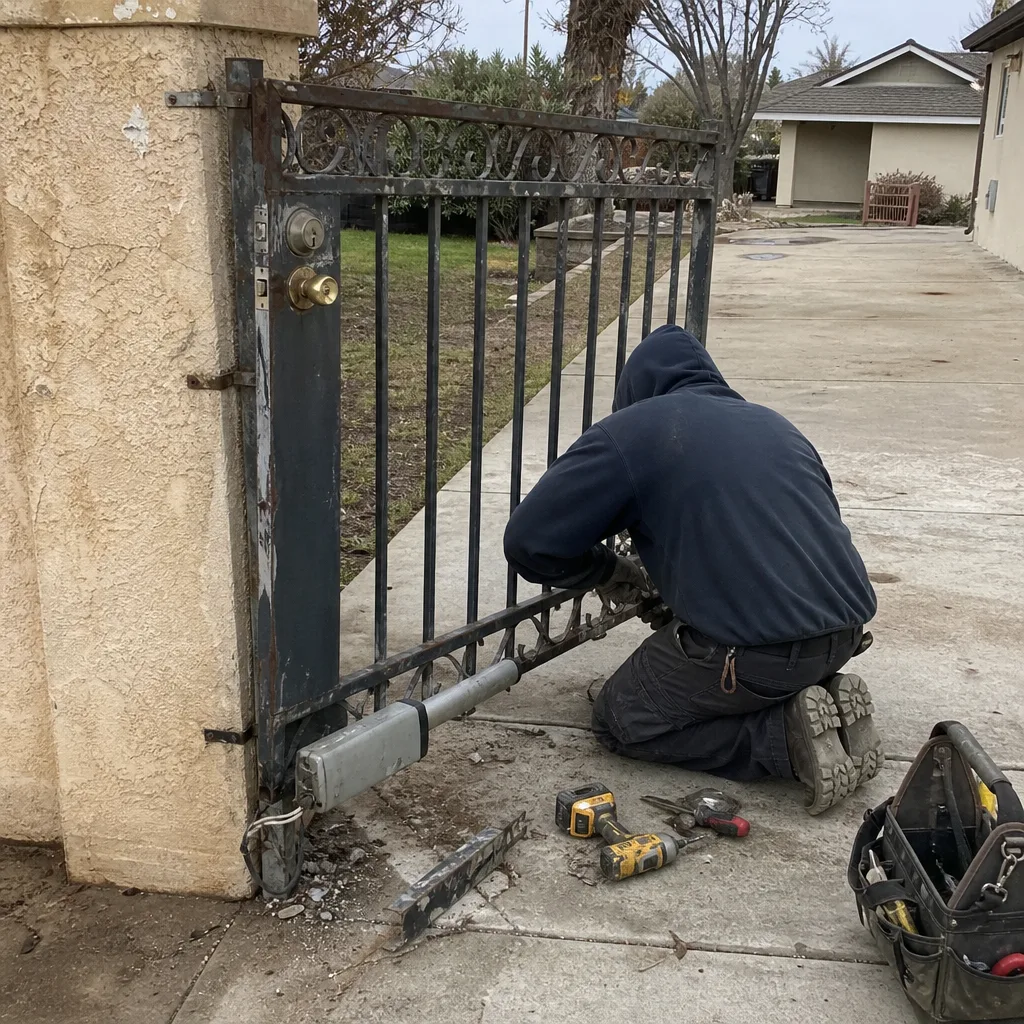 Before
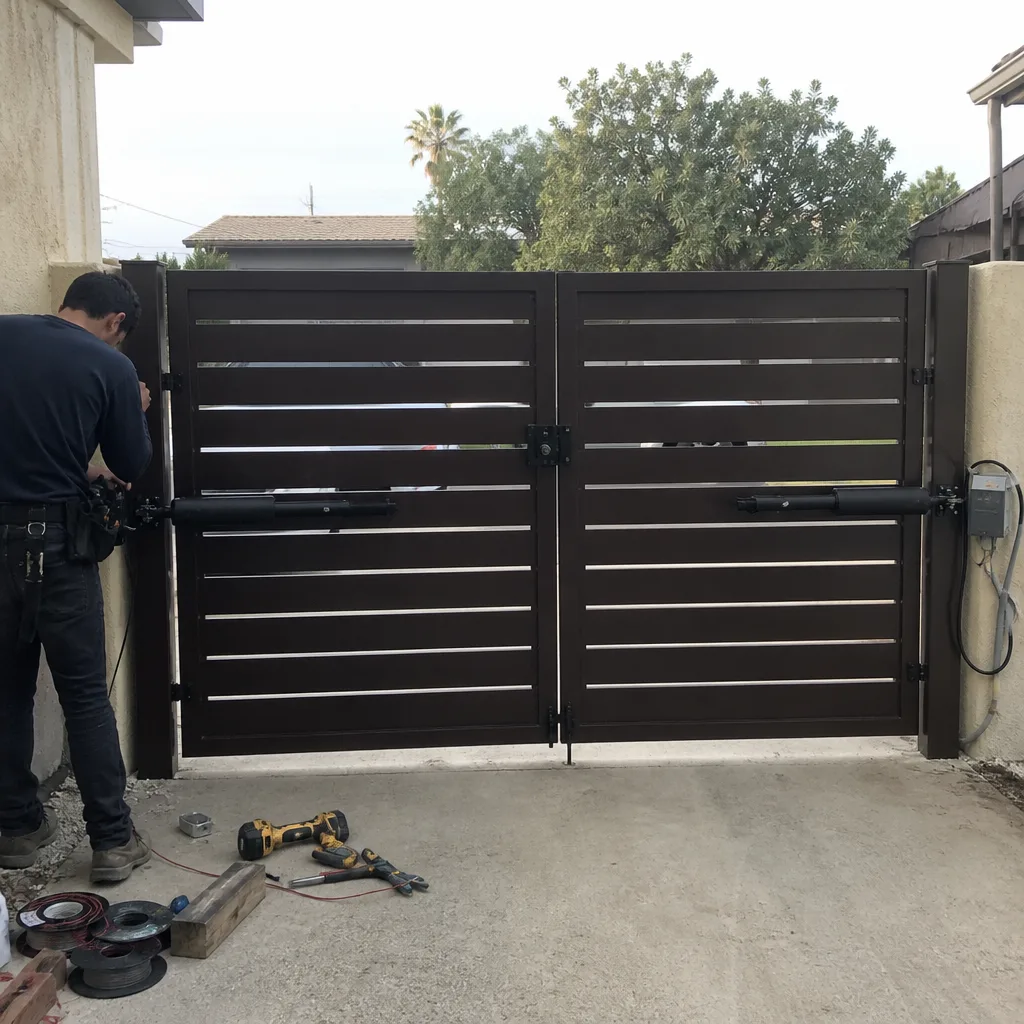 After
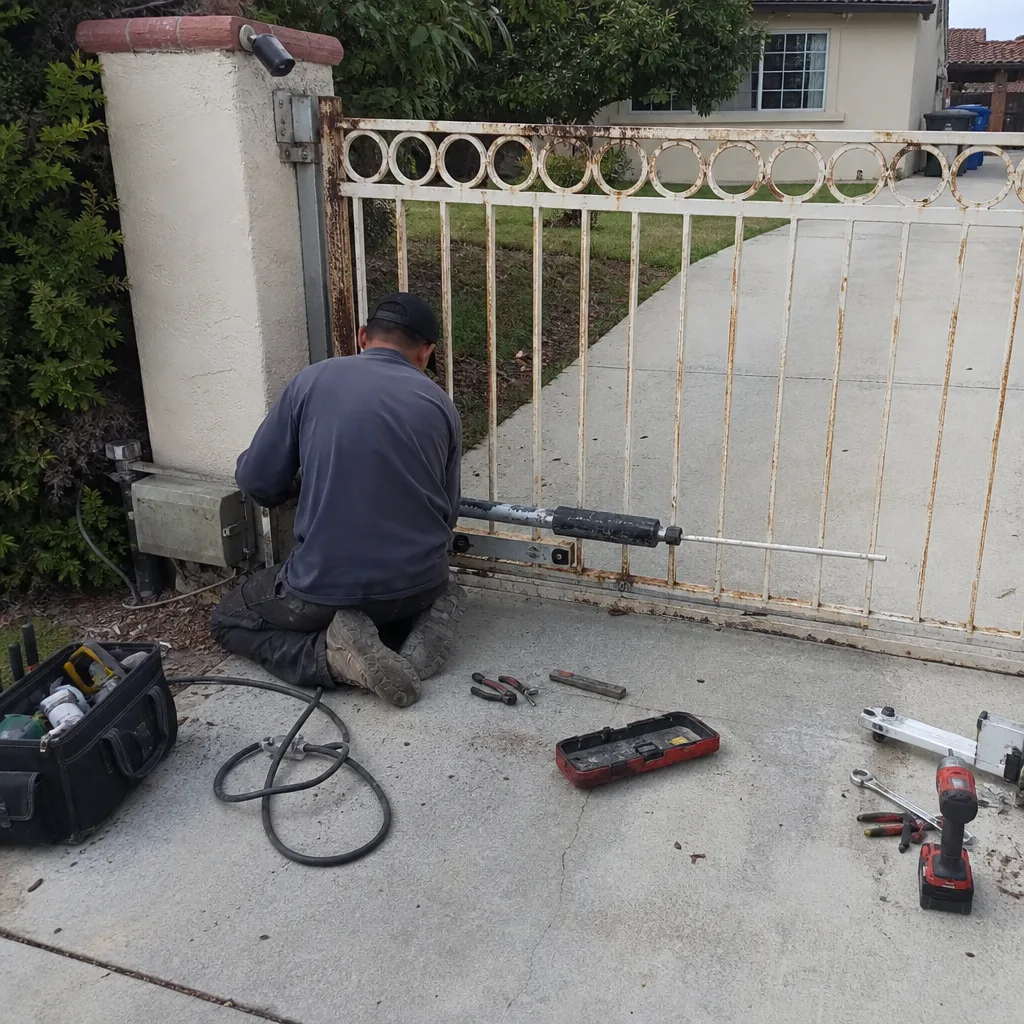 Before
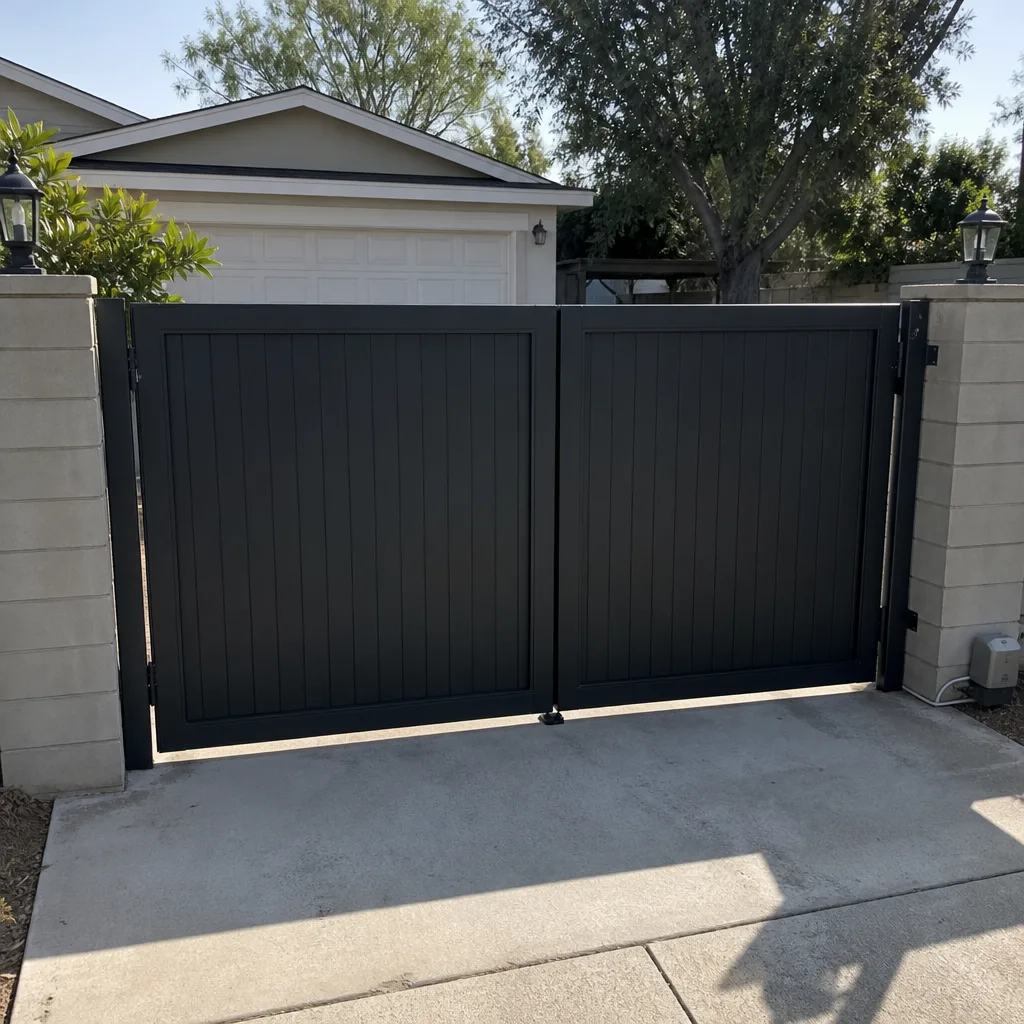 After
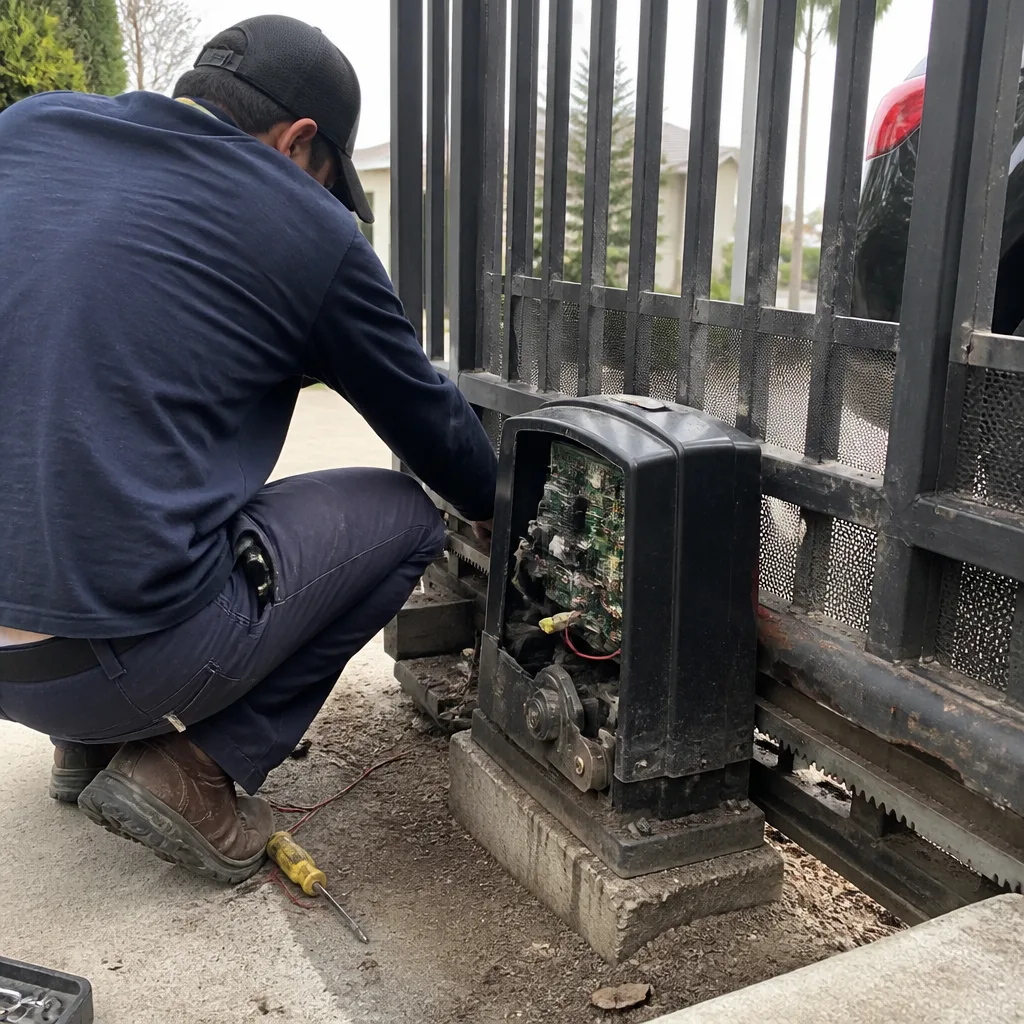 Before
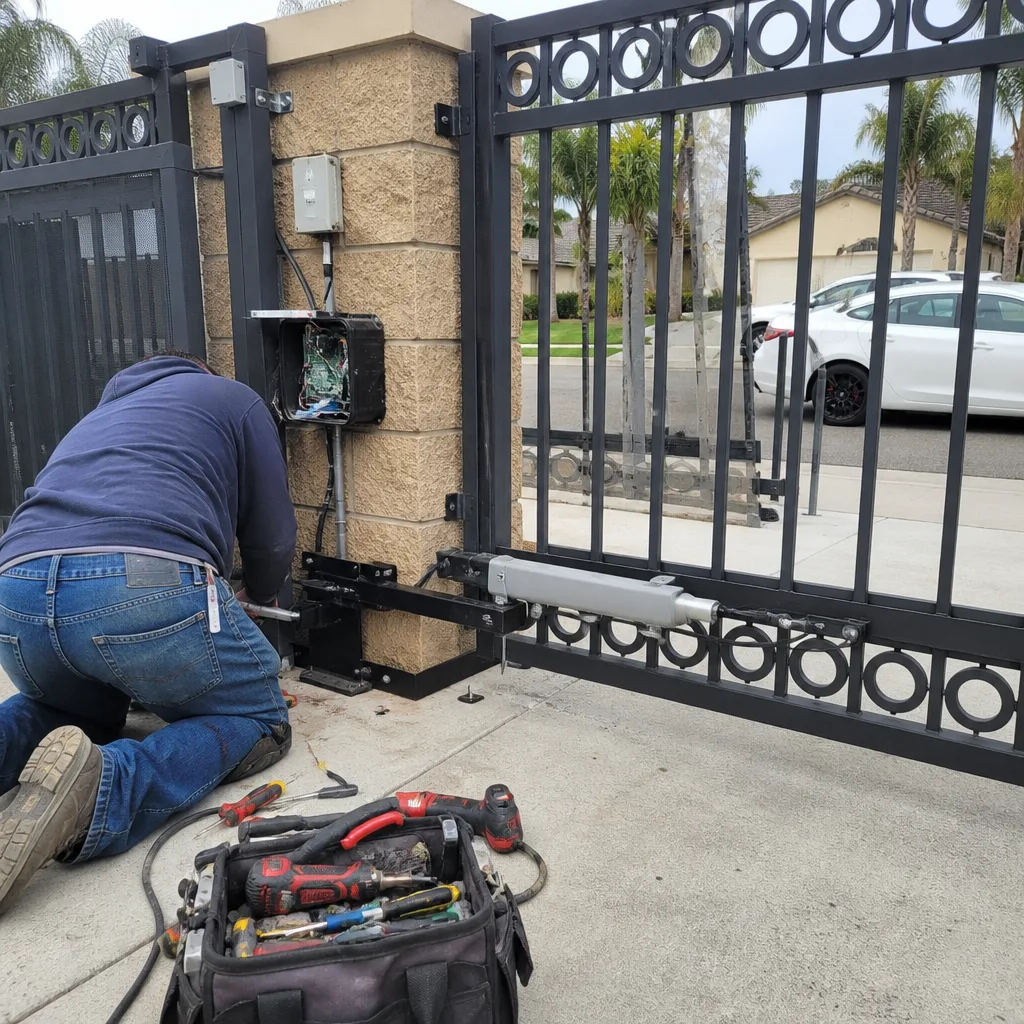 After
Frequently Asked Questions
Most gate repairs in Montclair fall between $150 and $800, depending on the failure. Simple fixes like battery replacements and photo eye realignment run $100 – $250, while control board replacements and structural repairs run $350 – $800. Full operator replacements start around $900. The price depends on the specific fault and brand.
Many gate repairs can be completed the same day, especially if we have the parts in stock for common brands like LiftMaster, Ghost Controls, and Linear. If a specific board or operator needs to be ordered, that may add a day or two. Give us a call and we’ll tell you honestly whether it’s a same-day fix.
A full gate installation includes site measurement, gate fabrication or sourcing, post setting, gate mounting and alignment, operator installation (if electric), safety device setup, and final testing. The price is quoted before any work begins, and the same specialist handles the project from start to finish. See our Gate Installation in Sky Valley page for a more detailed breakdown of what to expect.
Yes. We service solar-powered operators from Ghost Controls, LiftMaster, and other brands, and we frequently diagnose solar panel voltage drift and battery charging failures on off-grid gate systems in Montclair’s high-UV climate.
First, check for an obvious obstruction in the gate’s path and make sure the photo eyes are clean and aligned. If the gate still won’t close, disengage the operator and close the gate manually if possible, then call for a diagnostic. A stuck-open gate is a security gap, and leaving it open overnight is a bigger risk than the repair cost.
Yes. We service commercial gate systems, including FAAC and DoorKing operators, safety loops, and high-use gate hardware. Commercial gates fail differently than residential ones because the cycle count is much higher, so we approach those diagnostics with that in mind. Our Electric Gate Repair in Sky Valley page has more detail, and you can also look at Gate Repair in Sky Valley for a broader overview of the residential side.
The Bottom Line
Gate repair in Montclair is a diagnosis problem more than it is a parts problem. The climate here creates specific failure modes: UV-cracked components, solar panel drift, thermal expansion on aluminum, and dust intrusion in motor housings. Knowing which one you’re dealing with is the difference between a $40 fix and a $1,200 replacement. The homeowners who get this right call before the gate fails completely, insist on a diagnostic process rather than a quick quote, and match the repair to the actual cause instead of the visible symptom (see more guides & resources). That’s how you pay once, not twice.
Written by the team at Montclair Gate Repair, serving Montclair since 2013.