
Last updated October 30, 2026
 Wrought iron
 Wood & steel frame
 Farm & ranch
 Sliding driveway gates
 LiftMaster operators
Free on-site gate assessment - hinges, posts, and your LiftMaster or Nice gate operator checked before anything is quoted
The assessment is free and the quote is the invoice.
Get your free estimateSeasonal Gate Repair Care for Montclair: Year-Round Homeowner’s Guide
Most seasonal gate maintenance guides follow a tidy four-season script written for places with snow and ice. Montclair doesn’t work that way. What actually kills gates here is a brutal summer heat cycle that bakes control boards for months, followed by a fall thermal shock when temperatures finally drop 30 degrees overnight. Then there’s the dust: fine, persistent, high-desert dust that finds its way into every enclosure, relay, and hinge pin. This guide is built around what we see on the ground in Montclair: the wind season that loosens hardware, the September control-board failures that catch homeowners completely off guard, and the winter idle problem that leaves gates stuck shut right when you need them. You’ll learn what to check each season, what you can safely inspect yourself, and when our Gate Repair services can save you thousands over ignoring a small fault.
Styles & brands we work with
Quick Answer
Seasonal gate care in Montclair means adapting your maintenance to a desert-edge climate, not a generic national calendar. The two biggest local threats are heat stress on control boards during summer and dust ingress year-round, with a peak failure window in September when temperatures swing sharply overnight. A twice-yearly inspection (spring and fall) plus a few summer heat-management habits will prevent the majority of gate failures we see across Montclair.
Table of Contents
- Spring: Post-Wind-Season Inspection
- Summer: Heat Mitigation for Control Boards and Batteries
- Fall: The Thermal-Cycling Risk Window
- Winter: Low-Frequency Use Problems
- Year-Round: Dust Ingress Management
- The Right Way to Lubricate Gate Hardware in a Desert Climate
- Safety Checks Every Homeowner Should Do Quarterly
- Common Mistakes to Avoid
- When to Call a Professional
- Frequently Asked Questions
- The Bottom Line
Spring: Post-Wind-Season Inspection
Montclair sees its strongest winds between December and March, and those gusts do real damage to gate hardware. What we find on spring inspections is predictable: hinge pins that have worked themselves loose, rack teeth that have shifted slightly out of alignment, and mounting bolts that have backed out half a turn. None of these feel urgent on their own, but together they change how the gate moves, and that uneven movement accelerates wear on every other component.
If your gate runs on a chain-drive operator, wind season is when the chain stretches, especially on older systems. A chain that’s developed slack will slap the guide rail on windy days, and that vibration travels straight into the operator housing. The result is premature bearing wear inside the motor. For a rack-and-pinion system, the concern is alignment: wind pushes the gate leaf against the rack, and over a full season, that can knock the pinion out of true.
- Check hinge pins and mounting bolts with a wrench, not just your eyes. Grab each hinge and try to lift the gate slightly. Movement of even an eighth of an inch means the hinge bearing or mounting plate needs attention.
- Inspect the rack or chain for uneven wear. Run the gate once and listen for a change in pitch along the travel. A steady hum is healthy; a rhythmic clunk or scrape means something is binding.
- Look for paint chips and rust blooms at stress points. Paint chips around bolt heads are the earliest sign that a fastener is working loose. Touch them up before summer heat causes thermal expansion to speed the corrosion.
- Test the manual release. Every electric gate should be manually operable if the power fails. Pull the release and move the gate by hand. If it’s stiff or binds, the gate was already carrying too much resistance before the wind contributed to the problem.
Spring is also the time to reset the close and open limits. Winter temperature swings can cause the metal gate leaf to expand and contract enough that a limit setting that worked in November is slightly off by April. An operator that keeps pushing against the stop or fails to fully seat the latch is often a limit-adjustment issue, a quick fix that prevents motor strain all summer long. For Choosing the Right Gate Repair Brand: A Buyer’s Guide for Montclair, we service every brand this affects—from a simple Mighty Mule on a residential driveway to a heavy Elite operator on a commercial property—and the seasonal limit check is part of what keeps a system reliable.
Summer: Heat Mitigation for Control Boards and Batteries
Montclair regularly sees summer temperatures above 100 degrees, and that heat is the single biggest environmental stressor on automated gate equipment. Control boards are rated to operate within a specific temperature range, and when the inside of a metal enclosure approaches 140 to 150 degrees on a full-sun afternoon, capacitors begin to degrade. What surprises homeowners is that the failure rarely happens on the hottest day. The damage accumulates quietly through July and August, then the board fails in September or October when the thermal cycling pulls a weakened component past its limit.
If your operator enclosure faces south or west in Montclair, it’s absorbing direct afternoon sun. The enclosure itself becomes an oven. There are practical steps that make a measurable difference:
- Shade is your first defense. A simple shade structure or even strategic landscaping that blocks afternoon sun from hitting the enclosure directly can reduce internal temperatures by 20 to 30 degrees. Keep at least 18 inches of clearance around the enclosure for airflow.
- Check the enclosure’s internal fan or ventilation. Some operators use a small cooling fan or passive vents. Dust accumulation inside the enclosure blocks those vents, which compounds the heat problem. More on that in the dust section below.
- Test the battery backup in June, not in July. Battery chemistry degrades faster in heat. A 12-volt backup battery that’s marginal in June will be dead by August. Test the battery under load, not just with a multimeter, because a battery can show full voltage while having no capacity left under load.
- Don’t ignore exposed conduits and wire runs. UV degradation of wire insulation accelerates in high-heat environments. Check any wire runs visible outside the enclosure for cracking or stiffening.
For operators with solar charging, summer is when the panels are doing real work, but it’s also when the charging circuitry is under maximum thermal stress. If you run a Ghost Controls or Mighty Mule solar setup, make sure the charge controller has clean terminals and a solid connection. Loose or corroded terminals create resistance, which creates local heating, which compounds the ambient heat problem. It’s the kind of small fault that a professional inspection catches before it burns a charge controller.
One more Montclair-specific note: if your gate faces the Santa Ana wind corridor, you get the double effect of heat and wind-driven dust in the same months. That combination is particularly hard on relays and contactors. We trace faults in boards, loops, motors, and wiring at the component level, and in our experience, a relay that’s gummed with dust and baked by heat accounts for a large share of mid-summer “dead gate” calls.
Fall: The Thermal-Cycling Risk Window
September through November is the highest-failure window for gate control boards in the Inland Empire, and it’s not because of heat alone. What kills boards in the fall is the thermal cycling: months of sustained high temperatures followed by nights that drop 30 degrees or more. Materials expand and contract at different rates. Solder joints that developed micro-cracks during the summer finally open. Capacitors that were already marginal under heat simply fail when the first real temperature swing hits.
The frustrating part for homeowners is that this failure often looks random. The gate worked fine in August, then one morning in October it’s dead. It wasn’t random. The board was already failing quietly.
Here’s how to inspect your control board for the early signs of thermal-cycling damage:
- Look for bulging capacitors. On most control boards, capacitors are the cylindrical components standing upright. The top of a healthy capacitor is flat. If it’s rounded or domed, or if there’s a brownish crust around the base, that component is failing.
- Sniff for an acrid, burnt smell. A faint electrical smell around the enclosure is often the first sign of a component that’s been running hot. Don’t confuse this with the normal warm smell of a working transformer.
- Look for discoloration on the board. Any area that’s turned brown or yellow around a component indicates heat stress. This is especially common around relay sockets and power resistors.
- Check for tight or corroded terminal connections. Thermal cycling causes wire terminals to loosen over time. A loose terminal creates resistance, and resistance creates heat. The compounding effect drains the life out of board components.
For LiftMaster and DoorKing systems specifically, we check the power supply section first during fall inspections. Both brands use relays that are susceptible to contact pitting, and years of cycling in a hot environment build up carbon on the contacts. When the first real cold snap arrives, a pitted relay may fail to engage entirely. Replacing a relay is a straightforward repair for a technician; replacing a whole operator because the relay failure cascaded into a board failure is far more expensive.
A fall inspection in Montclair is the single best investment you can make in gate reliability; see The Complete Gate Repair Guide for Montclair Homeowners for the full seasonal breakdown. This is when we catch the board that’s about to fail but hasn’t yet. For most homeowners, a fall tune-up runs less than the cost of an emergency board replacement, and it means you’re not the one standing outside your driveway at 7 a.m. on a November morning.
Winter: Low-Frequency Use Problems
Winter in Montclair is mild by most standards, but it brings a specific problem to gate systems: inactivity. Homeowners travel for the holidays. Gate use drops. Operators sit idle for weeks. And then they’re asked to perform on demand, and that’s when a system that seemed healthy in October reveals a latent failure.
There are a few mechanisms at work here. First, lubrication settles. Grease that was evenly distributed through the hinge bearings during regular use settles and stiffens in cold weather. The gate, which moved freely in September, now needs significantly more force to start moving. Second, batteries lose capacity in cooler temperatures. A backup battery that held a full charge in September may deliver only 70 percent of its rated capacity on a 40-degree December morning. Third, contacts develop light corrosion. When a system runs daily, the small amount of arcing at relay contacts burns off that corrosion. When it sits idle, the film builds up, and the first activation after weeks of rest can fail.
- Run the gate a full open-close cycle at least once a week, even when you’re home. This keeps lubrication distributed, prevents contact film from building up, and gives the battery a small discharge-recharge cycle that keeps it healthy.
- Check the battery voltage in late November. If you’re planning to travel, do this before you leave, not after you return to a dead gate.
- Test the manual release in cold weather. A gate that’s been sitting for three weeks may be stiff. You want to know that you can still move it by hand if the operator fails.
- Listen for a slow, labored start on the first cycle after a period of inactivity. A healthy operator starts the gate smoothly. If it hesitates, groans, or trips a limit before the gate moves, that’s a sign of increased mechanical resistance.
Commercial clients in Montclair have a different winter pattern. Multi-tenant properties see consistent daily use, but the traffic is bunched at morning and evening. That stop-and-go pattern is harder on operators than continuous cycling. We recommend quarterly preventive maintenance for any commercial gate in the Montclair area, timed so one of the visits falls in early winter. For residential owners, the spring and fall visits match the local climate risk profile.
If you own a Viking or Linear operator, pay extra attention to the start capacitor during winter months. Both brands use start capacitors that are sensitive to cold-weather voltage sag. A brownout on a winter morning, combined with a cold-soaked capacitor, leads to a motor that hums but doesn’t turn. This is a common call we handle for electric gate repair in Sky Valley and surrounding Inland Empire communities, for the same seasonal reason.
Year-Round: Dust Ingress Management
Everyone thinks of dust as a desert problem, but Montclair sits in a transition zone where the air carries fine particulate from the high desert on Santa Ana wind days. This dust is the enemy of every moving component and every electrical contact in a gate system. It’s fine enough to get past enclosure seals, abrasive enough to wear hinge pins, and it carries salts that accelerate corrosion.
The highest-priority dust control point is the operator enclosure. Every enclosure has a seam, a gasket, or a cable entry point. Over years, those seals degrade, and dust finds its way inside. Once inside, it settles on the control board. Dust acts as an insulator, trapping heat against components. It also attracts moisture, which is the real killer: a humid evening in Montclair can turn a dusty board into a conductive, corroded mess.
- Inspect the enclosure gasket twice a year. If the gasket is cracked, compressed, or missing, replace it. A $15 gasket prevents hundreds of dollars in board damage.
- Check cable entry points. Anywhere a wire enters the enclosure, the penetration should be sealed. Foam sealant or rubber grommets are standard; deteriorated foam acts as a sponge, absorbing moisture and funneling it inside.
- Use compressed air on the control board at least annually. A can of electronics duster, with power off and the enclosure open, removes the fine dust that builds up on components. Do this in spring, before the summer heat hits.
- Wipe down hinge pins and pivot points monthly during peak dust season. A clean rag removes the abrasive particulate before it gets worked deeper into the bearing surface by the gate’s movement.
Dust is also why we don’t recommend heavy grease on gate hinges in this climate. Grease captures dust, turns into grinding paste, and accelerates wear. The right approach is a lighter lubricant applied more often, which gets to the point in the lubrication section below.
For properties near the railroad corridor or the industrial zones in the western parts of the city, dust and vibration combine into a particularly aggressive environment. These properties benefit from quarterly enclosure inspections and, in some cases, upgraded enclosures with better sealing characteristics. A gate system from any manufacturer, from residential operators to commercial-grade units, benefits from keeping its electronics clean.
The Right Way to Lubricate Gate Hardware in a Desert Climate
Most gate lubrication advice doesn’t account for Montclair’s specific dust problem. If you apply a heavy marine grease to your hinge pins in this climate, you’re creating grinding paste within a month. The right approach here is a light lubricant, applied frequently, with a cleaning step that prevents accumulation.
What works: a dry-film lubricant or a light machine oil for hinge pins, pivot points, and slide tracks. Dry lubricants leave a film that doesn’t attract dust the way grease does. For chain drives, a light chain-specific lubricant applied to the side of the chain, not the rollers, keeps the links moving without building up a dust-grabbing coating. For rack-and-pinion systems, a light grease on the rack teeth, applied sparingly and wiped down, balances wear protection against dust accumulation.
What to avoid: heavy greases, WD-40 as a hinge lubricant (it’s a solvent, not a lubricant), and spray lubricants that overspray onto the enclosure or into sensing edges. Lubricant on a safety edge or photo eye sensor is a reliability problem: it collects dust and blocks the beam, which can cause either false trigger events or a failure to reverse when it should.
- Clean first. Wipe each hinge and pivot clean with a dry rag. If you’re doing this in summer or fall, you’ll be surprised how much fine dust comes off.
- Apply light lubricant to the hinge pin, not the face of the hinge. Use just enough to wet the surface, then work the gate through one full cycle.
- Wipe away excess. Any lubricant visible on the hinge face is lubricant that will collect dust. A clean, light film is the goal.
- Lubricate the wheels or rollers if your gate runs on a track. These are the components that bind most often when lubricant breaks down. A light oil on the roller bearings keeps them spinning freely on cold mornings.
For any gate installation we handle in the Sky Valley area, we set up the lubrication schedule based on the property’s specific dust exposure. A residential driveway gate tucked behind a block wall has different needs than a commercial gate exposed to open, windy ground. The physics are the same, but the practical service interval changes.
Safety Checks Every Homeowner Should Do Quarterly
Automated gates are powerful machines. A typical residential operator can move a 300-pound gate leaf with enough force to crush or restrain a person or pet. Every homeowner should do basic safety checks on a quarterly schedule, not annually. Here’s what to look for:
- Test the automatic reverse. Place a rolled-up blanket or similar soft, bulky object in the gate’s path, then close the gate. The gate should stop and reverse on contact. If it doesn’t, that’s a safety failure that needs immediate attention.
- Check the photo eye sensors. Photo eyes should be clean, aligned, and mounted between 4 and 8 inches above the ground. Break the beam with your hand and close the gate; it should refuse to close or reverse if already moving. A misaligned sensor that no longer triggers is a false sense of security.
- Walk the full length of the gate. Look at every hinge, every bolt, every weld. Check for any component that has sharp edges, exposed wiring, or signs of metal fatigue. Gates that develop cracks at weld points become unpredictable under load.
- Verify the manual release works. Every electric gate should be out of service until the manual release is confirmed functional. In an emergency, a first responder needs to be able to open the gate by hand.
- Look for exposed wiring. Any wire visible along the gate frame, the fence line, or near the operator should be in conduit. Exposed wires get chewed by animals, nicked by landscape equipment, and shorted by weather.
These checks take 15 minutes and they catch problems while they’re small; find more guides & resources on our blog. We emphasize this because we’ve seen the consequences of skipped safety inspections, not just in terms of equipment failure but in terms of avoidable injuries. A gate system is a piece of machinery, and like any machine, it requires that the person responsible for it understand the basics of safe operation.
For commercial properties in Montclair, safety checks move from recommended to required by insurance and code enforcement. If you operate a multi-unit property with an automated gate, the quarterly walk-through should be documented. A simple log with date, time, and observations is sufficient. It protects you from liability and catches mechanical problems before they take the gate out of service.
Common Mistakes to Avoid
- Ignoring a slow or jerky gate because it still works. A gate that moves unevenly is telling you something specific: a hinge is failing, a motor bearing is wearing, or a chain is stretching. Ignore it, and the component that eventually costs $900 to replace could have been fixed for $150 during a routine maintenance visit.
- Using household lubricants on gate hardware. WD-40 and similar sprays are solvents with a light oil carrier. They strip away existing lubrication and leave the surface more exposed, not less. Use a purpose-made dry-film or light machine lubricant.
- Waiting until a board fails to replace capacitors. A bulging capacitor isn’t a “sometime this year” problem. It’s a clock ticking. Replacing a capacitor on an existing board often costs a fraction of a full board replacement.
- Adjusting limit switches without a multimeter. Limit adjustments feel like the kind of thing a homeowner can handle, and in many cases they can. But if you’re adjusting over and over to chase a persistent limit fault, the real issue is usually electrical: a failing relay, a weak transformer, or a marginal motor capacitor. Repeated limit adjustments don’t fix those; they just delay the proper repair.
- Ignoring the battery backup because the gate always has power. The battery is there for exactly one situation: the moment the power fails and you need the gate to work. If you never test it, you’re gambling on a component that may have been dead for two years. Test it quarterly under load.
- Sealing a control enclosure tightly without checking ventilation. Sealing against dust is good, but sealing against ventilation causes heat buildup that kills boards faster than dust does. There’s a balance: sealed where needed, ventilated where required.
- Skipping the fall inspection because the gate worked all summer. September and October are the highest-failure months in this region for a reason. A fall inspection is the cheapest insurance you’ll buy on your gate system all year.
When to Call a Professional
Most of what’s in this guide is within reach of a careful homeowner. But there are clear lines where you should stop and call someone who works on gate systems every day. If you see a bulging or leaking capacitor on the control board, stop and call. If the board shows scorch marks or you smell burning plastic inside the enclosure, stop and call. If the gate has become difficult to move manually, that’s a mechanical problem that’s likely compounding, and forcing it open does more damage. If your gate fails safety tests (no reverse, non-functional photo eyes, or a manual release that doesn’t work), treat that as a same-day service issue.
For Montclair homeowners, the calculation is simple: a diagnostic visit costs far less than replacing a board that fails because a $20 capacitor wasn’t caught in time. Montclair Gate Repair offers free estimates in Montclair. Call (866) 371-3309 to schedule a seasonal inspection or to have us trace a fault on your existing operator. Our technicians work on LiftMaster, DoorKing, FAAC, BFT, Linear, Viking, Ghost Controls, Elite, and Mighty Mule equipment, from a simple residential swing gate to a full commercial automation system. Nine brands, one call.
Frequently Asked Questions
A seasonal inspection and tune-up in Montclair typically runs between $150 and $300 depending on the size and complexity of your system, and that price is quoted and agreed before any work begins. The exact cost depends on whether you have a single residential swing gate or a commercial system with multiple operators and safety devices. Call (866) 371-3309 for a free estimate specific to your gate.
Twice a year is the right service interval for most homes in this region: once in spring, after wind season, and once in fall, before the thermal-cycling risk window. Commercial properties and gates in high-dust areas like the western industrial zones of Montclair should be serviced quarterly.
That failure pattern is thermal cycling. Months of sustained heat degrade capacitors and other heat-sensitive components quietly, then the first significant overnight temperature drop causes the weakened component to fail. A fall inspection catches these problems before they strand you outside your driveway.
Control board replacement involves working with line voltage, so it deserves respect. If you’re comfortable with electrical work and have the schematic or manual for your operator, a board swap on a simple system is feasible for some homeowners. But boards for brands like DoorKing and LiftMaster are sensitive to incorrect wiring; a single misplaced wire can destroy the new board. We recommend professional installation for most homeowners, and we always quote the full cost upfront before any board replacement work begins.
There’s no single best brand, but there are brands that match well to this climate with proper installation and maintenance. LiftMaster and Elite operators with sealed enclosures handle dust well. DoorKing and Viking systems are widely used on commercial properties in the Inland Empire and hold up when maintained correctly. The right system depends on gate weight, cycle frequency, and your property’s specific dust and wind exposure. What matters more than the brand is that the installer knows how to seal, ventilate, and program the system for the local environment.
Dust is a real and measurable cause of gate failures in this region. It’s not the dust itself that kills systems; it’s the dust combined with heat and moisture. Dust coats control boards, traps heat against components, and attracts condensation that causes corrosion. The site’s answer is simple: professional gate repair in Sky Valley and Montclair catches dust problems early, and a twice-yearly cleaning of the enclosure interior is one of the most cost-effective preventive measures available.
The Bottom Line
Seasonal gate care in Montclair means adapting to a desert-edge climate that doesn’t follow the national four-season script. Spring is for post-wind-season inspection, catching loose hardware and resetting limits. Summer is about heat mitigation: shade the enclosure, test the battery, and keep dust off the board. Fall is the highest-risk window, and a pre-fall inspection catches thermal-cycling damage before the first cold snap turns a marginal board into a dead one. Winter is about keeping idle systems moving and testing the manual release. Year-round, dust management is a discipline, not a chore. If you’d rather not handle any of this yourself, Montclair Gate Repair handles the full scope: gate installation in Sky Valley, repairs on all nine major brands, and seasonal maintenance programs for residential and commercial properties. Call (866) 371-3309 for a free estimate.
Written by the team at Montclair Gate Repair, serving Montclair since 2013.
See the difference
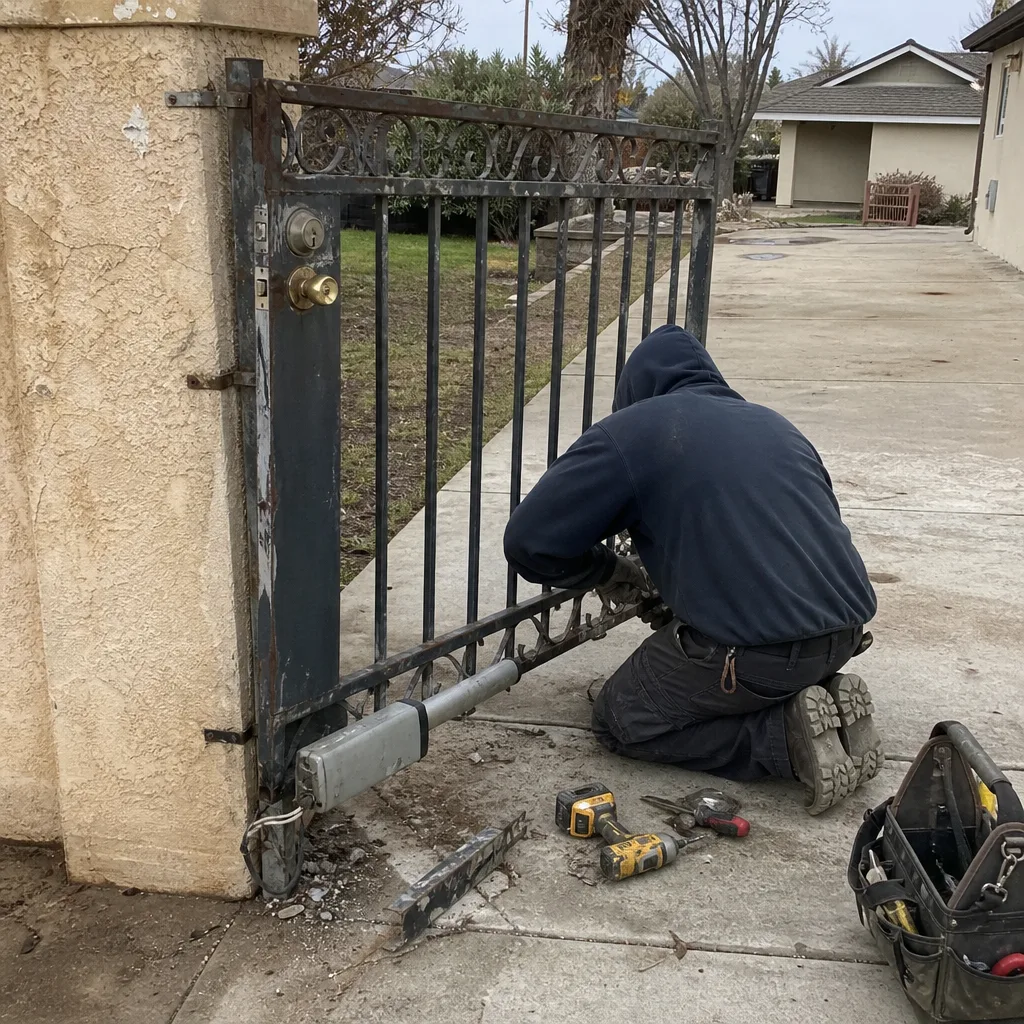 Before
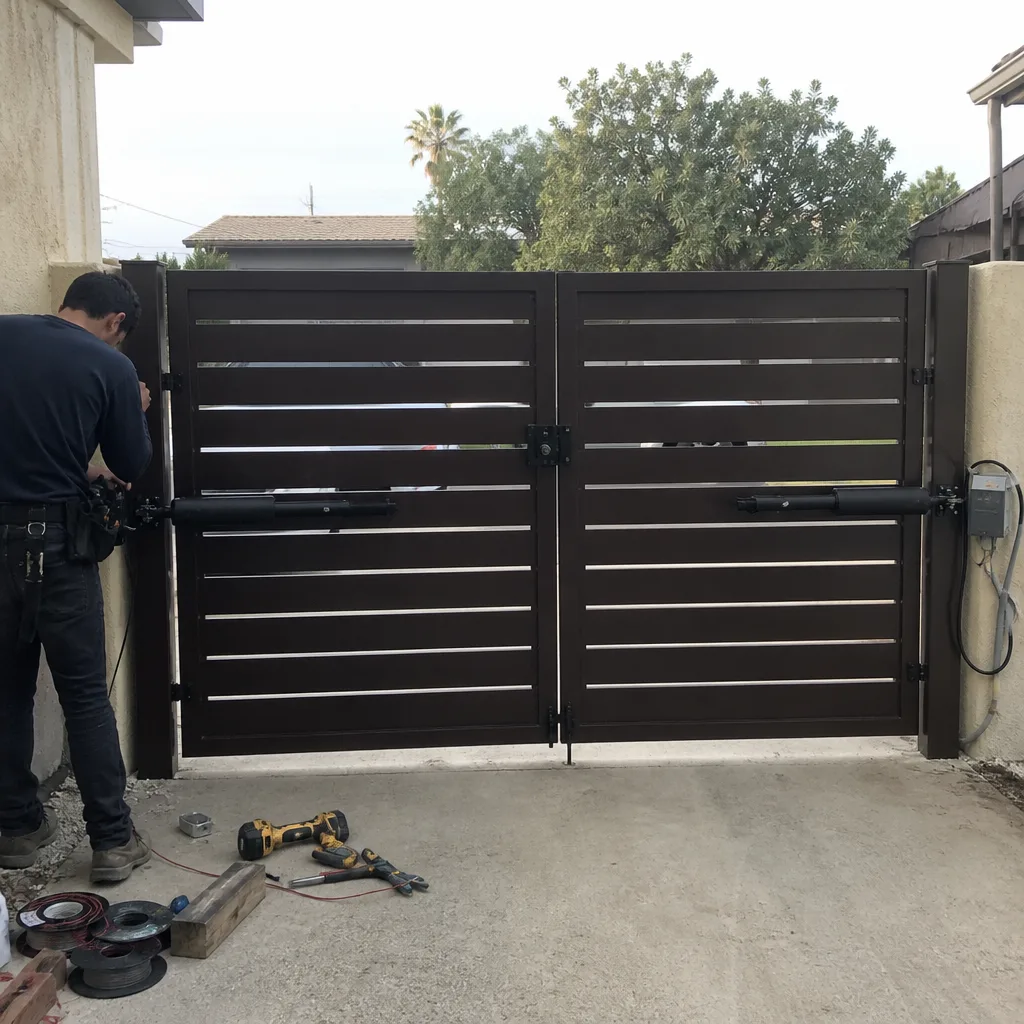 After
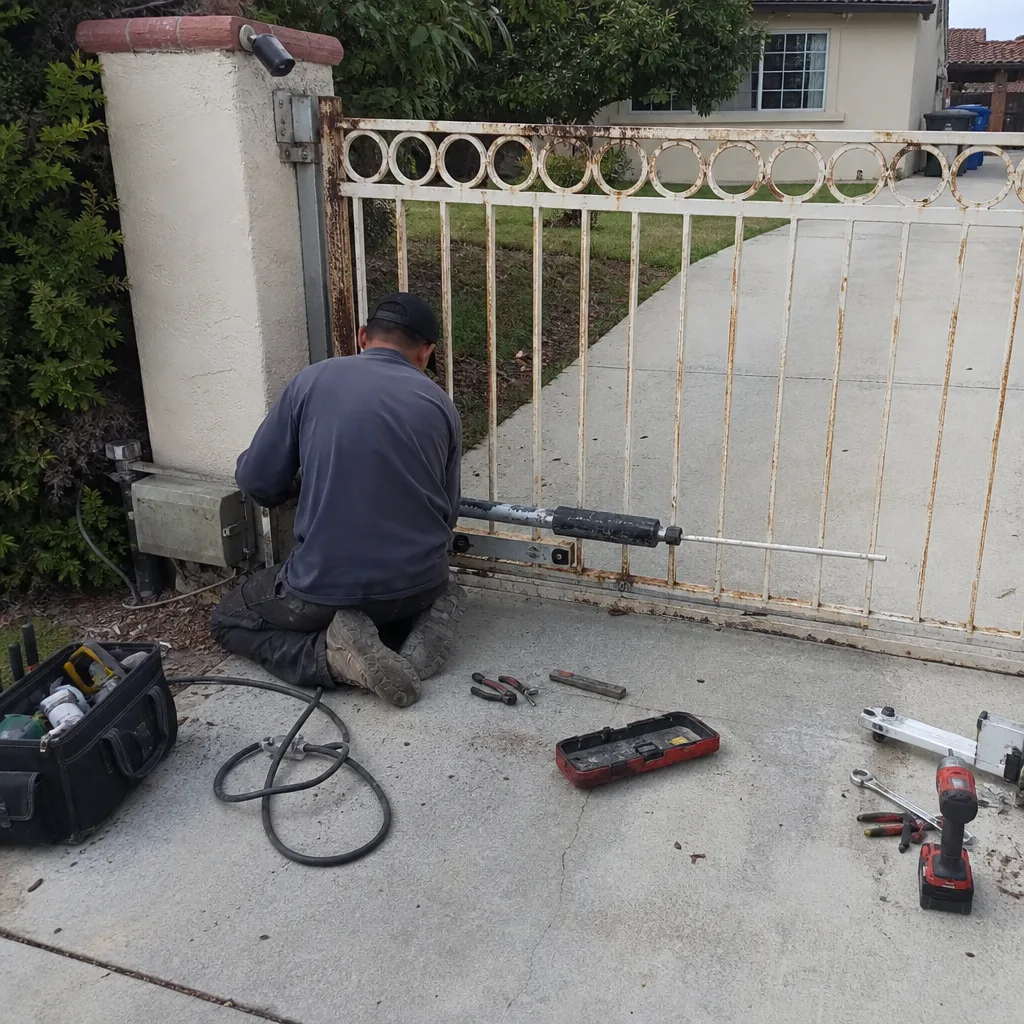 Before
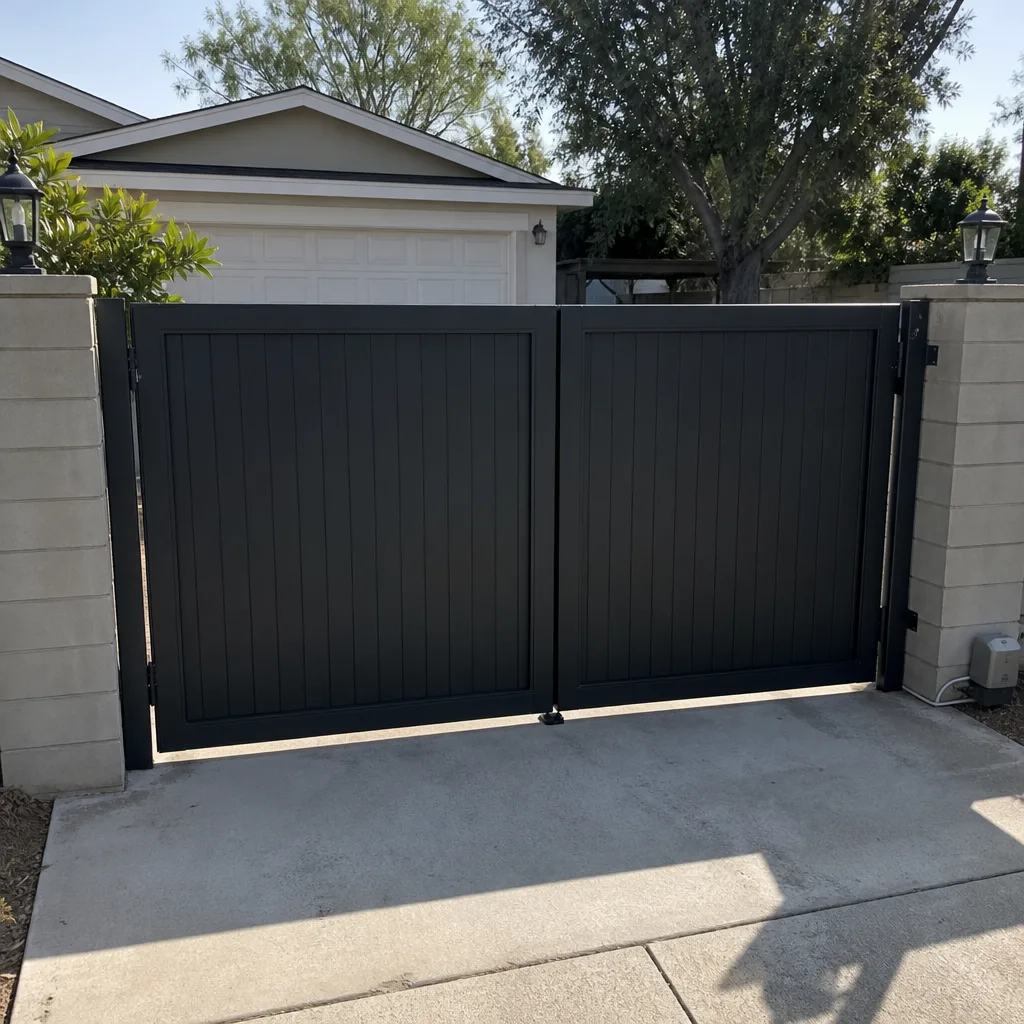 After
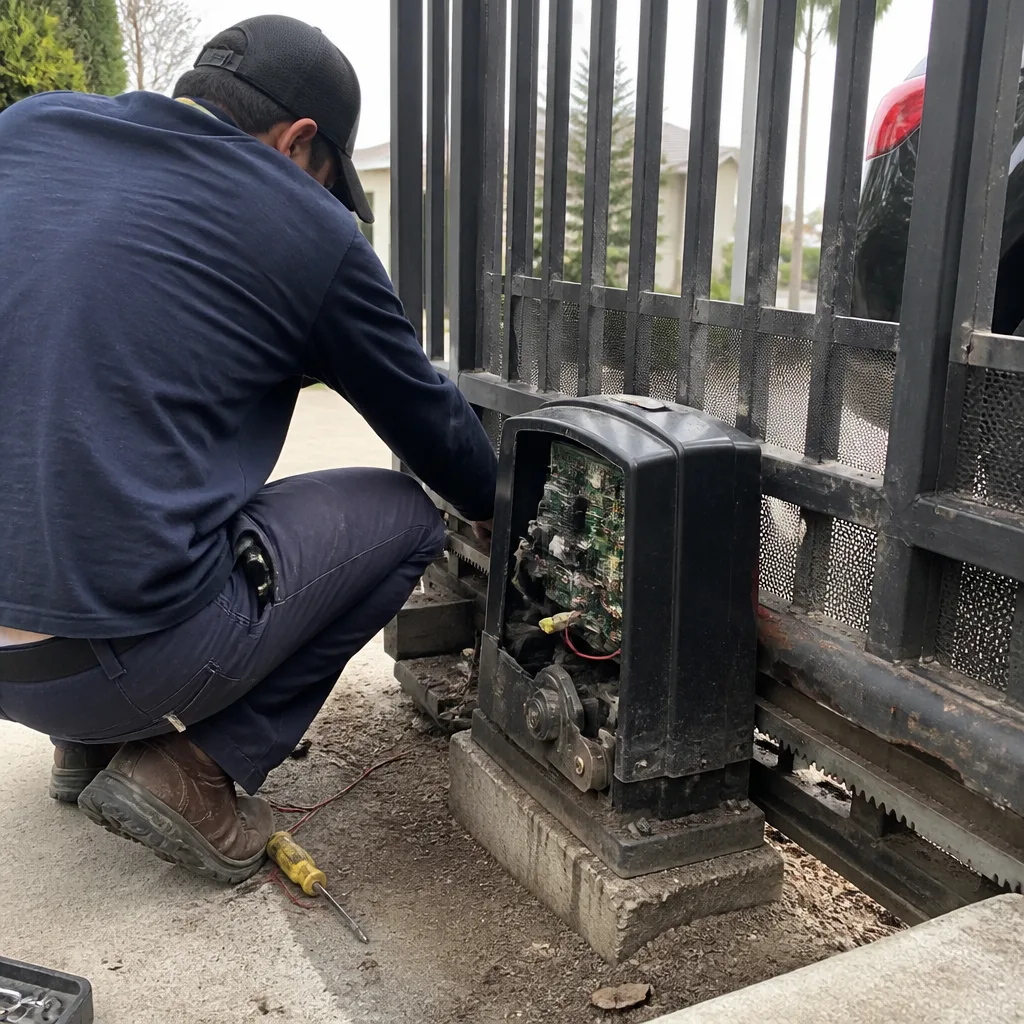 Before
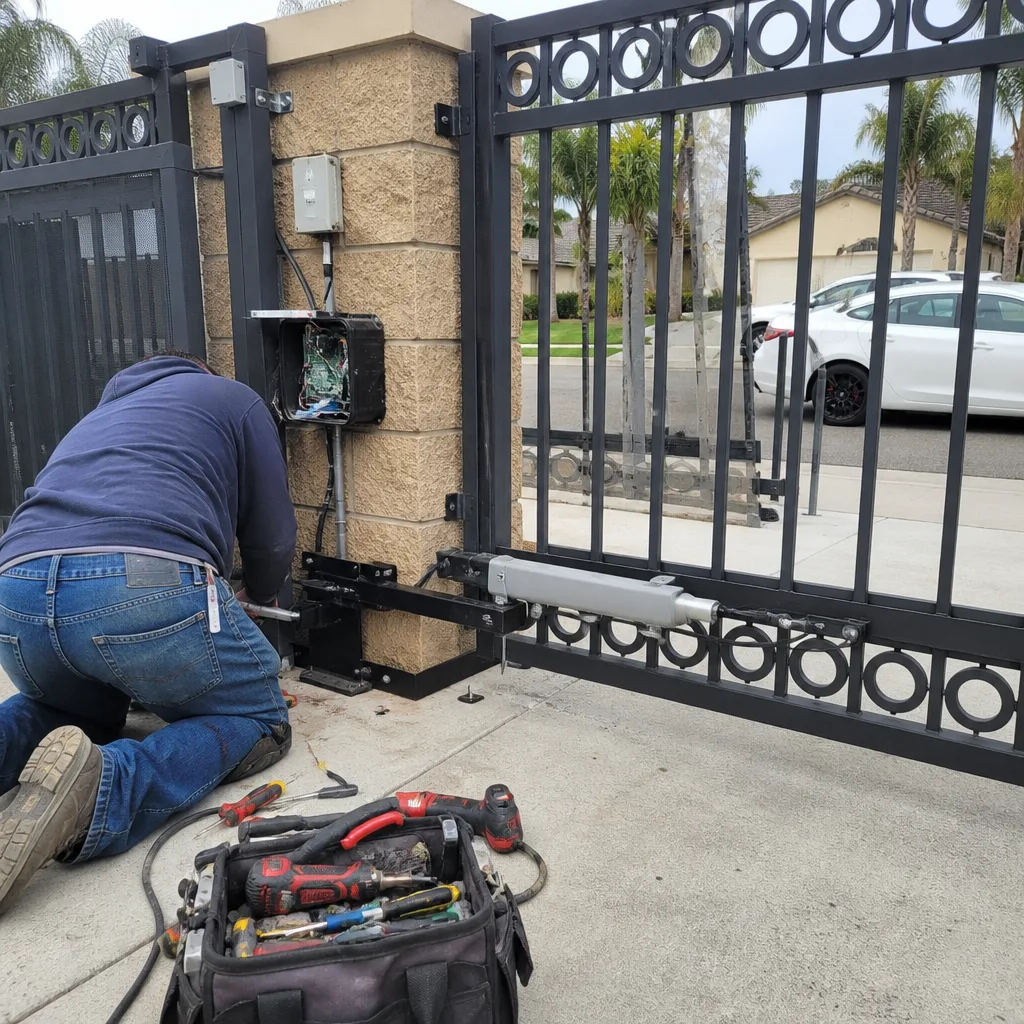 After