
Last updated October 30, 2026
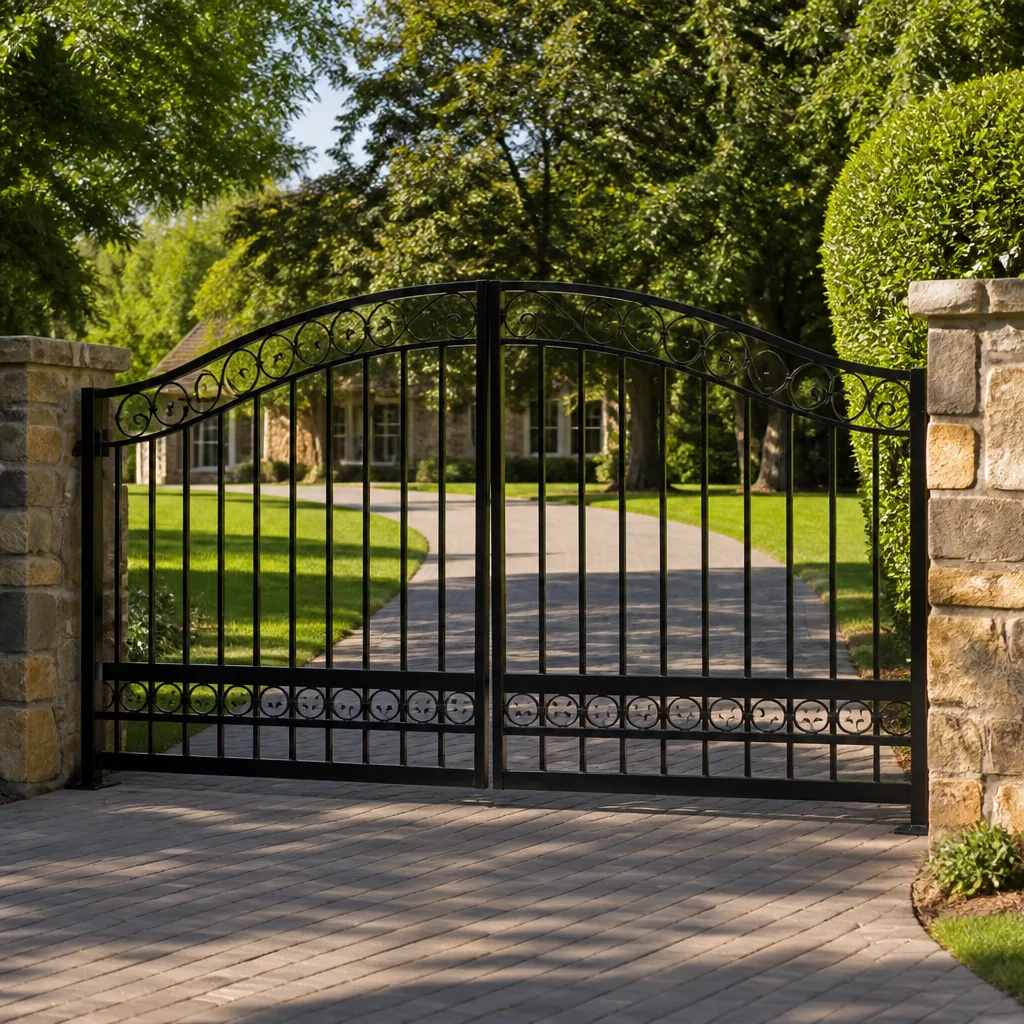 Wrought iron
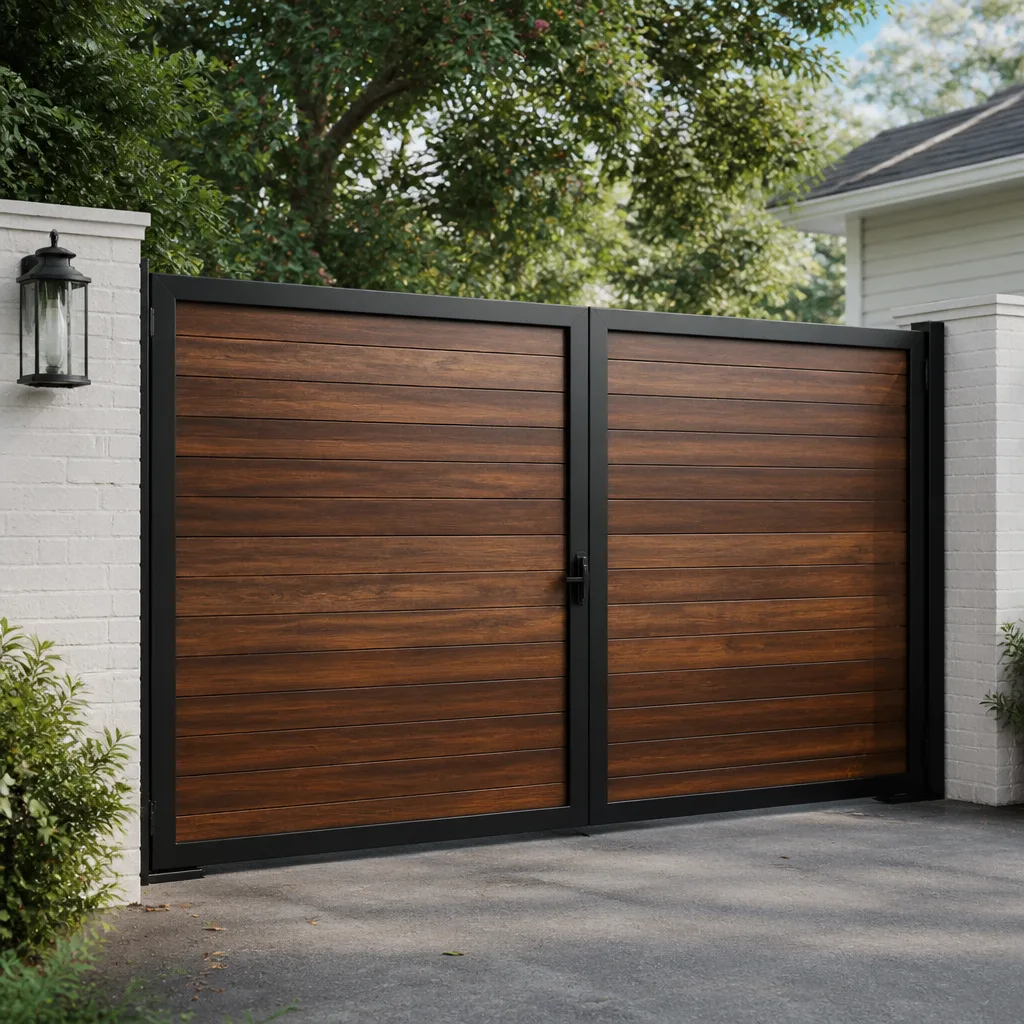 Wood & steel frame
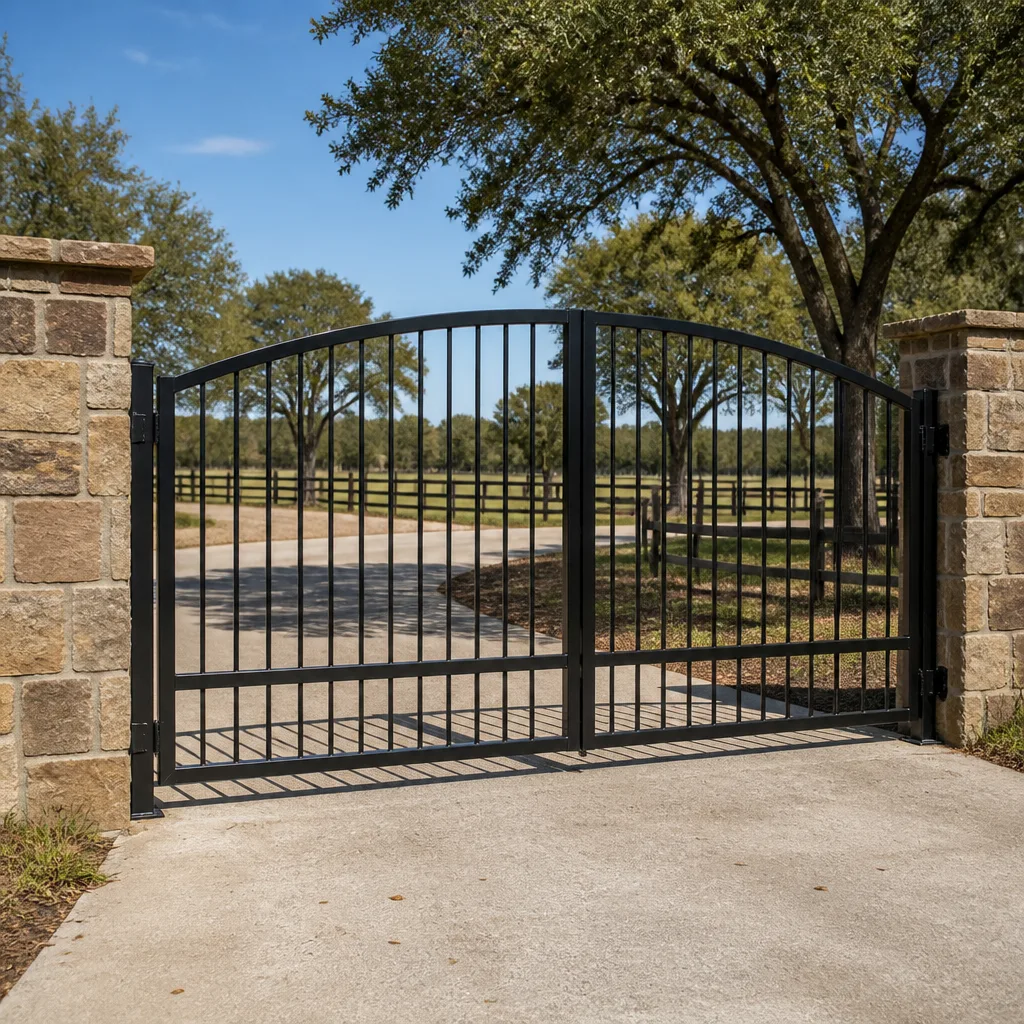 Farm & ranch
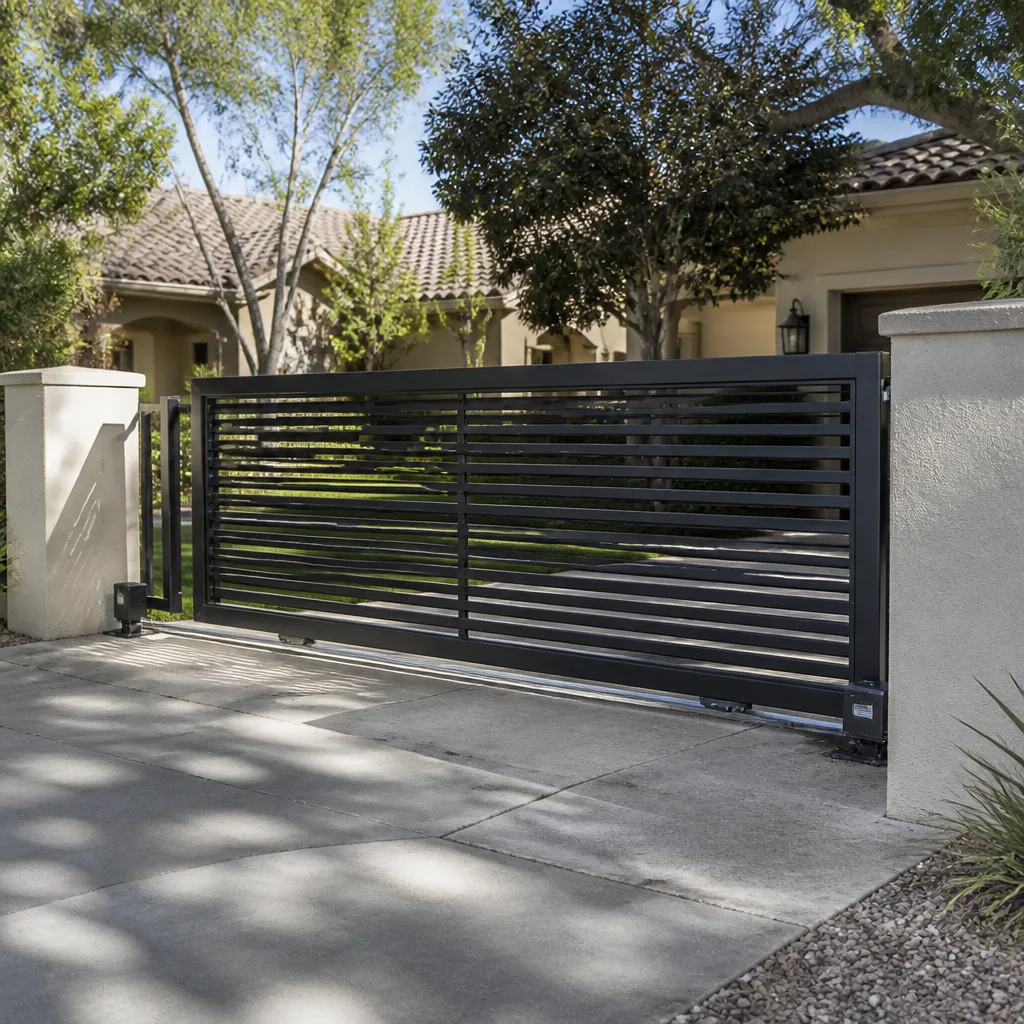 Sliding driveway gates
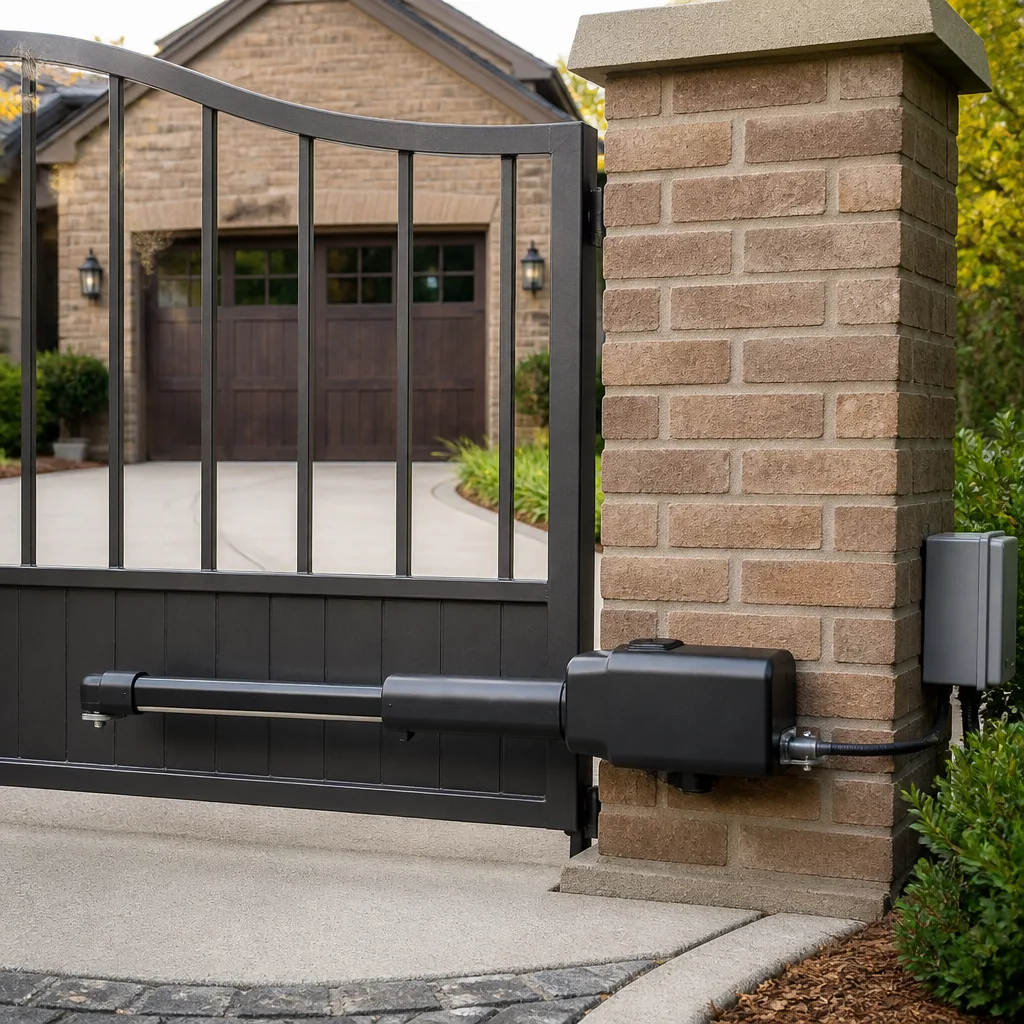 LiftMaster operators
Free on-site gate assessment - hinges, posts, and your LiftMaster or Nice gate operator checked before anything is quoted
The assessment is free and the quote is the invoice.
Get your free estimateGate Repair Cost Breakdown: The Montclair Homeowner’s Reference for 2026
The most expensive line item on many gate repair invoices isn’t the part you can see – it’s the emergency service premium charged because a warning sign that appeared three weeks earlier got ignored. A gate that groans, dips, or hesitates for half a second before latching is telling you something. By the time it stops opening entirely, the repair has usually escalated from a simple adjustment to a full component replacement. This guide and our Gate Repair Maintenance Checklist for Montclair Homeowners give Montclair homeowners a reference price by failure type – not by vague service category – so you can read a quote the way a technician does and know exactly what you’re paying for. We’ll break down actual 2026 cost ranges for limit switches, control boards, motors, hinges, post reconstruction, and loop detectors, plus how brand selection, labor variables, and quote structure affect the final number. If you’ve ever wondered why two contractors quoted $350 and $1,400 for what sounded like the same repair, you’ll have your answer by the end.
Styles & brands we work with
Quick Answer
Gate repair in Montclair typically costs $180 to $1,800 in 2026, but that range is meaningless without knowing the failure type. A limit switch replacement runs $150 to $350, a control board replacement runs $400 to $1,200 depending on brand, a motor replacement runs $600 to $2,500 installed, and full post reconstruction can exceed $3,000. The single biggest price variable isn’t the part cost – it’s whether the technician correctly diagnoses the failing component the first time.
Table of Contents
- How Montclair Gate Repair Pricing Actually Works
- Cost by Failure Type: 2026 Reference Ranges
- How Brand Affects Parts Cost
- Labor Rate Variables: Residential vs. Commercial
- How to Read a Gate Repair Quote Line by Line
- When a Repair Quote Is Really a Replacement Recommendation
- Common Mistakes to Avoid
- When to Call a Professional
- Frequently Asked Questions
- The Bottom Line
How Montclair Gate Repair Pricing Actually Works
Here’s the uncomfortable truth about gate repair quotes: “gate repair” is not a service with a standard price, the way an oil change or a tire rotation has a standard price. It’s an umbrella term covering roughly two dozen distinct failure modes, each with its own parts cost, labor hours, and diagnostic complexity. A gate that won’t open could be a $35 limit switch, a $700 control board, or a $2,200 operator that needs full replacement. Same symptom. Completely different invoice. That’s why we tell Montclair homeowners the same thing every time: get a quote that names the part, not just the symptom, and check more guides & resources to stay informed. “Gate not opening – repair” tells you nothing. “Replace left-limit switch on LiftMaster LA500, adjust close travel, test safety loop” tells you everything.
Montclair’s climate plays a role here too. We’re inland enough to get real summer heat – 95°F plus on a regular basis – and that heat accelerates capacitor failure in older operators and weakens plastic gear components faster than coastal temperatures would. If you live near the Claremont border or up in the hills above Arrow Highway, your gate hardware is working harder than the same equipment would in a cooler microclimate. That’s not a sales pitch; it’s material science. Heat is the enemy of electrolytic capacitors, and electrolytic capacitors are the first thing to fail on a control board that’s been baking in a metal enclosure since 2016.
The other pricing variable specific to Montclair is access. A driveway gate on a flat lot off Central Avenue is a 45-minute job. The same gate at the bottom of a steep slope with a narrow curb cut and a retaining wall on one side adds time for equipment positioning, sometimes requiring two technicians where one would normally do. Labor isn’t marked up – it’s just slower when the site fights you. Good contractors don’t hide this in the quote; they show labor as line items with hours attached.
Cost by Failure Type: 2026 Reference Ranges
These are the numbers we use when we estimate work in Montclair, based on current parts pricing and local labor rates. They’re reference ranges, not bids – your gate, your operator, and your specific failure will land somewhere on or near these bands. What matters is that you can now recognize whether a quote is in the right universe for the component that’s actually failed.
| Repair Type | Parts Range | Labor Range | Typical Total (2026) |
|---|---|---|---|
| Limit switch replacement | $35 – $120 | $115 – $230 | $150 – $350 |
| Hinge or bracket replacement | $40 – $180 (per hinge) | $130 – $300 | $170 – $480 per hinge |
| Safety loop detector repair | $80 – $250 | $140 – $320 | $220 – $570 |
| Capacitor replacement | $25 – $90 | $100 – $200 | $125 – $290 |
| Control board replacement | $250 – $950 (brand-dependent) | $150 – $350 | $400 – $1,300 |
| Motor replacement | $350 – $1,600 | $250 – $900 | $600 – $2,500 |
| Full operator replacement | $900 – $3,200 | $350 – $800 | $1,250 – $4,000 |
| Post reconstruction (single post) | $180 – $400 (materials) | $500 – $1,200 | $680 – $1,600 |
| Full gate realignment | $0 – $50 (shims, hardware) | $180 – $500 | $180 – $550 |
Three of these deserve extra context, because they’re the ones Montclair homeowners encounter most:
Limit switches: the $35 problem disguised as a $700 problem
Limit switches tell your operator when to stop. When one fails, the gate typically slams into the post, stops short of full travel, or reverses mid-cycle. It’s a cheap part and a straightforward swap. But because the symptom resembles what happens when a board fails or a motor loses position memory, an inexperienced tech can misdiagnose it. We trace the fault – board, loop, motor, or wiring – before replacing anything. That discipline is what separates a $200 limit switch repair from an unnecessary $900 board replacement. Every Montclair homeowner with an automated gate should know what a limit switch is and what it costs, because it’s the most common repair and the most commonly misquoted.
Control boards: the brand tax is real
A control board is the brain of the operator. When it fails, the gate is dead – no response, no hum, no movement. Board replacement parts range from about $250 for a residential-grade Linear or Mighty Mule board up to $950 or more for a commercial FAAC or BFT board with integrated loop detection and multi-device communication. The labor on top is relatively modest – $150 to $350 – because the physical swap is quick. The diagnostic work before the swap is where experience matters. A tech who replaces a board without verifying input voltage, checking for a shorted accessory, or testing the safety loop is setting you up for a second board failure in six months.
Motor replacement: when labor becomes the big number
Motors can usually be rebuilt or replaced independently of the operator chassis, which saves money versus a full operator swap. But the labor range here is wide – $250 to $900 – because motor replacement often means pulling the entire operator off its mount, disassembling the gear assembly, and getting the torque specs right on reassembly. On a Viking or Elite commercial swing gate operator, that’s not a 20-minute job. It’s a half-day visit that requires knowing the torque values for that specific gearbox, not just “tight enough.” Montclair’s heat also means some older residential operators with plastic gear housings have warped parts around the motor mount, which adds time for realignment.
How Brand Affects Parts Cost
Here’s a pair of numbers that explain more than a thousand words: a replacement control board for a residential LiftMaster operator runs roughly $250 to $450. A replacement board for a comparable FAAC or BFT commercial-grade operator runs $650 to $950. Same function. Different price. The reason isn’t brand snobbery – it’s manufacturing volume, distribution channel, and what the board is engineered to handle. Residential boards are produced in higher volumes and sold through broader retail channels, so economies of scale push the price down. Commercial boards are lower-volume, built for heavier duty cycles, and sold through controlled distribution, which keeps the price up. If a Montclair homeowner has a Viking operator on a custom steel driveway gate, they’re paying for a board that’s built to run that gate 40,000 cycles before it thinks about quitting.
This matters when you’re reading a quote, because brand is the single largest parts-cost multiplier on the invoice. A DoorKing board costs more than a Ghost Controls board for the same reason a commercial Viking operator costs more than a Mighty Mule – duty cycle and build quality. We work on your brand, whatever it is. That’s the point. Nine brands. One call. But you should understand why the board for your FAAC opener costs 3x the board in your neighbor’s LiftMaster, and it’s not because anyone is padding the invoice.
Here’s the parts-cost hierarchy we work with every day in Montclair, from most affordable to most expensive for comparable components:
- Entry-level residential: Mighty Mule, Ghost Controls – boards $150 to $300, motors $350 to $700
- Mid-tier residential / light commercial: LiftMaster, Linear – boards $250 to $450, motors $500 to $1,100
- Commercial / institutional: DoorKing, Elite, Viking – boards $400 to $800, motors $900 to $1,600+
- European commercial: FAAC, BFT – boards $650 to $950, motors $1,200 to $2,500+
None of these brands is “better” in a vacuum. The question is always: what’s this gate actually doing? A 600-pound ornamental steel gate with a maglock and a safety loop is a different animal than a 200-pound tube-frame gate on a single-family driveway. Correct parts and proper calibration the first visit is what prevents trial-and-error with unfamiliar hardware – and the second-visit charge that comes with it.
Labor Rate Variables: Residential vs. Commercial
Labor in the Montclair area for gate work runs roughly $95 to $160 per hour for a licensed, insured contractor in 2026. That number floats based on three factors: complexity, access, and whether the worksite is residential or commercial. Complexity is the honest one – a limit switch swap is simple, so it bills at one hour even if it takes 40 minutes; a full motor replacement with gearbox rebuild bills at four to six hours because that’s what it genuinely takes. Access is the one homeowners in the hills above Baseline Road and around Padua Avenue should know about. If a technician has to carry a 60-pound operator up 20 stairs, that’s not overtime, it’s just slower work with a second set of hands.
Commercial work bills differently for a fair reason. A multi-unit apartment gate on a busy street in central Montclair carries different liability exposure than a private driveway gate, and commercial property managers usually need after-hours dispatch to avoid tenant disruption. That labor premium is real and reasonable – but it should be shown on the invoice as a commercial labor rate, not hidden inside a vague “service” line. We handle both residential and commercial/multi-unit work, and our quotes separate the two clearly because the pricing should survive daylight.
Here’s how labor actually breaks down by job type, with the hours a qualified tech should quote:
- Diagnostic visit: 0.5 to 1 hour. This is the service-call charge, and it should be waived or credited toward the repair if you proceed with the work.
- Simple mechanical repair (hinge, bracket, limit switch): 1 to 2 hours total, including cleanup and cycle testing.
- Electrical/board-level repair: 1.5 to 3 hours. Diagnostic time is real work – tracing voltage, testing loop continuity, verifying transformer output.
- Motor replacement: 3 to 6 hours depending on operator type and mount configuration. Commercial operators with embedded gearboxes take longer.
- Post reconstruction: 4 to 10 hours. Digging, setting, plumbing, bracing, concrete cure time between steps – this is construction work, not gate work.
If a quote shows eight hours of labor for a hinge replacement, something is wrong. If it shows one hour for a full motor swap on a Viking commercial operator, something is also wrong – in the other direction. Realistic labor hours are the best tell for whether a quote is honest, or whether someone is padding the invoice or underbidding to get in the door and make it up on “unforeseen complications.”
How to Read a Gate Repair Quote Line by Line
Most gate repair quotes are written from the contractor’s perspective: enough detail to protect them, not enough for you to verify the work is necessary. Here’s how to read one like an estimator.
A legitimate quote from a Montclair-area gate contractor should contain six components. If any are missing, ask for them in writing before you approve the work:
- Service call / diagnostic fee: $50 to $120, credited toward the repair if you proceed. This covers the trip and the troubleshooting. You’re paying for the technician’s time to stand in front of your gate and figure out what’s actually wrong.
- Parts, itemized by name and brand: “Replacement control board – LiftMaster LA500, part #K74-37969” is a quote. “Control board – repair” is a placeholder. Refuse placeholders.
- Labor hours and rate: “3 hours at $125” is defensible. “Labor – $400” is not. You should be able to multiply the hours by the rate and get the number.
- Access / difficulty surcharge: If your gate requires equipment or extra crew, it should be a named line item, not a vague “miscellaneous” charge.
- Warranty terms: 30 to 90 days on parts, 90 days to one year on labor, depending on the contractor. If the quote doesn’t state a warranty, assume there isn’t one.
- Total, with tax and permit: Montclair doesn’t require a permit for most gate repairs or like-for-like operator swaps, but any work that involves removing and resetting posts on a public right-of-way line may trigger a city engineering review. If your gate is on a slope or near a city sidewalk, ask.
Here’s what should NOT appear on a gate repair quote: a “shop supplies” fee on a jobsite where no supplies are consumed; a “parts surcharge” on top of a parts price (parts are already marked up); an “environmental fee” for a repair where nothing is being disposed of; and any line labeled simply “additional” without a description. A quote written with itemization this clean tells you the contractor expects you to read it. A quote written as one line – “gate repair – $1,850” – tells you they expect you to sign it without asking questions.
When a Repair Quote Is Really a Replacement Recommendation
Sometimes a contractor presents a replacement quote when a repair is genuinely the better call. Sometimes it’s the opposite – a “repair” price so close to replacement cost that it’s designed to nudge you toward a new operator. Both are common, and both are fine, as long as you know which one you’re looking at.
The honest version goes like this: your operator is 18 years old, the motor is failing, the board is showing signs of heat stress, and two other major components are at the end of their service life. A partial repair at $1,400 would get you another year or two. A new operator at $3,200 gets you a 10-year horizon. That math might genuinely favor replacement, and a good contractor will say so in those terms. The version to watch for is the quote that comes without that explanation – just a replacement price presented as the only option, with no repair alternative offered even when the failed component is available and replaceable.
Here’s the verification method we recommend to Montclair homeowners:
- Ask what specifically failed. “Your operator is shot” is not a diagnosis. “The motor windings have failed and the board is throwing error code 31” is a diagnosis.
- Ask if the part is available. If the answer is yes, ask for a repair quote alongside the replacement quote. A contractor who won’t provide both isn’t giving you options.
- Ask the age of the operator. Most operators have a service life of 10 to 15 years. If yours is 8 years old, repair is usually the right call. If it’s 20, that math changes.
- Ask what a new operator gets you. If the replacement quote includes features your current unit doesn’t have – newer safety protocols, app connectivity, a longer warranty – that’s relevant context worth putting on the table.
From a bent arm to a full installation, the decision tree is the same: know the failure, know the part, know the alternative. When a gate installer recommends a full Gate Installation in Sky Valley instead of a repair, it should come with the reasoning – not just the price. And when the repair is modest but the gate itself is at end-of-life, the honest recommendation runs the other way. We’ve told Montclair homeowners “don’t spend $1,500 fixing this – it’s time” and we’ve told them “this is a $200 switch, not a $3,000 operator.” Both conversations are worth having.
Common Mistakes to Avoid
- Ignoring a slow-opening gate. A gate that opens slower than it did six months ago is telling you the motor is struggling or the voltage is dropping. Both are cheap to address early and expensive to address late. In Montclair’s summer heat, that degraded capacitor or wiring connection only worsens.
- Approving a quote without part numbers. “Gate repair – $900” could mean anything. Legitimate quotes name the part and the brand. If it doesn’t, you’re not getting a quote – you’re getting a placeholder with a price tag.
- DIY-ing spring or hydraulic work. Automated gates with mechanical springs, hydraulic rams, or heavy cantilevered panels store massive amounts of energy. Releasing that energy incorrectly can cause serious injury. Certain jobs are worth a professional.
- Choosing a contractor based on hourly rate alone. The lowest hourly rate often means the least diagnostic experience, which means more hours billed and possibly the wrong part installed. You pay for the diagnosis, not just the repair.
- Assuming all gate technicians know all brands. A tech who only sees LiftMaster and Mighty Mule residential units may not have the diagnostic familiarity to nail a Viking or Elite commercial fault. Ask if the contractor services your specific brand before scheduling.
- Waiting until the gate fails completely. Full failure creates urgency, and urgency creates the emergency service premium referenced at the top of this guide. A hinge that’s been squeaking for a month is a $180 repair today and a $700 post-reconstruction problem after a windstorm.
- Signing a quote that doesn’t show labor hours. If a quote won’t show you the labor line itemized, you can’t evaluate it. That’s the contractor’s intention. Walk away.
When to Call a Professional
Call a professional when your gate makes a new sound, moves slower than it used to, fails to latch, or trips its own safety reverse more often than normal. Those are early warnings, and they’re all cheaper to fix at the warning stage than at the failure stage. Call immediately if the gate won’t close, since an open gate is a security gap for your property and everyone behind it. Call before you start any repair that involves springs, hydraulics, high-voltage wiring, or a gate panel heavy enough to require lifting equipment. A stuck gate isn’t just an inconvenience – it’s a security gap. And call if you’ve received a quote you don’t understand; a second opinion on the scope of work is always cheaper than approving the wrong repair. Montclair Gate Repair offers free estimates in Montclair – call (866) 371-3309. If you need Gate Repair in Sky Valley, we handle that service area too, with the same multi-brand capability we bring to every job.
Frequently Asked Questions
A typical gate repair in Montclair runs $180 to $800 for common failures like limit switches, hinges, capacitors, and safety loops. Board and motor replacements run higher, from $400 to $2,500, and post reconstruction can exceed $3,000. The largest variable is which component has failed – not the service category. Call (866) 371-3309 for an exact quote on your specific gate; estimates are free.
Quotes vary because “gate repair” spans everything from a $35 limit switch to a $4,000 operator and post reconstruction. Two contractors quoting the same symptom may be bidding on different scopes – one replacing a switch, the other a board. Ask for a named part and brand on every quote. The number should line up with the failure type, not the symptom.
Yes, significantly. A control board for a LiftMaster residential operator runs $250 to $450, while a comparable FAAC or BFT commercial board runs $650 to $950. Motor and drive components follow a similar spread. We work on your brand – LiftMaster, FAAC, Viking, Elite, Ghost Controls, DoorKing, Linear, Mighty Mule, and BFT – so the diagnostic and parts expertise travels with us.
For most residential electric gate failures – limit switches, capacitors, hinge failures, loop detector issues – same-day or next-morning dispatch is realistic. Commercial or industrial operator failures may require parts that have to be ordered from the manufacturer. When that’s the case, we tell you before scheduling. Call (866) 371-3309 with your operator model and symptoms, and we’ll give you a realistic timeframe.
A full installation includes site measurement, material selection, post setting, gate fabrication or assembly, operator selection, electrical run, safety-loop installation, and programming. It also includes verification that the gate opens, closes, stops, and reverses properly on the loops. Whether you’re replacing a broken gate or starting fresh, we handle the entire scope. See Electric Gate Repair in Sky Valley for more on automated system work.
After-hours emergency gate repair typically runs $200 to $400 above standard labor rates, depending on time of night and travel distance. The best way to avoid that premium is to address early warning signs – slower operation, new noises, intermittent failure – before the gate stops working entirely. See our Gate Repair Emergency Preparedness Guide for Montclair Homes for a full prevention plan. If you do need emergency service, we’re available – call (866) 371-3309.
The Bottom Line
Gate repair pricing in Montclair follows a simple logic once you see it: the cost is determined by the failed component, the brand of the operator, and the labor hours the job genuinely requires. Ignore the $800 spread between quotes and you’ll overpay or underpay with equal likelihood. Know the failure type and the part cost range, and you’ll recognize a fair quote the moment you see it. This guide is built for the homeowner who wants that recognition without spending a weekend learning gate mechanics. For everything else, call a contractor who names the part, itemizes the labor, and tells you when repair beats replacement and when it doesn’t. Our Gate Repair services have been doing exactly that since 2013. Our estimates are free – call (866) 371-3309.
Written by the team at Montclair Gate Repair, serving Montclair since 2013. Need more context? Start with the Montclair Gate Repair home page or read up on specific repair scenarios in our service-area guides.
See the difference
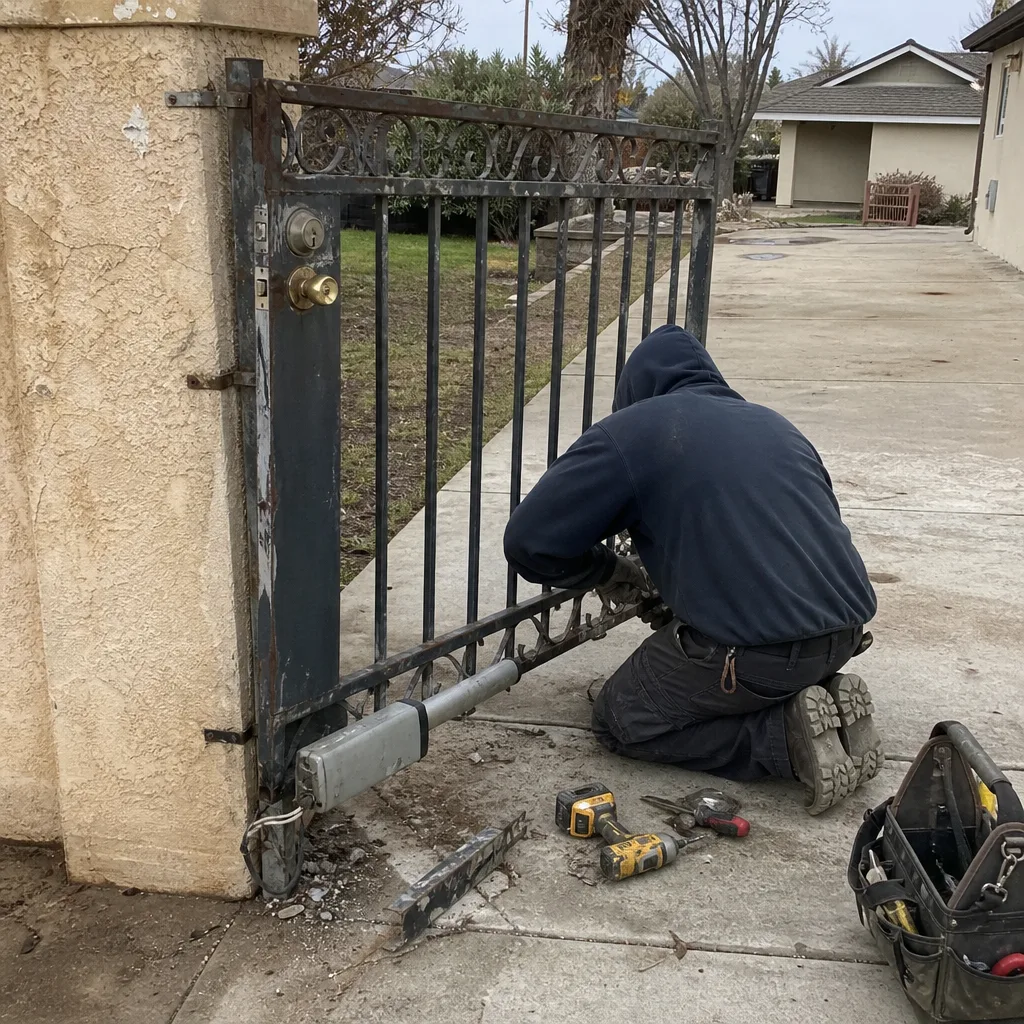 Before
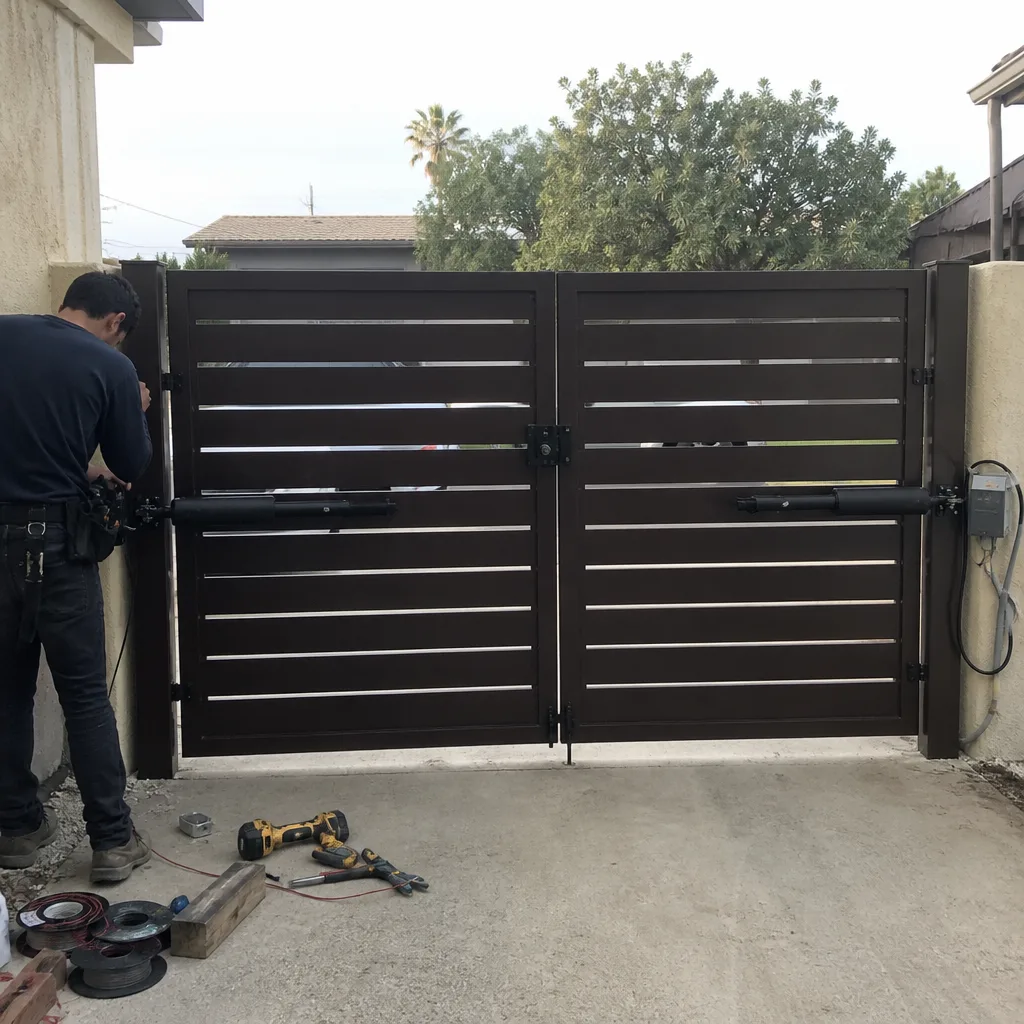 After
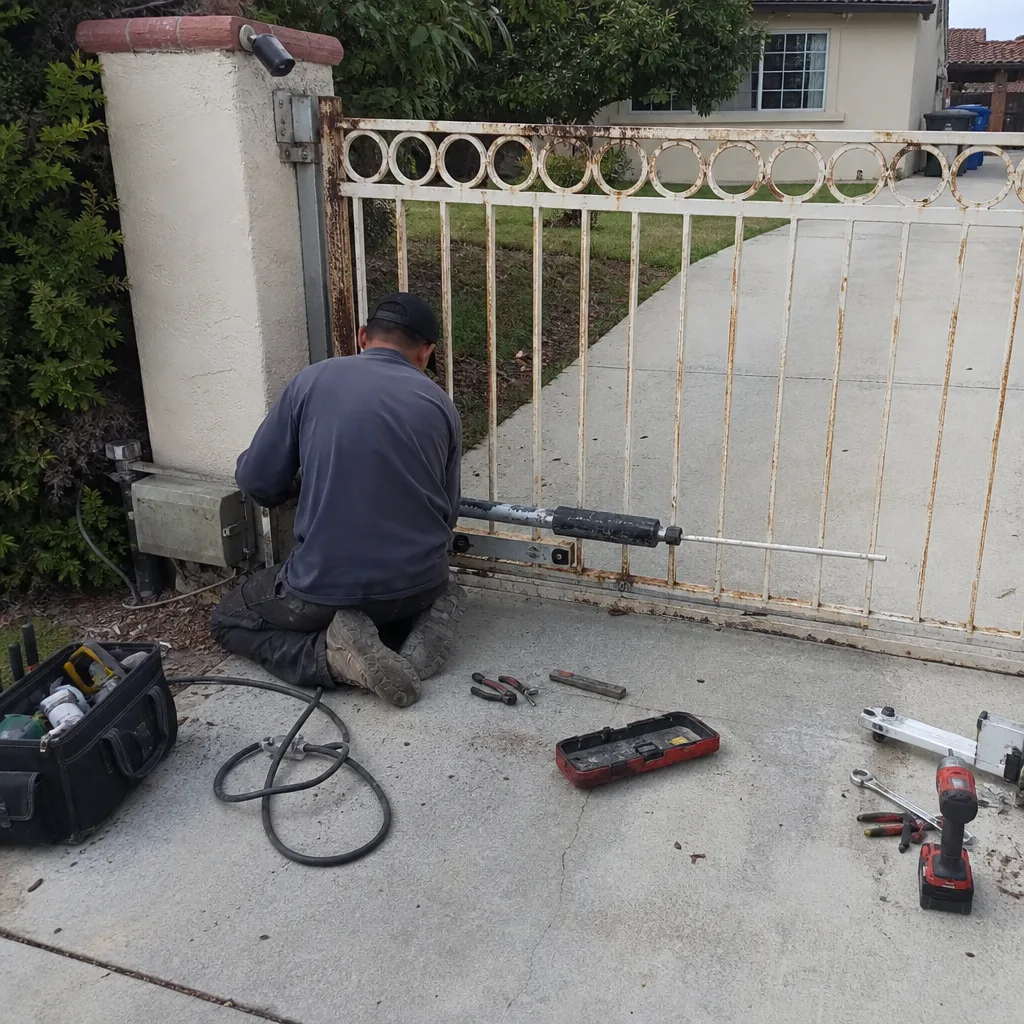 Before
 After
 Before
 After