
Last updated October 30, 2026
 Wrought iron
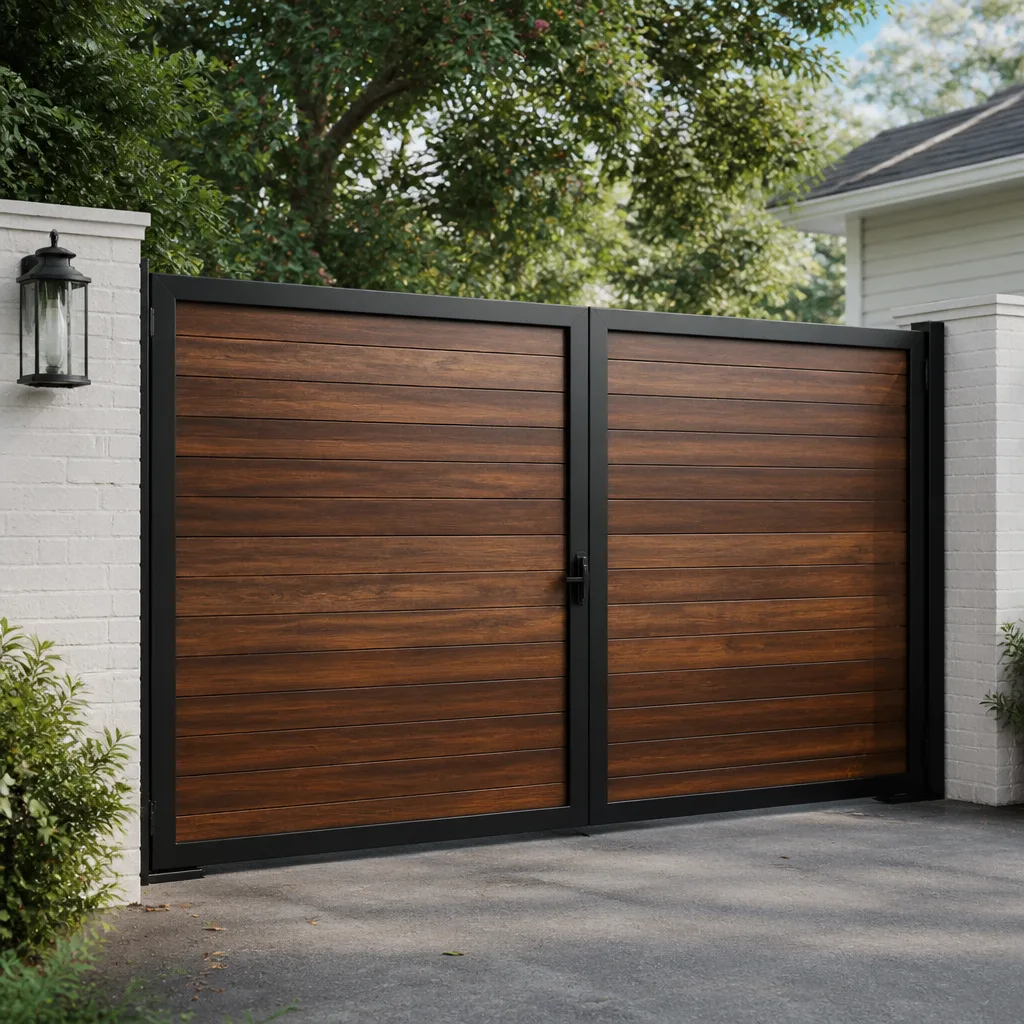 Wood & steel frame
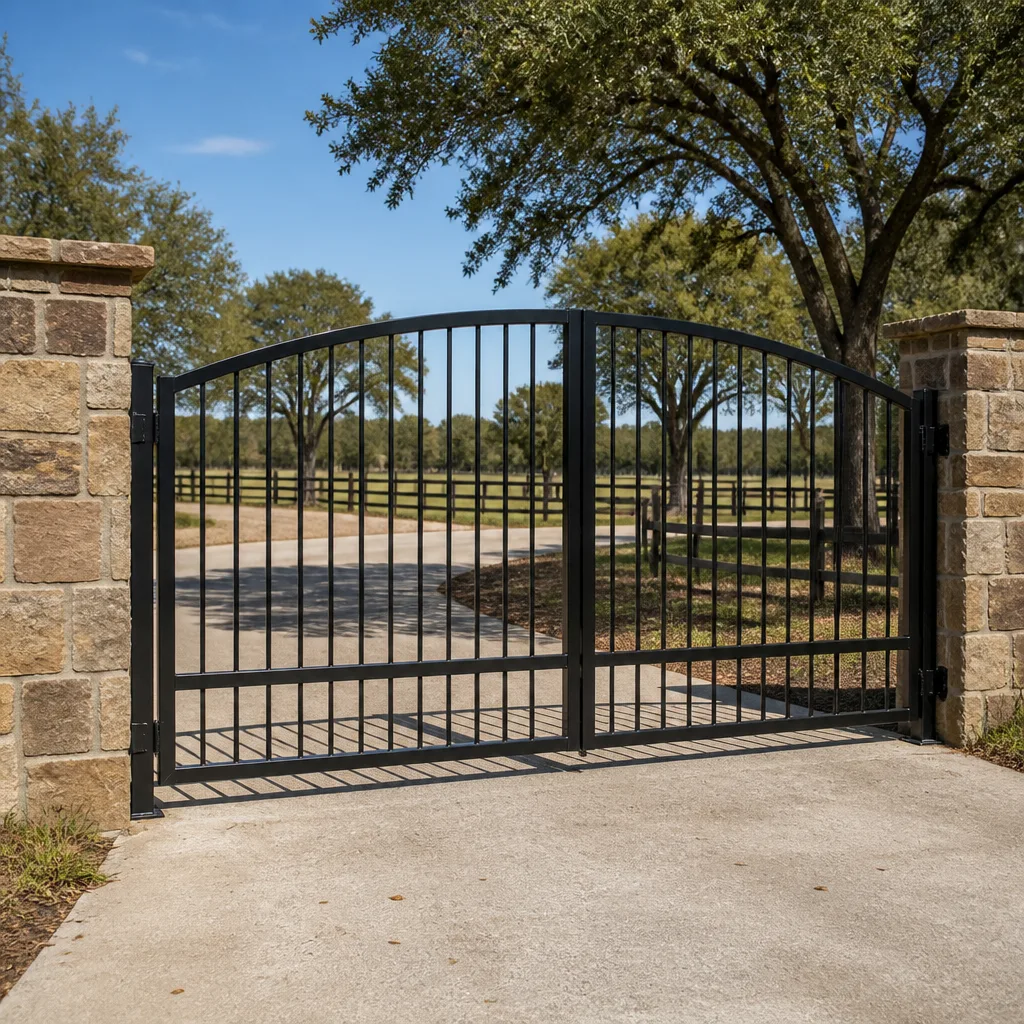 Farm & ranch
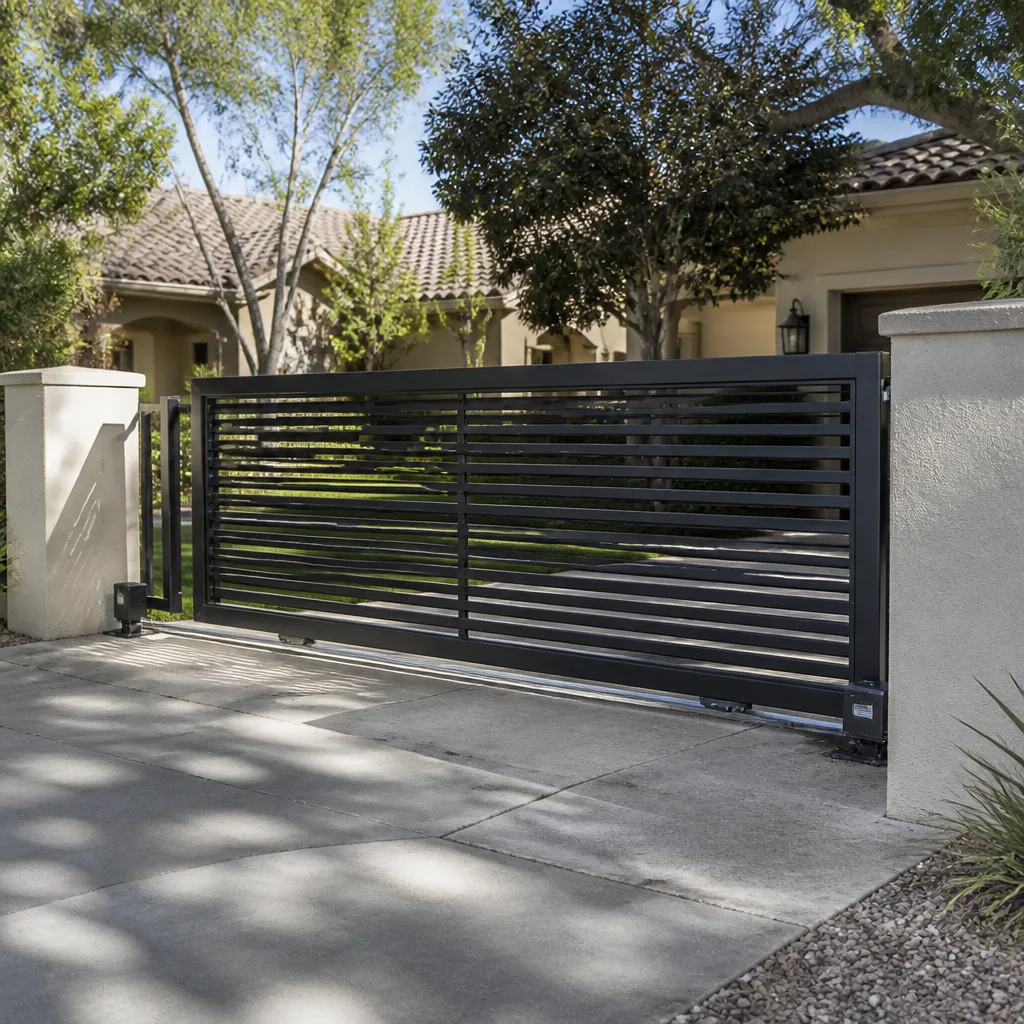 Sliding driveway gates
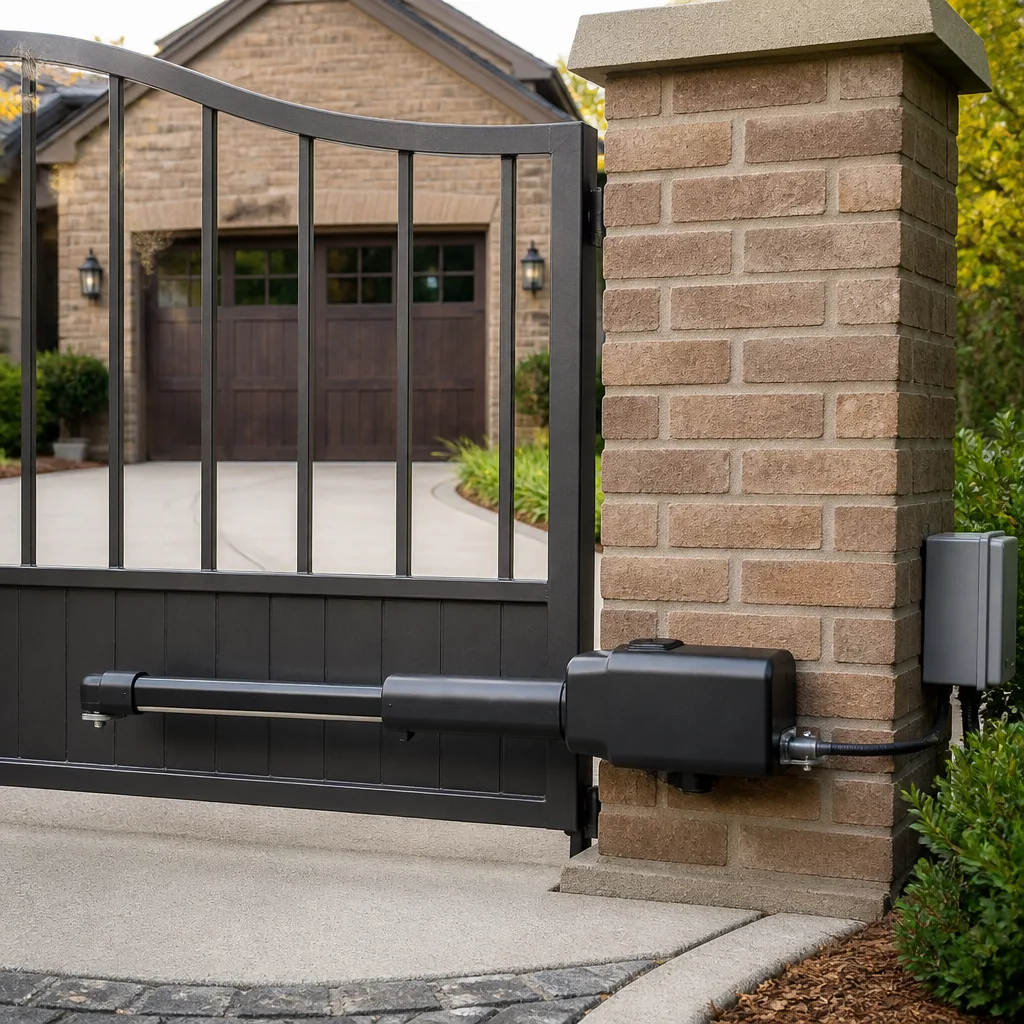 LiftMaster operators
Free on-site gate assessment - hinges, posts, and your LiftMaster or Nice gate operator checked before anything is quoted
The assessment is free and the quote is the invoice.
Get your free estimateGate Repair Emergency Preparedness Guide for Montclair Homes
The San Bernardino County Fire Protection District has documented response delays at gated properties where crews could not locate a manual release, and in several cases the homeowner did not know where the release was on their own operator. That is the reality of gate emergencies: the failure itself is rarely the problem. The problem is that nobody knows what to do in the first fifteen minutes. This guide—along with our Gate Repair Maintenance Checklist for Montclair Homeowners—covers the three scenarios that turn a gate failure into a genuine emergency, the manual release procedures for swing and slide gates across common operator brands, how to secure a gate that will not close, and what to have documented before anything fails. We have seen every one of these situations play out in Montclair and across San Bernardino County.
Styles & brands we work with
Quick Answer
Gate repair emergencies in Montclair fall into three categories: a trapped vehicle, a blocked emergency access point, and a property left unsecured. Each requires a different immediate response, and the single most valuable thing any homeowner can do is learn the manual release procedure for their specific gate operator now instead of in the dark. Keep the release key or handle in a known location, document your operator brand and model, and post your our Gate Repair services number where anyone in the household can find it.
Table of Contents
- The Three Gate Emergency Scenarios in Montclair
- Manual Release Procedures: Swing Gates
- Manual Release Procedures: Slide Gates
- How to Safely Hold a Gate Open or Closed Without Damaging the Operator
- What to Tell Emergency Services When Gate Access Is Blocked
- The Knox Box Solution for High-Risk Montclair Properties
- Temporary Security When a Gate Must Stay Open
- Building an Emergency Reference Card Before a Failure Happens
- Common Mistakes to Avoid
- When to Call a Professional
- Frequently Asked Questions
- The Bottom Line
The Three Gate Emergency Scenarios in Montclair
A gate failure is not automatically an emergency. A gate that opens slowly or makes a grinding noise is a repair issue, not a crisis. But three specific situations require immediate action, and they demand different responses. Knowing which one you are dealing with changes what you do in the first ten minutes.
Scenario one: a trapped vehicle. The gate will not open, and a car is stuck inside the driveway or cannot get in from the street. This is the most common emergency call we get in Montclair, especially on weekday mornings. The immediate priority is to disconnect the operator and manually move the gate. Every automated gate has a manual release for this exact situation. The procedure differs by gate type and operator brand, which is why the next two sections break it down in detail.
Scenario two: blocked emergency access. A gate that will not open during a medical emergency or fire is a life-safety issue. San Bernardino County fire crews carry bolt cutters and forcible entry tools, but cutting through a steel gate frame or a welded slide gate takes time that emergency response often does not have. In neighborhoods like Monte Vista and the hillside streets above Central Avenue, a stuck gate can add two to five minutes to a fire crew’s access time. The county has flagged gated properties as an access concern in its fire code enforcement reviews, and the standard solution is a Knox Box, which we cover below.
Scenario three: an unsecured property. The gate is stuck open, and it will not close. This is a security gap, plain and simple. A driveway gate left open in Montclair signals to anyone passing that the property is vulnerable, and it also invites theft of packages, tools, and anything visible from the street. The short-term fix is different from the first two scenarios because the priority is not access, it is securing the opening. Section five covers temporary measures that work without damaging the operator.
One thing all three scenarios share: the operator gets damaged more often by panicked homeowners forcing the gate than by the original failure. A gearbox that could have been repaired becomes a full motor replacement when someone pushes a gate hard enough to strip the drive train. Knowing the manual release procedure prevents most of that damage.
Manual Release Procedures: Swing Gates
Swing gates are the most common style in Montclair residential properties, and their manual release is usually simpler than slide gates, but the location varies enough by brand that a homeowner can waste critical minutes just finding it. Here is what to look for on the operators we service most often in this area.
FAAC swing operators use a release key that inserts into a lock cylinder on the operator housing, typically on the side or bottom. Turn the key a quarter turn and pull the release lever. The gate then swings freely by hand. FAAC’s residential 400 and 412 models and the commercial 750 series all use this keyed release, though the key shape differs between residential and commercial housings. If you do not have the key, a flathead screwdriver will sometimes engage the slot on residential units, but on FAAC commercial operators you need the actual key.
BFT swing operators (the Deimos and Phobos lines are common in Montclair HOAs and hillside properties) use a release lever accessible after unlocking the operator cover. The cover typically has a small keyed lock at the bottom. Once open, pull the red or yellow release handle toward you. The handle disengages the gearbox from the gate arm. BFT operators will not re-engage on their own; you have to push the handle back and then run a gate cycle from the keypad or remote.
Linear swing operators (the LSO and H-S series appear on many older Montclair homes) use a simple pull-to-release handle mounted on the operator arm itself. No key required on most residential models. Pull the handle down and out, and the arm detaches from the gate. The gate then swings freely.
Viking swing operators use a release key similar to FAAC, but the lock is on the top of the housing on most models. Insert the key, turn counterclockwise, and pull up on the release fork. Viking’s residential line shares components with their commercial line, so the release mechanism is the same across most models.
For any swing gate, once the operator is released, move the gate slowly by hand. Swing gates are heavy, and a gate panel that weighs 300 pounds or more will build momentum quickly on a slope. Montclair’s hillside properties add gravity to the equation. Stand behind the gate and push, do not stand in the arc of the gate’s swing. And if the gate has an open stop or a close stop, make sure the gate rests against it rather than swinging past its normal travel range.
Manual Release Procedures: Slide Gates
Slide gates are more common on Montclair commercial properties, multi-unit complexes, and newer homes with long driveways, and their manual release is almost always a chain or belt disengage mechanism at the operator. The principle is the same across brands: you disconnect the drive chain or belt from the motor sprocket so the gate rolls freely on its track.
For most slide operators, including BFT, Viking, and Linear slide models, start by unlocking the operator cover. Inside you will see the drive chain running from the motor sprocket to the gate’s drive rail or chain tray. There is a release lever or a clutch nut near the motor sprocket. Pull the lever or loosen the clutch nut a few turns, and the sprocket will spin freely while the chain stays put. The gate is now disconnected. You can push the gate along its track by hand.
FAAC slide operators use a similar internal release, but on their commercial 844 and 884 models the release is a large red handle that requires a firm pull. The handle sits near the motor housing, and it disengages the reduction gearbox entirely. When you pull it, you will hear a click, and the gate will freewheel. A slide gate that freewheels will roll on its own if the track has any slope to it, so set a wheel chock against one of the gate wheels before you walk away.
An important note on slide gates: they are heavy enough to crush a person, and when disengaged they move with startling ease on a level track. Montclair commercial gates can weigh 800 pounds or more. If the gate starts to roll while you are working near it, do not try to stop it with your body. Let it hit its end stop or the wheel chock. We have seen property managers and maintenance workers injured because they assumed a detached gate would stay put.
After the emergency is resolved, re-engage the operator before running any cycles. A gate that runs its motor while disconnected will think it is moving, but the limit switches will not trigger, and the motor can drive itself into a fault state or burn out the controller. For high-tension components like slide gate chains, do not attempt to remove or replace a chain yourself; a chain under load can snap with enough force to cause serious injury. Call a trained gate technician.
How to Safely Hold a Gate Open or Closed Without Damaging the Operator
Once you have manually released a gate, the next problem is holding it in place while you wait for repair. The wrong approach here causes more damage than the original failure, and most of that damage is to the operator, not the gate itself.
The single most important rule: never force an automated gate against a disengaged or engaged operator. If the operator is still engaged and you push the gate hard enough, you are turning the motor backward and generating current back into the control board. On some boards this causes a fault, on others it destroys the board. The release exists precisely so you do not have to force the gate.
For a swing gate that must stay open:
- Disengage the operator using the manual release procedure for your brand.
- Swing the gate fully open to its normal open stop.
- Place a heavy object against the gate’s free edge: a wheel chock, a length of lumber, or a concrete block wrapped in a towel to prevent scratching.
- If wind is a factor (Montclair’s Santa Ana season pushes gates hard), brace the gate on both the push and pull sides.
- Do not tie the gate to a fence or wall with rope or bungee cords that can stretch. A wind gust will stretch the cord, the gate will move, and the cord will snap back. Use rigid bracing.
For a slide gate that must stay open: chock both front and rear gate wheels. A disengaged slide gate will roll on a track with even a 1% slope, and many Montclair commercial driveways have exactly that. Two wheel chocks, one behind each trailing wheel, is the minimum.
For a gate that must stay closed: close the gate manually and place the brace the same way, but also consider locking the gate. Most Montclair swing gates have a mechanical lock point at the center, but many were installed without the receiver pin because the operator served as the lock. If your gate has no manual lock, a heavy-duty chain and padlock around the gate frame works as a temporary fix. Run the chain around the gate post and the gate frame, not through the operator arm.
What to Tell Emergency Services When Gate Access Is Blocked
If a gate failure coincides with a medical emergency, structure fire, or any situation requiring police or fire response, the information you give the dispatcher affects how quickly crews can get to you. Dispatchers in San Bernardino County route calls through a consolidated communication center, and the details you provide are relayed directly to responding units.
Here is what to say, in order:
- Tell them the gate is electric and stuck closed. This triggers a different response than a manual gate. Crews will bring forcible entry tools.
- Tell them the gate type. “It’s a swing gate” or “It’s a slide gate” tells crews where to cut or pry. Slide gates with welded steel frames take longer to breach than aluminum swing gates.
- Tell them if anyone is trying to hold the gate open. If you or a neighbor are manually holding the gate, crews need to know the gate may spring back or move during their approach.
- Tell them about secondary access. Many Montclair backyards have pedestrian gates, but fire crews need a vehicular access point for equipment. If there is an alley access or a secondary driveway gate, say so.
- Tell them if a Knox Box is installed. If you have one, crews will look for it. If you do not, say that too, so they come prepared to cut.
The same information applies when you call a gate repair company during an emergency. When you call us and say “my FAAC slide gate is stuck closed and I cannot get my car out,” the technician knows which tools to bring, which release mechanism to go for first, and roughly how long the manual disconnect will take. The more specific you are, the faster the response. The Montclair Gate Repair home page has our full contact details if you need to save them now.
The Knox Box Solution for High-Risk Montclair Properties
A Knox Box is a small, tamper-resistant metal vault mounted at the gate or near the driveway entrance. Inside are the keys, release tools, or access codes needed to manually open the gate. San Bernardino County fire departments carry a master key that opens every Knox Box in their jurisdiction. When crews arrive at a gated property, they find the box, open it with the master key, and access the gate’s manual release without cutting or forcing anything.
Knox Boxes are not just for commercial properties. They are installed on residential gates throughout Montclair, particularly in the hillside neighborhoods where a single gate access point creates a bottleneck for fire crews. The San Bernardino County Fire Marshal’s office recommends them for any property where a gate is the sole vehicular access point and the setback from the street exceeds roughly 100 feet; see Gate Repair Permits, Codes & Inspections in CA: What You Need to Know for additional compliance considerations.
The installation is straightforward: a licensed gate technician or locksmith mounts the vault to a gate post or perimeter wall, and the county fire department verifies the installation and confirms the access tools inside work. Some Montclair HOAs in gated communities are now coordinating bulk Knox Box installations across all entry gates, which simplifies the process and reduces the per-property cost.
The box should contain the specific manual release key for your operator brand. A FAAC release key and a Viking release key are not interchangeable. If you change gate operators during a system upgrade, the Knox Box contents need updating too. This is one of the most common oversights we encounter when servicing multi-unit Montclair properties that have upgraded from older operator brands to newer FAAC or BFT systems. The Knox Box still holds the old key, and it is useless to responding crews.
For more detail on operator brands and which release keys work on which models, see our Electric Gate Repair in Sky Valley page, which covers the lineup we service.
Temporary Security When a Gate Must Stay Open
If the gate is stuck open and repair will not happen for several hours or until the next morning, you need a temporary security plan. An open gate in Montclair is an invitation, and the properties most at risk are those with visible packages, bicycles, tools, or vehicles in the driveway.
First, clear the sightline. Move anything portable out of view from the street. Bicycles, ladders, tool chests, and boxed deliveries should go inside the house or garage, even if it is inconvenient.
Second, block the opening with a vehicle if possible. Park a car across the driveway access point, not just near it. A vehicle positioned nose-to-fence creates a physical barrier that a person has to climb over, and most opportunistic theft does not involve climbing over an occupied vehicle.
Third, install temporary motion lighting if your property does not already have it. A battery-powered motion light aimed at the gate opening costs less than twenty dollars at any hardware store in Montclair, and it removes the cover of darkness.
Fourth, warn neighbors. The most effective deterrent in Montclair neighborhoods is a watchful neighbor. Tell the people on either side that your gate is stuck open and ask them to call you if they see anything unusual. It takes thirty seconds and costs nothing.
Fifth, if the gate will be open overnight, consider a temporary fence panel. Rental companies in the Inland Empire rent portable construction fencing panels for short periods. It is a heavier solution than most homeowners need, but for Montclair properties with no other perimeter security, a rented panel across the opening is the closest thing to a functioning gate.
Building an Emergency Reference Card Before a Failure Happens
Most people do not build an emergency reference card because it sounds like the kind of thing that only matters after a failure, which is exactly when it matters; our more guides & resources can help you prepare before one occurs. The card should take ten minutes to complete and be kept in a known location: taped inside the garage door, in a kitchen drawer, or saved as a note on multiple household phones.
What goes on the card:
- Gate operator brand and model. This is the single most useful piece of information. FAAC, BFT, Linear, Viking, DoorKing, LiftMaster, Elite, Ghost Controls, Mighty Mule: the brand tells a repair technician which release mechanism to expect and which parts to bring. The model narrows it further. There is a label on the operator housing or inside the cover.
- The manual release description. Write down: “FAAC swing operator, release key located in the kitchen drawer, key turns counterclockwise in the lock on the side of the housing.” That sentence saves the fifteen minutes we described at the start of this guide.
- Where the release key lives. If the key is not stored at the gate, document where it is. If there is no key, note that too.
- Your gate repair contractor’s phone number. Include the number for the company that services your specific operator brand. Our number is (866) 371-3309, and we service all the major brands listed above.
- Your Knox Box location, if installed. Fire crews need to know where to look.
- Secondary access points. If there is a pedestrian gate, a side gate, or alley access, note it.
- Circuit breaker location for the gate. Most Montclair homes have the gate on a dedicated breaker in the main panel or a subpanel. Label it. If the gate is malfunctioning, cutting power is sometimes the fastest way to stop a runaway operator, though it will not release the gate manually.
For a full list of the gate operator brands we service and what a repair call covers, see our Gate Repair in Sky Valley page.
Common Mistakes to Avoid
- Forcing the gate against the operator. An engaged operator creates resistance by design. Pushing through it strips gears and burns out motors. The manual release exists for a reason, and skipping it turns a $200 repair into a $1,500 replacement. We have replaced drive trains in Montclair and Sky Valley specifically because someone forced a gate during a panic.
- Not knowing where the release key is. The release key is not decorative. If it is on a keychain with ten other keys somewhere in the house, it is useless during an emergency. The emergency reference card section above exists because of this exact failure.
- Leaving a slide gate unchocked after manual release. A disengaged slide gate on a sloped Montclair commercial driveway will roll. We have seen a gate roll thirty feet down a slope because someone assumed the track was level. Chock the wheels every time.
- Calling a general handyman instead of a gate specialist. Electric gate systems involve control boards, safety loops, and brand-specific wiring. A handyman who services everything cannot carry nine brands’ worth of diagnostic knowledge and parts. You want a technician who already knows your brand.
- Ignoring a failing gate until it fails completely. Grinding noises, slow operation, intermittent reversing, and safety loop faults are warnings. Address them while the gate still opens. A gate that sometimes works is a gate that will eventually not work at the worst possible time. Montclair hillside properties in particular see accelerated wear from wind load and grade stress.
- Attempting DIY spring or chain work. Slide gate chains are under tension. Swing gate arms are under torque. Removing or adjusting either without the right training can cause crushing injuries or lacerations. Safety edges and photo eyes also carry adjustment tolerances that matter for both safety and liability. This is not a weekend project.
- Not telling emergency dispatchers about the gated entry point. In a medical emergency, details get lost. “My mom is unconscious and the driveway gate is stuck shut” is a complete sentence that tells dispatch everything they need. Leaving out the gate means responders have to figure it out on arrival.
When to Call a Professional
Some gate failures require a professional, full stop. If you hear grinding from the gearbox, the gate reverses on its own, the safety loop trips constantly, the control board shows an error code you do not recognize, or the gate moved unexpectedly during any of the steps above, stop and call a technician. A professional diagnosis costs less than the damage from a misjudged repair attempt, and the work gets done correctly instead of becoming the next emergency.
Montclair Gate Repair offers free estimates in Montclair and services all major gate operator brands, including FAAC, BFT, Linear, Viking, and DoorKing. Call (866) 371-3309 to schedule a diagnosis or to get a quote on a full gate replacement. If your gate is currently stuck and you need emergency service, tell us the brand and what happened; it helps us bring the right tools the first time.
Frequently Asked Questions
Emergency gate repair in Montclair typically ranges from $150 to $450 for the service call and diagnosis, plus parts and labor for the repair itself, with total job costs most often falling between $250 and $900 depending on the operator brand, the failed component, and whether the gate is a swing or slide system. The quote is agreed before any work starts. Call (866) 371-3309 for an exact quote; estimates are free.
Yes, emergency gate repair calls are prioritized based on whether a vehicle is trapped or a property is unsecured, and we dispatch same-day for Montclair and surrounding areas. Your best move is to call us at (866) 371-3309, tell us the gate type and operator brand, and we will get you on the schedule with the right technician.
Our full gate installation service in Montclair includes removal of the old gate and operator, a site assessment for grade and wind load, installation of the new gate panel and posts, mounting and wiring of the new operator, programming of remotes and keypads, safety loop installation, and a full operational test. We also handle the power connection at the control board. For a comprehensive overview, see our Gate Installation in Sky Valley service page. Call (866) 371-3309 for a free measure and written price.
Yes, we handle all low-voltage wiring, safety loops, photo eyes, and safety edges for both new installations and repairs, including the electrical connections at the operator control board. Most Montclair residential gates are 24V DC systems, and our technicians carry the correct wire gauges and safety equipment for the job. Call (866) 371-3309 to discuss your specific setup.
We repair nine major gate operator brands, including FAAC, BFT, Linear, Viking, DoorKing, LiftMaster, Elite, Ghost Controls, and Mighty Mule, covering everything from residential swing operators to commercial slide systems. We carry brand-specific parts for many models and our technicians are trained on the diagnostic procedures for each manufacturer. Compare our electric gate service details on the Electric Gate Repair in Sky Valley page.
Knox Boxes are not currently mandatory for every single-family home in Montclair, but they are recommended by San Bernardino County fire officials for properties where a gate is the only vehicular entry point, and some HOAs in the city are now requiring them at community gate entrances. Check with your HOA or the county fire marshal’s office for requirements specific to your property. Call (866) 371-3309 if you need a gate technician to coordinate the installation of the access tools inside the box.
The Bottom Line
A gate failure only becomes an emergency when you are unprepared for it. The difference between a minor inconvenience and a security or safety crisis is whether someone in the household knows the manual release procedure and has the right information documented. Learn your operator brand today. Find the release key. Build the reference card. Store the gate repair phone number where everyone can find it. These steps cost nothing and take less than an hour. When the gate fails, and at some point it will, you will not be standing in the dark trying to figure out what to do. You will already know.
Written by the team at Montclair Gate Repair, serving Montclair since 2013.
See the difference
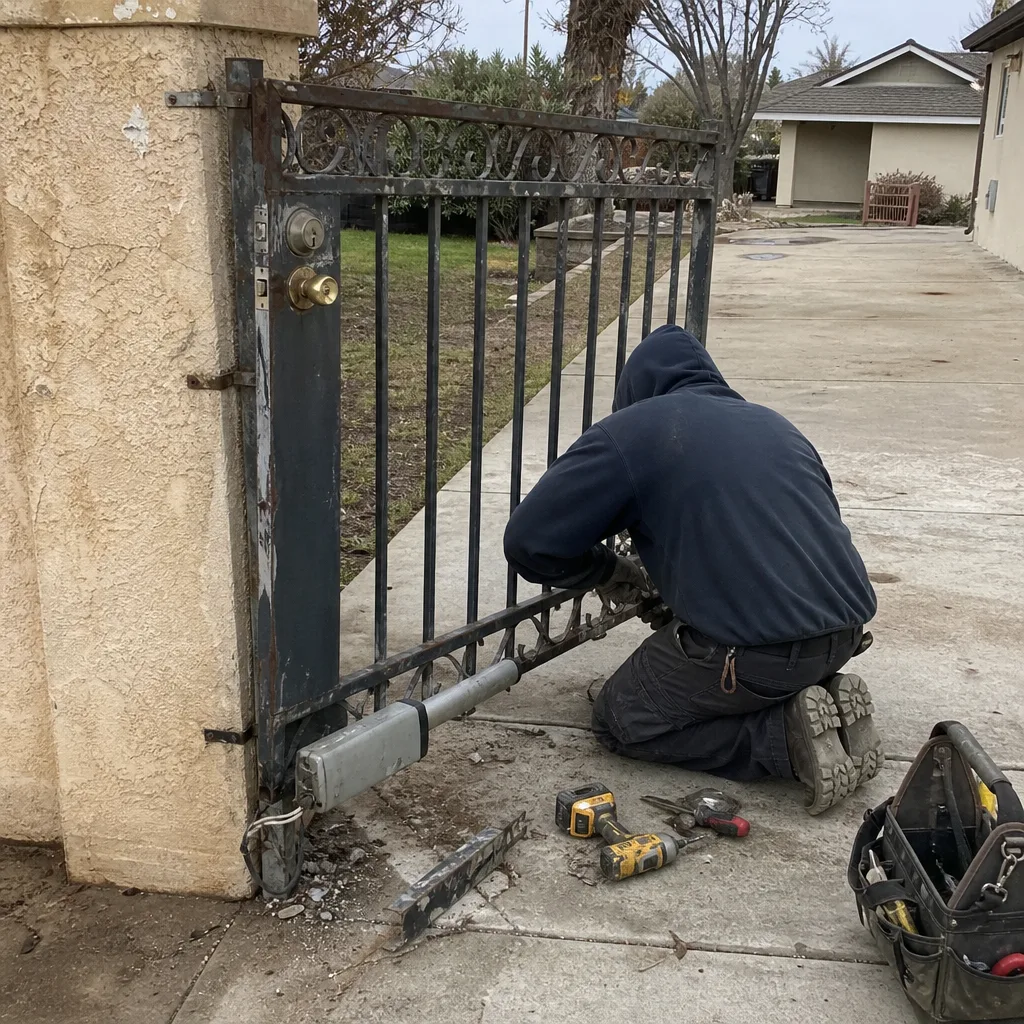 Before
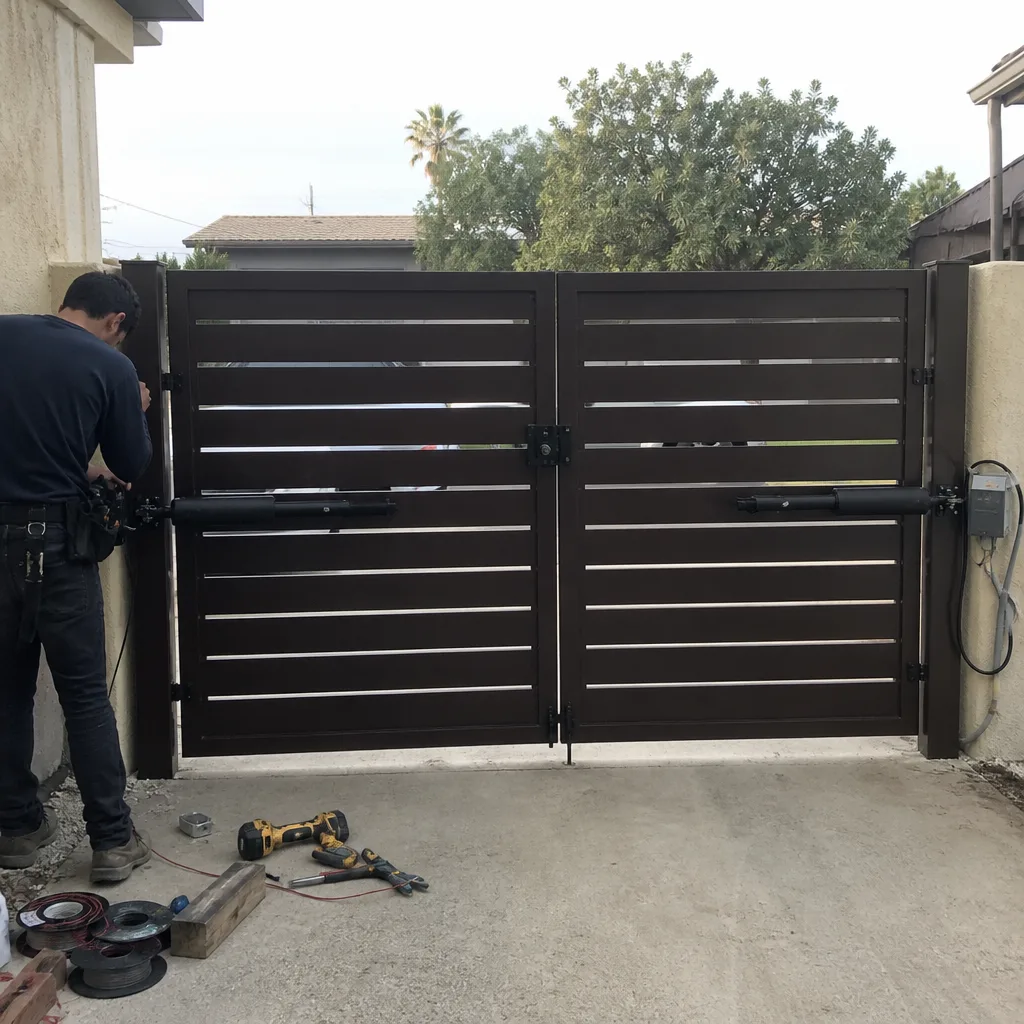 After
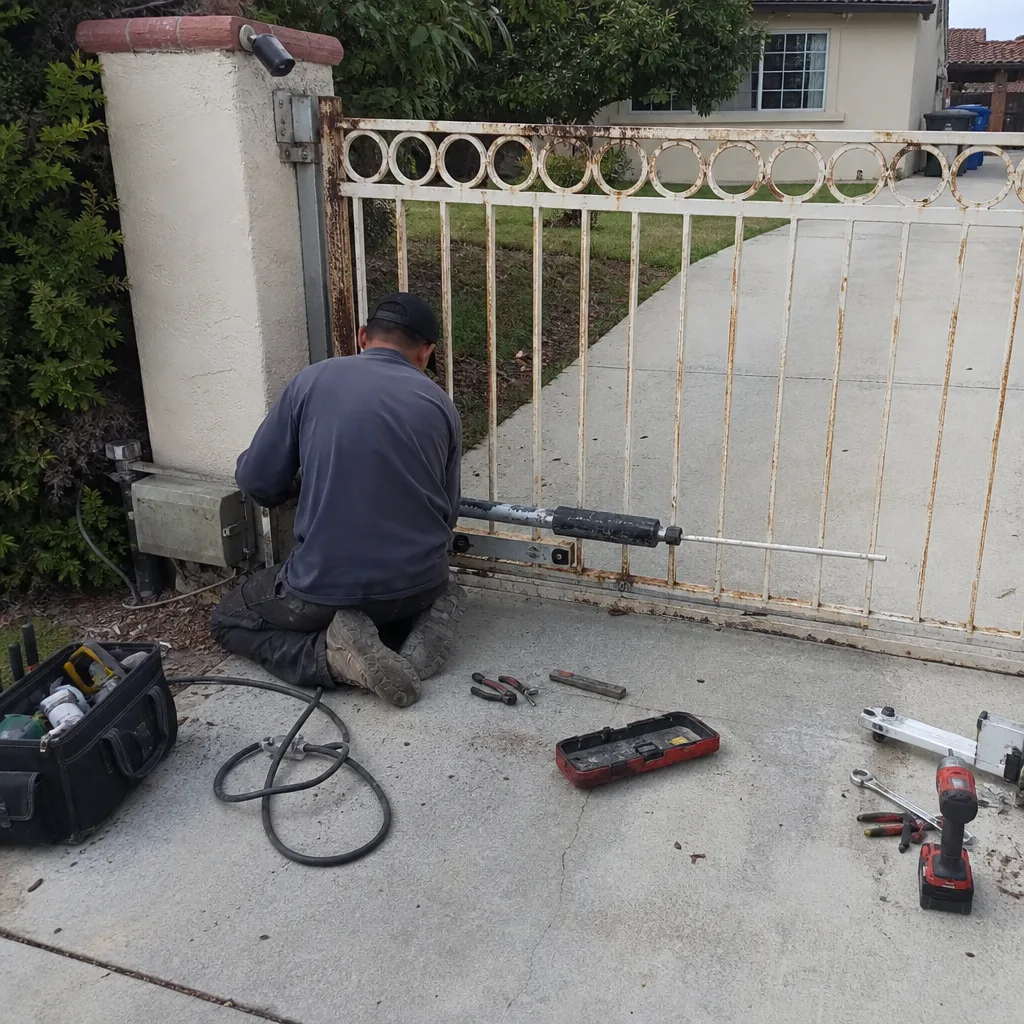 Before
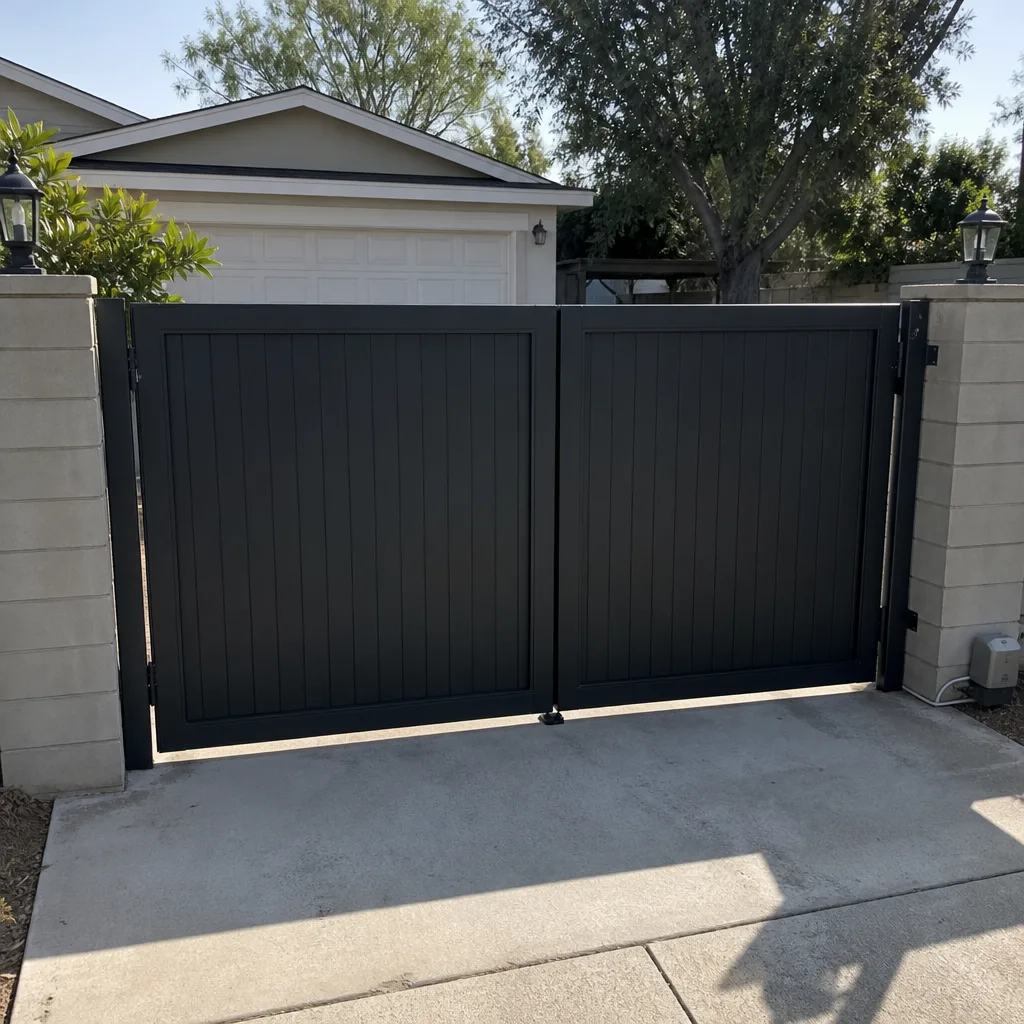 After
 Before
 After